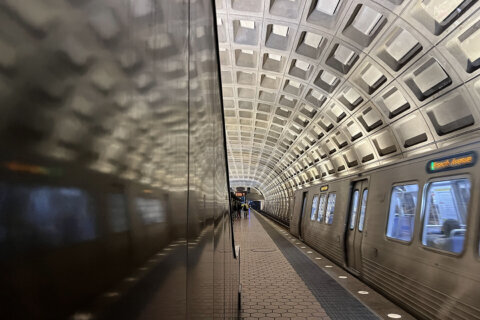
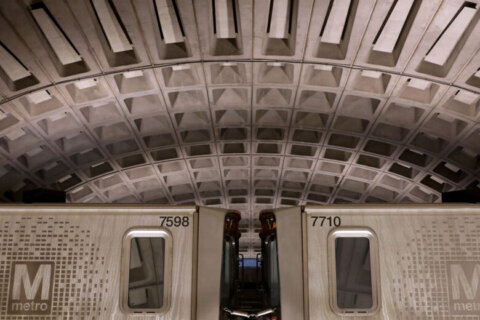
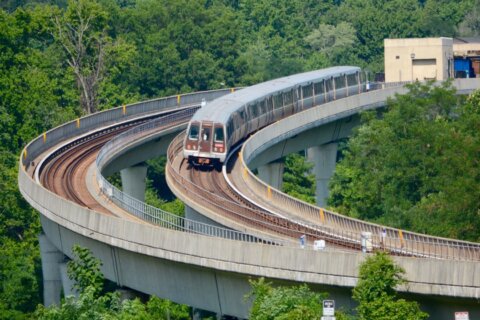
Metro General Manager Randy Clarke presented the proposed budget for the D.C.-area transit system’s fiscal year 2027 to the WMATA Board of Directors on Thursday, calling for an improvement in service frequency across Metro’s buses and trains without fare increases.
The proposal calls for shorter wait times on the Orange, Silver and Blue lines during the weekdays, and on the Red Line at night. This would mean trains on the Orange, Silver and Blue lines would run every 10 minutes, as compared with its current 12-minute headway, to support peak ridership.
Clarke noted the rising growth in ridership since the pandemic and efforts that Metro has utilized to engage more riders, including its most recent “Tap. Ride. Go.” campaign.
“Metro ridership has grown in recent years and we want to continue to meet that demand for the region,” Clarke said. “This proposal reflects our commitment to delivering safe, frequent, and reliable service, while preparing Metro for the potential long-term capital challenges ahead.”
Tom Webster, executive vice president and acting chief financial officer at Metro, noted the transit system’s successful rollout of the revamped bus routes — the Better Bus Network — and automatic train operations that happened earlier this year.
“Ridership increased from roughly 81 million trips in FY-21 to a forecast 268 million trips by the end of FY-26. A lot of that is due to improved service and in increasing regional travel,” Webster said.
He said there would be no increase in fares next year from the $2.25 fare fee increase in July 2024.
Webster said Metro forecasts “very significant revenue growth” for 2026, at $632 million — only $19 million less than the proposed 2027 budget. He said Metro intends to use $84 million in “capital funding for preventive maintenance.”
Allison Davis, Metro’s senior vice president of planning and sustainability, shared the proposal for shorter wait times on key bus routes and expanding hours to “address coverage gaps.”
“We want to make sure that we are thoughtful about the ridership and revenue projections that we have in the budget, just so that at the end of the year, there isn’t a surprise of additional revenue that is needed. And so where we are right now with the FY-26, the top line is revenue, 506 million,” she said.
Webster shared that one of Metro’s biggest concerns is the uncertainty of future funding from regional investment. In February 2024, D.C. offered the transit system $200 million on top of its yearly operating subsidy to help close Metro’s budget deficit. Maryland offered $150 million and Virginia an additional $130 million.
“The contrast is pretty significant in that we will not have the resources needed to continue to maintain the performance and the state of good repair of the system at the levels we have today,” Webster said regarding a hypothetical issue in the future.
Metro’s Board of Directors approved its 2026 budget of $4.96 billion in April, which included $2.5 billion for the agency’s Better Bus Network redesign and $2.4 billion to address repair needs and modernize service.
Metro will hold meetings for public comments in February in Arlington and two virtual meetings.
Get breaking news and daily headlines delivered to your email inbox by signing up here.
© 2025 WTOP. All Rights Reserved. This website is not intended for users located within the European Economic Area.