Breaking into Hollywood has never been easy.
For decades, aspiring screenwriters have faced a familiar cycle: write a script, submit it, wait, follow up, wait some more — and often never hear back. In an industry where who you know is invariably more valuable than what you know, even strong material can die on the vine before it ever reaches the right decision-makers.
At CES 2026, a Rockville, Maryland-based startup believes they have found a way to disrupt that process.
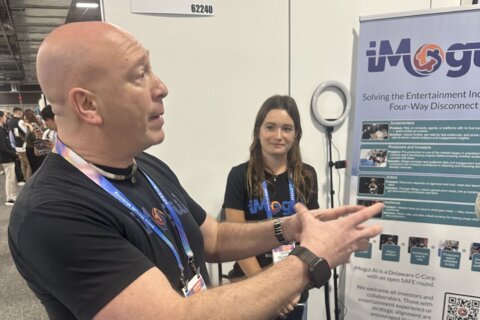
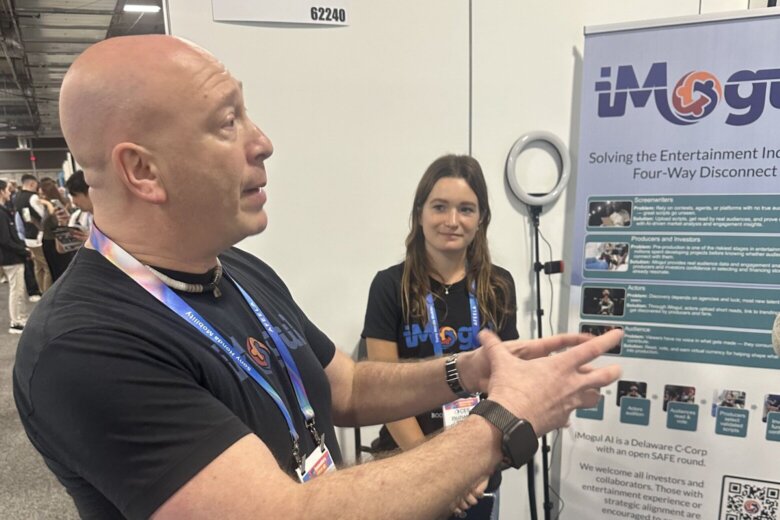
Exhibiting this year from Eureka Park at CES, iMogul AI is unveiling a platform designed to help screenwriters, actors and producers connect more efficiently — using artificial intelligence not to create content, but rather to analyze, validate and accelerate the acceptance process, essentially trimming that all-important barrier to entry.
“The company and the product is called iMogul,” CEO Chris LeSchack said. “As we all know, it’s incredibly hard to get into Hollywood. iMogul is essentially designed for screenwriters who have created screenplays but don’t know where to go with it.”
LeSchack speaks from personal experience. In 2005, he attempted to pitch a screenplay to Fox Studios. While the studio expressed interest, the project ultimately stalled.
“They said, ‘Yeah, Jerry Bruckheimer has done this before. Maybe next time,’” LeSchack recalled.
The experience planted the seed for what would eventually become iMogul AI.
Rather than acting as another script-hosting site or marketplace, iMogul AI aims to create a feedback-driven ecosystem around each screenplay. Writers upload their scripts to the app, where audiences can read them, vote on elements such as casting, filming locations and creative direction, and provide validation that can be shared with potential investors and producers.
“What if I had an app and got the demographics or the information from the audience that actually go and read the script, vote on actors, vote on directors and cinematographers?” LeSchack said. “And then I take that information and provide it to friends and family investors or actual real investors who are interested in Hollywood.”
iMogul AI, LeSchack said, absolutely does not use generative AI to write or alter scripts.
“I don’t use AI to do anything with the content itself,” he said. “That’s all the screenwriter.”
Instead, the platform applies AI to market analysis — evaluating potential audiences, identifying tax incentives and shooting locations, and recommending actors who might align with a project’s budget and goals.
“If the screenwriter is interested in selecting their own talent, they can go and do that,” LeSchack said. “While the higher tier actor or actress a film engages, the higher will be the value of the screenplay; but in many instances, we want to bring in relative unknowns … some B-listers and others … talent that might bring down the cost down while also helping the screenwriter pitch it to investors and producers.”
The AI also analyzes scripts to suggest optimal filming locations. By parsing external and internal scenes, settings and themes, the system can flag regions with favorable tax incentives.
“We’re using AI really to … deal with flow,” LeSchack said. “Help actors, screenwriters get back to work, producers — in fact, everybody in the film industry.”
Bypassing traditional gatekeepers
For emerging creatives, that promise resonates strongly.
Zsuzsanna Juhasz, an employee of iMogul AI, is also a junior at USC majoring in film studies and production. As she embarks on her career in the entertainment industry, Juhasz is fully representative of the sort of individual for whom iMogul was created.
“One of the scariest things about breaking into the industry is not knowing the right people,” Juhasz said. “If you don’t know the right people, maybe your work won’t be recognized or it won’t get out there. And that’s terrifying as you’ve invested four years into your education building your portfolio.”
She sees iMogul AI as a way to bypass traditional gatekeepers.
“This app will bridge that connection,” she said. “My work will be in front of audiences. People can read the kind of worlds I’m building, the characters I’m building, and they’ll be interested in that. They can vote for it.”
The platform’s casting features are also central to its appeal. Actors can read sides, submit reels and audition directly through the app — opening doors for performers without agency representation.
“It lets you have a sort of control that the industry doesn’t always offer you,” Juhasz said.
That functionality will soon expand, thanks to a new feature called iMogul Take One, which LeSchack announced at CES.
“Take One is going to invite actors to come in and read sides … and then pitch it out into the real world,” he said. “So we might be able to find the next up-and-coming actor.”
The app is currently free to download on Apple’s App Store, with a Google version presently in the works. While screenwriters may eventually pay a modest monthly fee, LeSchack said the priority is growth.
“The more screenwriters that put screenplays up there, more audience comes in,” he said.
As iMogul AI makes its CES debut, the company is positioning itself not as a replacement for Hollywood, but as a smarter on-ramp. For creatives long locked out of the system, that may be the most compelling pitch of all.
Get breaking news and daily headlines delivered to your email inbox by signing up here.
© 2026 WTOP. All Rights Reserved. This website is not intended for users located within the European Economic Area.