This content is sponsored by the Fairfax County Department of Transportation.
Commuting in the D.C. region can feel like a daily uphill climb as long distances, crowded highways and the high cost of driving all add up.
For many people, getting to and from the office is one of the most stressful parts of the day.
But for Shawnequa Albert, the commute became an opportunity not just to improve her own routine, but to help colleagues rethink how they get to work.
Years ago, when Albert was a young mother living in Woodbridge, Virginia, she faced a difficult commute to her job in Bethesda, Maryland.
Rather than driving the long distance every day, she began researching alternatives to make the trip more manageable.
“Having access to different modes of transportation is key,” said Albert. “It’s good in terms of saving money and helping the environment, too.”
Albert eventually built a routine that combined several transportation options.
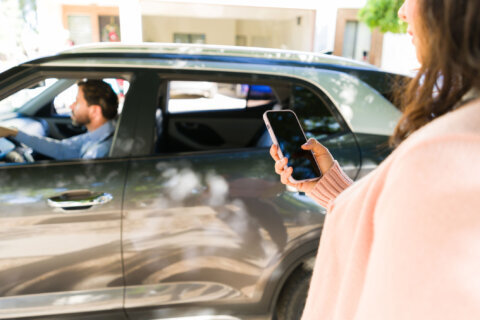
She relied on the Virginia Railway Express or local bus service to start her trip, transferring to Metro. Eventually she tried the regional commuting system known as “slugging” – informal carpooling where drivers pick up riders to qualify for high-occupancy vehicle lanes.
“As I started to build out my career, having different ways of getting to work was pivotal,” Albert said.
Slugging, in particular, is something Albert called “beautiful.”
“I value three things – which are time, peace and efficiency,” explained Albert. “Slugging provided me with peace of mind because I wasn’t the one behind the wheel and didn’t have to worry about traffic.”
“It’s a very organized method for getting to work,” she added.
Along the way, Albert discovered something unexpected: a sense of community.
“I’ve met people that I still know to this day, and I’ve made some great friends,” said Albert. “We even had a lost and found system, which kind of restored your faith in people.”
Smart programs for smart commuting
Programs designed to support smart commuting helped make it possible for Albert to leave her car at home.
One of those resources was the Guaranteed Ride Home program operated by Commuter Connections.
The program provides commuters with a ride home if they face personal or family illness, unexpected overtime or other emergencies.
For people who rely on public transportation or carpools, it removes the fear of being stranded when something unexpected happens.
Commuter Connections is a regional network of transportation organizations coordinated by the Metropolitan Washington Council of Governments.
“Guaranteed Ride Home has been a lifesaver,” said Albert. “I’ve used it when I’ve had sick kids, and it made the difference between being able to use public transportation or having to drive through three counties and across state lines to get to work.”
Albert’s experience with the program eventually grew beyond her own commute.
Helping colleagues commute smarter
While working in human resources at two different government agencies, Albert began encouraging colleagues to take advantage of the region’s smart commuting options.
She saw the programs as a way for employers to support their workforce while also helping recruit and retain talent.
“To help augment salaries at the federal agency where I worked, we accessed commuter benefits from Commuter Connections to help ease the burden or getting to the office,” Albert said. “Rolling out these benefits as an employer was a no-brainer, providing an invaluable benefit to employees in this region.”
Albert continues to champion smarter commuting.
She now works at KNZ Solutions in Tysons, Virginia, near the Greensboro Metro station.
KNZ recently received recognition from Fairfax County as a “Best Workplace for Commuters,” highlighting the company’s commitment to helping employees find flexible ways to get to work.
The company offers hybrid work options, commuter transit benefits and participation in the Guaranteed Ride Home program.
Albert’s commitment to alternative commuting has also extended into her family life.
The children she once balanced her commute around have grown into adults navigating the region themselves. Having grown up watching their mother use trains, buses and slugging to travel across the D.C. area, they’ve adopted many of those same habits.
Today, her three sons regularly rely on public transit and other alternatives to get around the region.
“When you are trying to get to work, you want things to be as efficient and as smooth as possible,” Albert said.