This content was provided by GW Hospital.
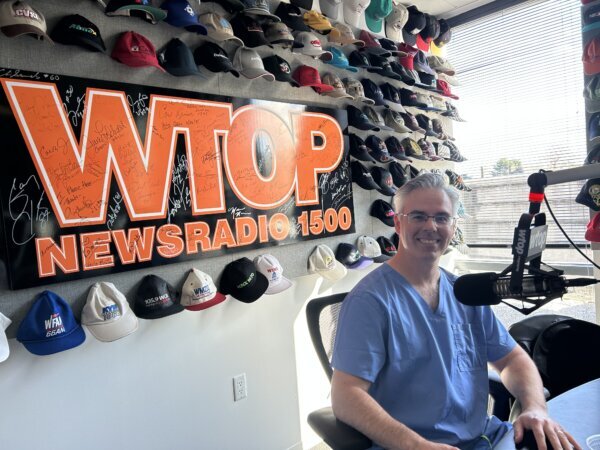 David M. Lutton, MD, is a board-certified, shoulder and elbow fellowship-trained orthopedic surgeon at The George Washington University Hospital (GW Hospital). He specializes in conditions of the upper extremity, specifically shoulder, elbow and sports injuries. Here, Dr. Lutton describes his work and why he is grateful to perform shoulder surgery at GW Hospital.
Q: What types of shoulder conditions and injuries do you see most?
A: I typically see patients aged 16 and up. Patients’ injuries typically stratify out at different ages.
Younger patients often experience injuries from overuse or issues related to their growth plates. Shoulder instability is common, especially among athletes in contact sports like football and basketball, where shoulder dislocations may occur.
As patients get a little bit older, I commonly see tendonitis. Patients with more gray hairs, like mine, begin having biceps tendinitis and rotator cuff problems. These are the tendons that go around the shoulder, helping us to position our arm in space. Those tendons may get injured and while many may be treated conservatively, every now and then, those problems require surgery.
As patients get even older, they may progress to developing arthritis. Arthritis is a condition whereby we lose cartilage, which is akin to losing the tread on your car tires. Ultimately, symptomatic arthritis may be treated with a shoulder replacement.
Q. What is your largest patient population?
A. The 20- to 30-year-olds with shoulder dislocations and the 60- to 90-year-old patients with symptomatic arthritis may need surgery. Many patients in between are able to be managed with conservative care. When you see a surgeon, you shouldn’t be afraid that he or she is going to automatically encourage surgery; many conditions may be treated with home exercises, physical therapy, modalities and oral medicines.
Q. What kind of technology does GW Hospital invest in for the treatments you perform?
A. I have been practicing for 16 years, and GW Hospital has been my home. GW Hospital has been a wonderful partner in helping me treat patients with shoulder injuries. We’ve gone through a massive evolution in technology and advancements in shoulder surgery over the past two decades, including both anatomic and reverse shoulder replacements.
We have advanced technology to help understand bone deformities ahead of time, before surgery. At GW Hospital, we utilize patient-specific instrumentation and 3D modeling. Advanced imaging such as CT and MRI can help us treat arthritis, rotator cuff injuries and shoulder instability. GW Hospital has been great, allowing me to treat my patients with leading-edge technology.
Q. How does that technology benefit patients?
A. Treatment for arthritic patients easily benefits from technology. When I was in residency at GW Hospital 20 years ago, we were using basic X-rays to determine where to put our implants. Studies have shown that the outcome of a shoulder replacement may heavily depend on where we put our implants. We must get it right. Think about using a bow and arrow when you’re trying to accurately hit the bullseye.
Over time, we evolved from using standard X-rays to fine cut CT scans. Now we take that CT scan, put it into proprietary software, and we can utilize computer modeling so patients can really understand what’s going on inside that shoulder. This facilitates better doctor-patient communication before surgery and allows me to implement the technology with precision during surgery. During surgery, we leverage the data of the CT scan and utilize something called patient-specific instrumentation — a guide that helps me to be very accurate and precise at the time of surgery.
Arthroscopic procedures have likewise benefited from technological improvements. Improved materials and engineering have led to leading-edge anchors and repair constructs, as well as biologic augmentation that may help stimulate that healing for patients.
Q. Do you take a collaborative approach at GW Hospital?
A. I am one of the longest-tenured orthopedic surgeons at GW Hospital. Our department works with synergy to improve patient outcomes. We have a supportive academic atmosphere within the orthopedics department. Each of us has our own specialty and nuance to treating patients.
Q. Since GW Hospital is an academic medical center, what types of research and innovation are you focused on?
A. I do research mostly in the realm of shoulder arthroplasty. I have performed countless standard and reverse shoulder replacements and even many custom shoulder replacements, where our patient’s bone deformity is so severe that we need to make a 3D printed shoulder replacement. One of my current studies is tracking these patients to demonstrate clinically relevant outcomes and improved patient care.
Q. Why would you recommend the orthopedic services at GW Hospital?
A. I bring my patients to GW Hospital because this is how I would want my family treated. We want to take care of patients the way you would want your mother, father, brother or sister taken care of. At GW Hospital, we have advanced orthopedic services, a wonderful nursing staff, and a unique Acute Pain Service that is available 24 hours a day in the perioperative time period to help minimize postoperative pain. We have all the ancillaries that can take care of you and your family and provide great treatment.
Let the GW Hospital family care for you and yours.
To find a doctor, call 888-4GW-DOCS (449-3627).
Learn more at gwhospital.com/orthopedics
Physicians are independent practitioners who are not employees or agents of The George Washington University Hospital. The hospital shall not be liable for actions or treatments provided by physicians. For language assistance, disability accommodations and the nondiscrimination notice, visit our website.