Much is at stake in Mali. The arid West African nation has the world’s second-youngest population by median age, which offers great potential, experts say. But it’s yet unclear whether that potential will translate into progress or make an already tenuous situation much worse. This past weekend’s presidential elections, the outcome of which is not immediately clear, will provide some indication as to whether the current mix of international aid is having any effect.
[ MORE: Mali’s presidential election heads toward runoff.]
Hundreds of Canadian soldiers and six military helicopters deployed to Mali in June as a part of an ongoing Western effort to stabilize the former French colony now plagued by militant extremists and other forms of instability in recent months.
News of the deployment served as a familiar headline for most Westerners, who have viewed Mali a hotspot for extremist activity since then-Republican presidential candidate Mitt Romney referenced it — to rebuke at the time — during a 2012 debate. Mali has since gained international attention for a series of militant uprisings that prompted Western military reponses led by France and the local government, and which continue to threaten broader instability, waves of migration and economic disruption.
Yet the country with a deep history of mining wealth, known in the 13th and 14th centuries as a place where ” gold flows like a river,” is also home to one of the world’s oldest constitutions, an oral tradition known as the Charter of Manden. It boasts UNESCO sites such as the Djenne and has a rich culture of dance, architecture, art and cuisine.
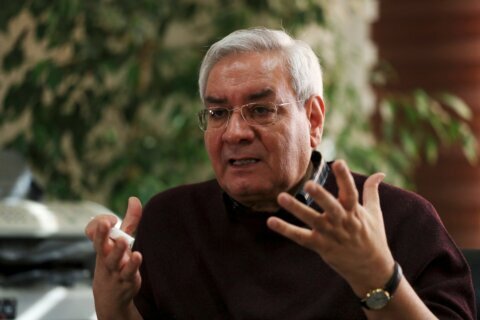
Louis Verret, Canada’s ambassador to Mali, previously served as the director of development for the African nation from 2010-2013 during the French military intervention, and acknowledges it is considered a poor and fragile country by most Westerners. But he adds that the positive aspects of his tour inspired him to return in 2017 to his current post.
Verret spoke with U.S. News from Bamako about the future of the ongoing international response to assist Mali, and its efforts to prevent the crisis there from spinning out of control. The interview took place before the recent elections, and has been edited for length and clarity.
What is it like living in Mali right now?
When I came back in 2017, things had changed. But the Malian people, the citizens, are still the same people. This is what I call a rich country.
However — this is my personal view about the people — when we go back to the overall situation, we are in a crisis here. And this is a very complex and multi-dimensional crisis, mostly for the situation in the north and center of the country, around Gao and Timbuktu, and Mopti. This is a part of the country that is quite difficult in terms of security, and there are also significant governance issues to the country. In Canada, and in Washington, you hear a lot about terrorism and criminal groups. Those fuel long-standing conflicts. They’re trying to undermine the effort to stabilize the country, but they are only one piece.
How evident is the security crisis for those living there?
This is something that is very present in the minds of everybody, because it is reported in the newspapers and people talk about these things. Radio is very popular, also.
There are displaced people moving from the north and center to the capital Bamako, and other places, so those things are very well understood, very well known. Obviously, people are reacting very differently based on where they are.
I’ll discuss with my family, “There was a bomb in Gao, or Timbuktu a few weeks ago,” but that’s almost two weeks of traveling if I were to go there, so it’s not that close for us.
What effect has the Canadian military deployment had on the crisis there?
We look at it differently. We consider Mali a multidimensional crisis that requires an integrated, multidimensional response to address long-term political development.
There must be a political solution to the crisis. In the short term, we would like the elections (which took place on July 29) to be fair and free. At the same time we look at the longer term, at the multidimensional response that includes our military intervention in Gao.
In that context, we also have to include our programs for stabilization, humanitarian assistance and development assistance, and some police intervention. All this is part of our overall strategy that is to try to respond to the crisis and be inclusive of not only Canada but also MINUSMA (the United Nations peacekeeping mission in Mali), the U.S. and the French.
Does the situation require more resources?
I think we are probably at the right level, but we have to be a bit more efficient in coordinating and responding to the real challenges we have at the moment. Presidential elections are one of the key steps to being in good shape, but then we also have to be able to work on decentralization, so a peace agreement can be achieved. We have to involve some political dimension into that, but also security and development are key.
We need to get the right mix of tools.
What are your goals for the Malian election?
We have to be realistic about the election. Elections are necessary but they will not solve everything here. If they go poorly, that won’t be positive. But if they go according to plan, and if we have a good turnout of 40 to 45 percent of people registered and a good result, that is one part of the solution.
How important is mining in Mali, and how might that contribute to their future stability?
The mining industry represents more or less 15 percent of the national revenue for Mali, so it’s quite important. It accounts for 60 percent of their exports, and I’m referring to all mining but a big majority of it is gold mining.
If you look at a map, the gold mines are mostly located close to the border with Burkina Faso and Senegal, so far away from the actual region where there is insecurity at this moment. Though gold mining is important for revenue generating from the state, it also creates local jobs, and develops skills for workers, which is important. Historically, mining was always a very important feature for Mali. In the 13th century it was known as “the river of gold.”
Now that’s formal mining. There is also informal mining, which is also important in terms of the economy. This to me is not as positive, there are a lot of issues with the environment and with child labor.
Are you seeing increases in international influence in Mali outside of the Western security response or corporations’ interest in mining?
Yes, there is an increase in the Chinese presence, but not in the mining sector. A lot of Chinese are going into construction, buildings and roads, those types of things.
What is at stake if Malian security deteriorates?
We Canadians are here in Mali mostly because of our values. We’ve been here for 50 years in our first and major program here trying to reduce poverty. But there is a question of international terrorism here, and these limited number of terrorists can have influence and already do influence the region, here in Mali but also in Niger, Burkina Faso, above the Sahel and they are trying to expand into neighboring West African countries like Senegal or Algeria.
We want to make sure that we return to a stable region. If you are a European country, obviously since they are closer to Africa than we are it has an impact on their border and migration. We — Canada and the Western world — want to have a peaceful environment here so people can live their life according to the rights they should have.
More from U.S. News
Sub-Saharan Nations Lead Global Trend of Fewer Executions, Rights Group Says
Sub-Saharan Nations Lead Global Trend of Fewer Executions, Rights Group Says
Africa’s Immigrants to the U.S.: Profiles of Education, Hard Work
Canada’s Ambassador to Mali on New Hopes for Persistent Problems originally appeared on usnews.com