At midnight on New Year’s Eve 1999, embattled Russian President Boris Yeltsin stepped down from power. Allegations of corruption and an attempted impeachment by the State Duma earlier that year had clouded the ailing leader’s administration, which had overseen a bumpy decade of the former Soviet bloc’s turn toward democracy. Inheriting power temporarily was a young former KGB officer whom Yeltsin had hand-picked as his successor.
“I trust him,” Yeltsin had said of Vladimir Putin earlier that year in a televised statement, assuring the Russian public he would serve as a fair contender in elections the following summer “But I also want all those who in July 2000 will come to the polling stations and make their choice to have similar confidence in him. I think Putin will have enough time to show his worth.”
Having taken the oath of office on Monday, Putin now faces the bureaucratic end of his tenure as Russia‘s leader, the longest since Joseph Stalin. But as he begins his fourth term as president, most Russia analysts say Putin now faces a decision: find a political heir to maintain his domestic and foreign policies, or extend his time in office by altering the Russian Constitution.
And it’s difficult for many Russia observers to see exactly how the former intelligence officer-turned-political strongman can execute an exeunt from power comparable to Yeltsin’s.
“Putin was chosen so as to partly maintain the achievements of the 1990s — which he did not. However, he was primarily chosen to ensure the security of Boris Yeltsin, his actual family and his political one. Putin proved much more capable on this front,” says Andrei Kolesnikov, head of the Carnegie Moscow Center’s Russian Domestic Politics and Political Institutions Program.
During the presidency of his protege, Yeltsin was able to keep largely out of the public spotlight and died in Russia 2007 of congestive heart failure.
“So Putin needs this sort of ‘Putin,'” Kolesnikov says. “Perhaps he will not find such a man, and then Putin will become his own successor.”
In the almost two decades since taking power, Putin has administered over a tumultuous time in Russia’s post-Cold War history. He oversaw an expansion of the Russian economy and closer political and military ties to the West, including cooperation on international space operations and rumblings of perhaps even joining the anti-Soviet military alliance NATO.
SEE: [The 5 Longest-Serving World Leaders Still in Power]
Yet his administration has also been marked by turbulence, with harsh crackdowns on political dissent at home and military interventions abroad — including an annexation of Crimea in 2014 that most Western powers consider illegal, and a military intervention into Syria in 2015 to prop up the brutal regime of Syrian President Bashar Assad. Some have accused Putin of committing war crimes.
Whatever goodwill he had secured with the West was dashed following first dismissive and then combative rhetoric from the Obama administration during this period. Russia now maintains international headline space for accusations it gassed a Russian defector on a city street in England, for reportedly meddling in the 2016 U.S. presidential election and other foreign operations, and for still unclear connections with members of Donald Trump‘s presidential campaign.
There are two main paths Putin will likely pursue as he faces the end of his latest six-year term. He might find a successor who will continue his legacy and ensure against any political or legal backlash against him. Some potential scions have emerged — like Dmitry Medvedev, who served as president from 2008 to 2012 between Putin’s terms — but most experts agree it’s too early for a clear choice to emerge now. Or Putin could continue his break from democratic norms and use his party’s strong majority in the Russian legislature to change the constitution to allow him to continue serving in power.
Some believe the latter wouldn’t be particularly difficult, either politically or in terms of persuading the Russian people. Putin has Russia under control and he remains popular, having won the last election with 77 percent of the vote, says Denis Volkov, a sociologist at the non-governmental research and polling organization Levada Center in Moscow. “It will be easy for him to make changes to let him stay either in a presidential capacity or again make some changes for him to stay in some other capacity.”
“He is unlikely to fade into obscurity,” says Kadri Liik, a senior policy fellow at the European Council on Foreign Relations.
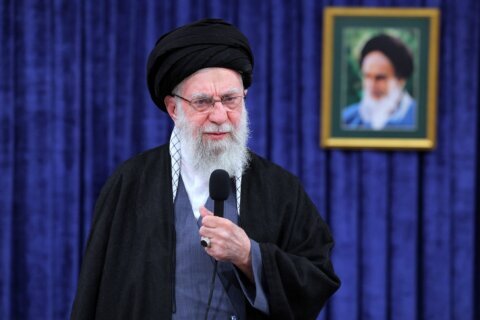
Russia does not have a tradition of elderly statesmen, Liik says, like China’s Deng Xiaoping or Iran’s Ayatollah Khomeini, who found deeply influential roles as a supreme or spiritual leader outside of formal government.
“So carving out such a position for Putin would be a significant novelty in Russia’s political culture — that right now is a lot more top-down than in Soviet times,” Liik says.
Putin instead is preoccupied with fortifying the system he has helped put in place and bringing in a new generation of power, though how the two will mesh also remains unclear.
The younger generation of Russian leaders, frequently referred to as the technocrats, are more pragmatic than their elders who lived through Russia’s communist era, Volkov says. They want greater relations with the West and are more market-oriented.
“But at the same time, it might not be so, because they have to play according to the rules within the system,” he adds. And Putin has ensured those rules are clear. “There are some rather permanent trends in Russian relationships with the West, with Europe, with the United States, and probably quite often the interests are so different that whoever is in charge, they still have to follow more or less the same route.”
And others question the extent to which Putin feels fully comfortable with the control he exerts over the Russian government.
Political dissidents like Alexei Navalny — who runs a popular YouTube channel, among other media, exposing corruption and patriarchy within the Russian government — have been increasingly attacked for activism. Navalny was blocked from competing in this year’s presidential election and faces a new stint in jail after participating in weekend protests against Putin on the eve of the leader’s inauguration.
“I was surprised actually that they took away Navalny from the race,” says Janis Sarts, the former state secretary of Latvia’s Ministry of Defense who now serves as the director of the NATO Strategic Communications Centre for Excellence. “I thought that if they felt confident enough in their support levels they should have shown the victory was over all the players, or opposition figures in the game. I think that demonstrated some nervousness on their part.”
“I’m sure they were not afraid that Navalny would win, but that essentially could cause some disruptive effect,” says Sarts, whose organization is accredited by NATO but does not speak for the military alliance. “The fact they were nervous about that tells me a story that they were worried they don’t have full control over this sentiment.”
More from U.S. News
Vladimir Putin’s Image Presents Opportunities and Risks for Russia
Data: Americans Consider China, Russia More Powerful Than U.S.
The Consequence of Vladimir Putin’s Victory
After Inauguration Vladimir Putin Faces Questions on Political Future originally appeared on usnews.com