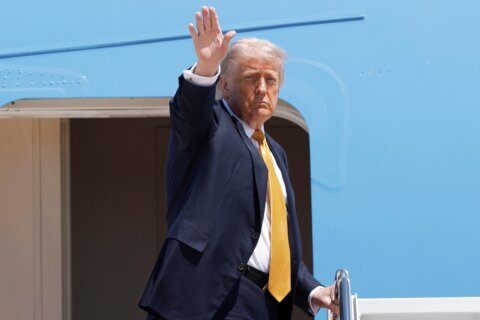
In a press conference last week, U.S. President-elect Donald Trump said he started a “movement that the world hasn’t seen before.”
He’s likely referencing his aggressively nationalist and populist platform, heavy in anti-immigrant and anti-Muslim rhetoric, that brought him to victory over Democratic candidate Hillary Clinton. It was a win that stumped pollsters, many of whom had Clinton leading by significant margins.
But in many ways, the movement is one that was taking shape on a global scale well before Trump declared his candidacy and one that has the potential to grow and advance through 2017 and beyond. Its fate depends largely on the results a number of national elections scheduled for this year as democracy faces itself.
[WATCH: How the world changed in 2016, by the numbers.]
“On both sides of the Atlantic, large swathes of the electorate have come to believe that the existing ‘system’ really does not have their interests at heart,” says Graeme Auton, a political science professor at the University of Redlands. And, he says, while global cooperation was necessary in the wake of World War II and the Cold War, nationalism has strengthened in the past decade or so in response to 9/11, the great recession, conflict throughout the Muslim world and more.
Auton points to the rise of Russian President Vladimir Putin, President Recep Tayyip Erdogan’s conservative Justice and Development Party in Turkey and India‘s Bharatiya Janata Party led by Prime Minister Narendra Modi as examples of nationalist leaders on the stage years before Trump.
[READ: The consequences of Latin America’s move to the right.]
Experts agree that key elections in Europe — namely in the Netherlands, France and Germany — will likely be influenced by recent events like Brexit and the election of Donald Trump and that the wave of nationalist and populist policies will likely continue.
“This is a low point for democracy around the world,” says Nandini Deo, an assistant professor of political science at Lehigh University. “In wealthy nations, democracy is, in some ways, being used to achieve some pretty undemocratic goals and people around the world are watching this and thinking democracy isn’t all it’s cracked up to be.”
As new democracies recognize that popular representation through voting may not be necessary to become a powerful and wealthy state, she says, we are more likely to see undemocratic and authoritarian sentiments rise.
“One case builds on the next,” says Courtney Hillebrecht, an associate professor of political science at the University of Nebraska-Lincoln. “Brexit or Trump don’t happen in a vacuum.” As more examples of nationalist leadership take hold, she says, what could happen is “less willingness to cooperate over things that make people’s lives easier” — such as transportation, telecommunications, trade and scientific sharing — in a world that is so highly dependent on globalization.
In many ways, the general election in the Netherlands in March will be 2017’s first test of the movement’s power.
More from U.S. News
The Consequences of Latin America’s Move to the Right
The World According to Donald Trump: The Beginning of the End of the Liberal World Order?
Global Democracy Faces Nationalist and Populist Movements originally appeared on usnews.com