DAVOS, Switzerland — As the world continues to witness political surprises and upsets, the Chinese leadership is working to present itself as guardians of stability and clear leadership. China’s President Xi Jingping said on Tuesday that it would be wrong to blame the world’s problems on globalization.
Speaking at the World Economic Forum, Xi said that “Many of the problems troubling the world are not caused by economic globalization,” making a point to speak specifically on economic measures. Xi is the first Chinese head of state to attend the annual WEF meetings in Davos, and his keynote speech that opened this week’s meetings packed the main congressional hall’s 1,600 seats and filled various side rooms that webcast his speech.
Xi attendance at Davos comes at a time of uncertainty, both for multilateral approaches and the World Economic Forum, which both face a backlash against “elites.” Globalization itself has come under increasing criticism in the West for uneven distributions of wealth.
The Chinese leader vigorously defended world trade and came as the leaders of the U.S. and U.K. appear to be retreating. British citizens last year voted to leave the European Union and on Tuesday, as the WEF opened, British Prime Minister Theresa May outlined a clean break from the EU.
[ READ: The unlikely Brits who caused a revolution.]
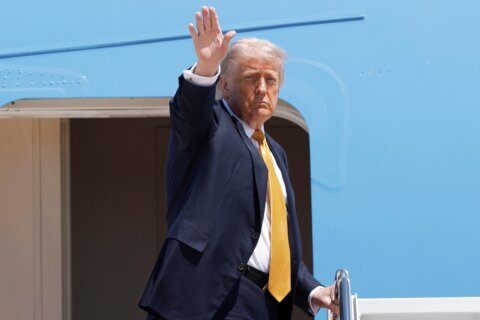
In the U.S., meanwhile, Donald Trump was elected as the next president, riding a campaign that heavily criticized trade agreements. He has promised to withdraw from the Trans-Pacific Partnership and renegotiate the North American Free Trade Agreement.
In his speech, Xi acknowledged the problems tied to globalization, calling it “a double-edged sword.” Yet he argued that the benefits outweighed the problems. “It is true that economic globalization has created new problems. But this is no justification to write (it) off altogether.”
Xi warned that no countries could win in any “trade war” — a veiled criticism of the incoming U.S. President-elect. Anthony Scaramucci, a senior adviser to Trump who also is attending Davos, said any Chinese moves to retaliate against import tariffs would cost Beijing “way more” than it would cost the U.S.
[READ: Why Donald Trump’s China policy may stir a trade war.]
The Chinese premier called for courageous leadership around the world that focuses on engagement, using an analogy from nature to drive his message home: “If one is always afraid of the bracing storm, one will get drowned in the ocean sooner or later.” He also used an environmental analogy as he argued against protectionism, stating that pursuing such policies, “… is just like locking oneself in a dark room. While wind and rain may be kept outside, so are light and air.”
Xi promised that his country would remain committed to the climate change agreement struck in Paris last year and became effective last November. Xi’s support was welcome news for many of those attending meetings here and his comments again drew a contrast to Trump, who has cast doubt over U.S. commitments to the Paris agreement.
More from U.S. News
The Unlikely Brits Who Caused a Revolution
Australia’s Foreign Minister Julie Bishop: The Case for Globalization Needs to be Remade
Why Donald Trump’s China Policy Is a Trade War in the Making
China’s Xi Jingping Defends Globalization at Davos originally appeared on usnews.com