Tuesday was not an Election Day to remember for those on the left, but progressive wage initiatives in four states passed as millions of voters supported efforts to raise pay for those at the bottom of the earnings scale.
Arizona, Colorado, Maine and Washington all passed minimum wage initiatives Tuesday that will gradually raise their respective state-mandated base pay levels. Washington will boost its minimum wage to $13.50 per hour by 2020, while the other states will see minimum pay climb to $12 per hour over the same window.
Minimum wages in the four states that passed initiatives Tuesday currently range from $8.05 in Arizona to $9.47 in Washington. In some of these states, like Arizona and Colorado, employers will also be required to guarantee paid sick leave to employees.
“Four very different states passed ballot initiatives today to raise the minimum wage. That speaks volumes,” Holly Sklar, CEO of Business for a Fair Minimum Wage advocacy group, said in a statement Wednesday. “The minimum wage wins today will increase the momentum to raise the minimum wage in more states and nationally.”
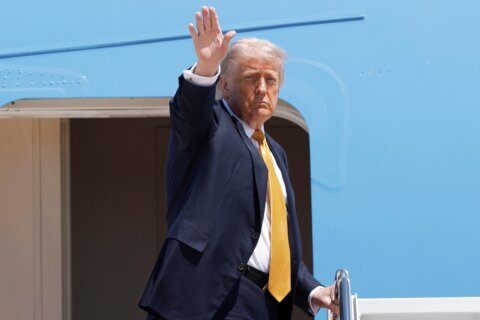
The federal minimum wage currently sits at $7.25 per hour, where it has remained since 2009. Despite the momentum built up by the Fight for $15 initiative in recent years, Congress has been reluctant to raise Americans’ pay. President-elect Donald Trump has waffled on the federal minimum wage issue but has most recently expressed support for a slight uptick — somewhere in the ballpark of $10 per hour.
“I would like to raise it to at least $10,” Trump said at a press conference at his golf facility in Doral, Florida, earlier this year, though he tacked on the caveat that “states should really call the shots.”
States and some cities are free to set their own rules if they deem it appropriate to raise pay for local low-wage earners above that federally mandated benchmark. Seattle, for example, approved legislation back in 2014 that will gradually raise its minimum wage to $15 per hour over the next few years — even though Washington state’s will rise to only $13.50.
Walking into Election Day, 15 state-level minimum wage proposals had appeared on ballots since 2000, according to the University of Southern California’s Initiative & Referendum Institute. All 15 passed. Four more successful proposals joined those ranks Tuesday night.
The Fairness Project estimates more than 2 million workers in Arizona, Washington, Colorado and Maine could see pay increases as a result of the new measures.
“We’re encouraged by these state raises and look forward to continued growth for our business and the economy with future state and federal raises,” Bill Phelps, cofounder and CEO of Wetzel’s Pretzels, said in a statement Wednesday.
The Business for a Fair Minimum Wage group spoke with a handful of national employers who have indicated a minimum wage hike will ultimately be good for their bottom lines. If consumers have more money to spend, that’s good for business, especially if these companies already pay their workers a better-than-bottom base wage.
But not everyone in the private sector is happy about this movement, which critics say will put unfair stress on small business owners and could put a damper on new hiring.
“Big labor interests continue to sacrifice local entry-level labor markets to advance their activist agenda,” Michael Saltsman, the research director at the Employment Policies Institute, said in a statement Wednesday. “The consequences of dramatic minimum wage increases, including layoffs, reduced hours, and business closures, are already being felt in parts of the country that have passed such hikes.”
The jury is actually out on whether modest minimum wage hikes have a meaningful impact on employment. Anecdotal evidence and some research suggest higher minimum wages aren’t great news for hiring prospects, but other studies have claimed to debunk that notion.
Regardless, though, the minimum wage victories at the polls Tuesday will be hailed as good news for a movement that was brought up by progressives but increasingly hovers in bipartisan territory.
South Dakota actually rejected an initiative that would have lowered the minimum wage for workers under the age of 18. Some analysts have claimed that higher minimum wages hurt young workers who may be less likely to be hired. Again, data on this issue have mostly been inconclusive.
But with a growing number of states and cities ramping up the minimum wage to at the very least keep up with inflation and rising costs of living, researchers could soon have plenty of new test cases to work with.
More from U.S. News
Vladimir Putin Leads the Pack in International Congratulations to President-Elect Donald Trump
Colorado Joins 5 States to Allow Physician-Aided Death for Terminally Ill
Election Night 2016 Marks a New Beginning for Donald Trump and America
Progressive Minimum Wage Boosts Win the Night Even as Hillary Clinton Falls originally appeared on usnews.com