NEW ORLEANS (AP) — At least four states have adopted laws this year making it a crime to disrupt worship services, a reaction to a high-profile protest inside a Minnesota church that prompted outrage from faith leaders.
The Republican lawmakers sponsoring most of the legislation say those gathering at sacred sanctuaries deserve protection beyond what existing trespassing laws provide. They also say these new laws will prevent escalating clashes between congregants and protestors as many churches, mosques and synagogues remain on edge over recent mass shootings and acts of violence targeting religious groups.
“People should go to church to be able to sit in peace, worship as they please, without having to worry about people coming in and harassing them,” said Idaho Sen. Mark Harris, a Republican who co-sponsored legislation criminalizing protests inside places of worship. “I think the thing that happened in Minnesota was kind of a shock to some of us, that churches would be used as a place to berate people.”
Critics in both parties have warned that the laws infringe on free speech rights.
Here’s a look at the situation.
The laws make it a crime to interfere with worship
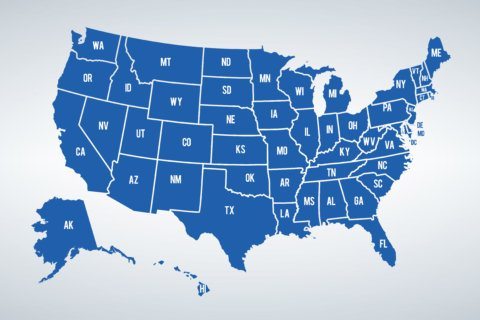
Bills have been signed into law in Republican-dominated Idaho, Louisiana and Oklahoma. In Kansas, a bill is becoming law without the signature of Democratic Gov. Laura Kelly.
Similar bills have been introduced for this year’s legislative sessions in at least seven other states and in Congress. Nassau County, New York, passed a similar measure this year. In 1994, President Bill Clinton signed a law making it a federal crime to intentionally injure or interfere with or intimidate someone entering a place of worship or a reproductive health facility.
The details in the bills differ, but they all make it a crime to interfere with religious assemblies.
Laws against trespassing already apply to disruptions on the grounds of churches or other private property. But legislators say the new laws would boost penalties and bar other protest activity like holding signs near places of worship.
The penalties could be harsher than for trespassing. In some states, people could face up to a year in prison and fines as high as $10,000 for first offenses. The laws also give the states a way to prosecute cases if local authorities decline to do so.
A protest in Minnesota touched off the call for action
Thirty-nine people, including two journalists, were charged in February for roles in a protest during a St. Paul, Minnesota, church service. The protesters had learned that one of the church pastors was also an official at U.S. Immigration and Customs Enforcement who had been overseeing an intensive Minnesota operation.
The U.S. Department of Justice charged the protesters with conspiracy against religious freedom and interfering with the right of religious freedom. The protestors and journalists have pleaded not guilty and the cases are pending in federal court.
Louisiana Rep. Gabe Firment, a Republican, said he was inspired to introduce legislation that allows protestors to be forcibly removed from churches and other places of worship after seeing videos showing the fearful expressions of children at the Minnesota church.
“The first thought that came to my mind was those poor kids,” Firment said. “You certainly have a right to protest, but just like you don’t have the right to come into someone’s home and act like that, you don’t have the right to come into private church property to do that.”
Oklahoma Sen. Todd Gollihare, a Republican, wrote his bill after anti-abortion protestors disrupted his church service last year. His law bars blocking highways within one mile of a service or approaching someone to hand them a flyer within 100 feet of a place of worship.
His Republican colleague, Sen. Kendal Sacchieri, described the law as extreme and said she was afraid of the precedent it would set.
Court challenges could await the laws
The Nassau County ordinance is already facing a court challenge from the New York Civil Liberties Union, which says there’s no history of residents facing intimidation, harassment or violence outside places of worship — and that the statute denies people their constitutionally protected rights of expression in public places.
Kevin Goldberg, vice president at Freedom Forum, which advocates for First Amendment rights, said that if the laws are challenged in courts, governments would have to show there’s a need for them. “You can’t be guessing, you can’t be speculating,” he said. “There has to be some evidence that there’s an actual threat going on — that there’s been a problem there, that you can reasonably forecast there will be a problem.”
In Louisiana, Democrats raised concerns about mandatory jail time for disrupting services and warned that the laws were too arbitrary, suggesting that they could be applied against a congregant for singing out of turn as a pastor delivers a homily.
“If the spirit just hits me and I start singing during the middle of his homily, and it disrupts his homily in a way where he’s got to say ‘Hey, take a seat’, I mean that would materially disrupt his service and now I’m going to jail for 30 days,” Rep. Edmond Jordan said during a March hearing in the Louisiana Legislature.
The law’s proponents said police officers and judges would have discretion about how to apply the law.
___
Mulvihill reported from Haddonfield, New Jersey.
Copyright © 2026 The Associated Press. All rights reserved. This material may not be published, broadcast, written or redistributed.