NEW YORK (AP) — The COVID-19 pandemic’s early death toll was much higher than the official U.S. count, according to a new study that spotlights dramatic disparities in the uncounted deaths.
About 840,000 COVID-19 deaths were reported on death certificates in 2020 and 2021. But a group of researchers — using a form of artificial intelligence — estimate that as many as 155,000 unrecognized additional deaths likely occurred in that time outside of hospitals. That would mean about 16% of COVID-19 deaths went uncounted in those years.
The overall findings, published Wednesday by the journal Science Advances, were close to estimates from other studies of pandemic deaths during that time. But the authors of the new study tried to determine exactly which deaths were more likely to be missing from the official tallies.
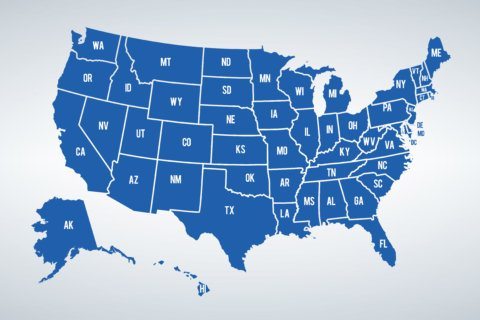
The answer: The undiagnosed dead were more likely to be Hispanic people and other people of color, who had died in the first few months of the pandemic, and who had been in certain states in the South and Southwest — including Alabama, Oklahoma and South Carolina.
Six years after the coronavirus swept through the U.S., barriers remain for many of the same people, said Steven Woolf, a Virginia Commonwealth University researcher not involved in the study.
“People on the margins continue to die at disproportionate rates because they can’t access care,” he said in an email.
Access to care wasn’t the only challenge
While hospital patients were routinely tested for COVID-19, many who grew sick and died outside of hospitals were not tested — often because at-home testing was not readily available early in the pandemic, said one of the study’s authors, the University of Minnesota’s Elizabeth Wrigley-Field.
In some parts of the country, death investigations are handled by elected coroners who don’t necessarily have the specialized training that medical examiners do. Some research has suggested partisan opinions could affect whether a sick person or their family members sought COVID-19 testing, and whether coroners pursued postmortem coronavirus testing. Indeed, some coroners said families had pressed them not to list COVID-19 as a cause of death.
“Our antiquated death investigation system is one key reason why we fell short of accurate counts, particularly outside of big metropolitan areas,” said Andrew Stokes of Boston University, the senior author on the paper.
Death counts were swept up in COVID politics
The Centers for Disease Control and Prevention data count more than 1.2 million COVID-19 deaths since the pandemic erupted in early 2020. More than two-thirds of those reported deaths occurred in 2020 and 2021.
The count has long been debated, as false claims on social media said the number of COVID-19 deaths was inflated. Adding to the rancor was President Donald Trump, who in August 2020 retweeted a post claiming only 6% of reported deaths were actually from COVID-19 — a post Twitter later removed.
To be sure, there were other kinds of pandemic deaths. For example, uninfected people died from other medical conditions because they could not get care at hospitals overloaded with COVID-19 patients. People with drug addictions died of overdoses as a result of social isolation and losing access to treatment. Other studies that have estimated the actual number of pandemic deaths have taken those deaths into account.
But Stokes and his collaborators wanted to focus on the deaths of people infected by the coronavirus. They used machine learning to sift through the death certificates of infected patients who died in hospitals and then used patterns observed in those records to evaluate death certificates of people who died outside hospitals and whose deaths were attributed to things like pneumonia or diabetes.
Scientists’ understanding of the strengths and weaknesses of machine learning-reliant research is still evolving, but Woolf called this team’s use of it “intriguing.”
___
The Associated Press Health and Science Department receives support from the Howard Hughes Medical Institute’s Department of Science Education and the Robert Wood Johnson Foundation. The AP is solely responsible for all content.
Copyright © 2026 The Associated Press. All rights reserved. This material may not be published, broadcast, written or redistributed.