President Donald Trump confirmed in an 8-minute Truth Social video that the U.S. took part in a “major combat operation” in Iran that has since been named “Operation Epic Fury” by the Pentagon.
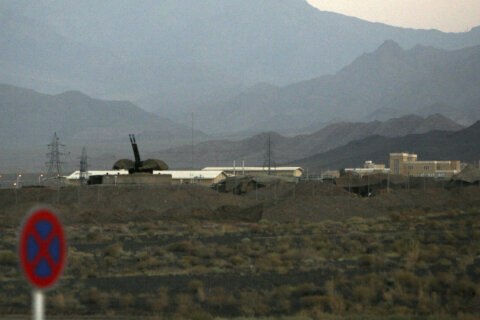
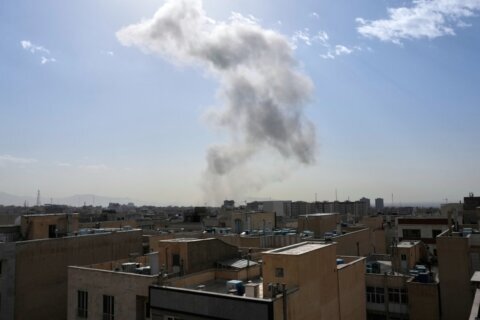
The military operation, which comes after recent nuclear talks between the U.S. and Iran proved unsuccessful, saw some of its first strikes against Iran strike near the offices of the Supreme Leader Ayatollah Ali Khamenei.
The Iranian Foreign Ministry has issued remarks, warning that Iran “will not hesitate” with its response. Counterattacks have been reported across the Middle East, with reports indicating airstrike in Bahrain, Qatar, Kuwait and the United Arab Emirates.
Iranian media has reported that at least 40 people were killed at a girls’ school in southern Iran, and that another 45 individuals were injured in Iran’s Hormozgan.
WTOP national security correspondent J.J. Green joined Ian Crawford earlier to discuss why the airstrikes happened, what the public can expect, and what may be the American cost.
This interview has been lightly edited for clarity.
- Ian Crawford:
J.J., please bring us up to speed on Operation Epic Fury and the developments so far this morning.
- J.J. Green:
This is a massive development this morning. The U.S. and Israel carried out coordinated strikes on Iranian military and nuclear facilities around Tehran. And, what we have been hearing as well, is that the U.S. is intending, along with Israel, to take out the leadership of the Iranian government.
President Donald Trump told the Iranian people to go take that government over, because they will be able to now — it is theirs for the taking. And, in response to this, Iran acted quickly, with the Islamic Revolutionary Guard Corps launching retaliatory missile and drone strikes targeting Israeli territory and U.S. positions in the region, and that includes Qatar.
We are getting reports at this hour that there have been missile dropped and possibly bombs as well, dropping in Qatar. We know as well that the U.S., a couple of weeks ago, moved most of the military personnel away from the Al Udeid Air Base in Qatar because of concerns about what it was going to do and how Iran would respond.
But this is the situation here where the president seems to be intending to decapitate the leadership of that country and give people inside the country the opportunity to take over the government.
Israel is supposedly experiencing some kind of retaliation as well. They have activated, obviously, their air defense system and have been intercepting missiles from Iran. This is, I think, an existential situation for people in Iran right now, certainly the leadership. There probably will be scenarios where there are what we call “collateral damage,” but there is a very active, very dangerous and very serious situation unfolding in Iran and across the Middle East this morning.
- Ian Crawford:
There seems to be the potential for this to unfold very quickly and engulf other countries. What are some of the impacts we could expect from this in the hours and days ahead?
- J.J. Green:
You should expect Iran to fight with everything they have — the military, the Islamic Revolutionary Guard. Earlier this week, it was pointed out that all of the pieces were in place to launch a massive and possibly ongoing military action from the U.S. and Israel. And it was very clear, yesterday, probably about 4 p.m. that something was going to happen, because a source in the U.K. told me, that the British government had told all of its citizens to make sure not to go to Iran, to stay as far away from Iran as they could. That something like this was being planned and was going to be rolled out.
This is no longer a shadow conflict or a proxy warfare scenario. This is overt, a high-risk military engagement, engagement between state actors with strategic economic, geopolitical consequences that extend far beyond the battlefield.
To answer your question, there is the likely response from Iran to go after anyone and anything that’s connected to the U.S. And it wouldn’t just be out in public and out in the obvious. It could be as they’re very good at and very capable of doing, in an asymmetric way, using guerrilla tactics, which could include assassinations, kidnappings and a host of other things that they’re capable of doing, either directly through the IRGC, or, through some of their proxies which are still active.
- Ian Crawford:
Just a modern style of guerrilla warfare?
- J.J. Green:
Yep, absolutely, 100% This is what they’re good at. They are the best in the world.
But at the end of the day this is about what the U.S., what the president was saying about taking out the leadership of that government, leaving that country essentially rudderless for a short time. And he also said, and I’m seeing reports of this, that this could go on for days.
The president has also said that Americans should expect casualties. What that means — I’m not sure whether that means boots on the ground there or not, but he said American lives may be lost.
And, again, he called on Iranians to take over their government, which is going to be bloody. It’s going to be consistent, and it’s going to be widespread way beyond the borders of Iran.
Get breaking news and daily headlines delivered to your email inbox by signing up here.
© 2026 WTOP. All Rights Reserved. This website is not intended for users located within the European Economic Area.