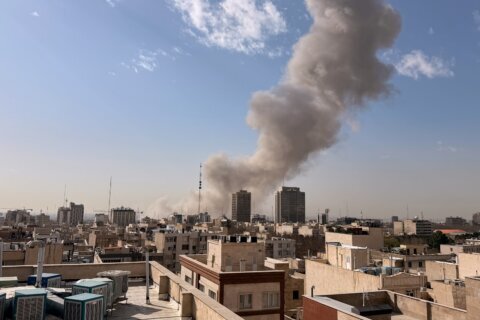
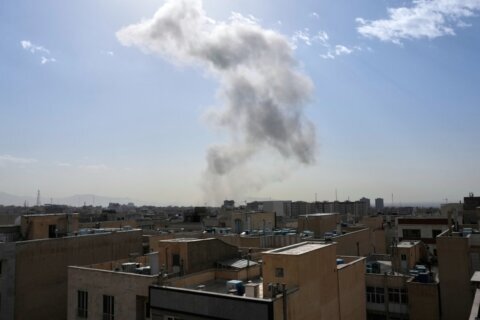
The trigger was unmistakable and thunderous: Joint U.S. and Israeli military strikes on Iran targeted key military infrastructure and, crucially, leadership-linked sites in Tehran and beyond.
The assault, described by Washington as “major combat operations,” struck deep into Iranian territory, hitting command facilities and triggering explosions that echoed across the region. Within hours, Iran’s calculated retaliation erupted.
In an expansive and unprecedented counterattack, Tehran launched waves of ballistic missiles and drone salvos across the Middle East. Air defenses lit up skies from Israel to the Gulf. The United Arab Emirates, Qatar, Bahrain, Kuwait, and Jordan all reported incoming missile and drone activity within or near their airspace. In Abu Dhabi, falling debris from an intercepted missile killed a civilian, a stark reminder that this confrontation has crossed beyond hardened military zones into civilian life.
The retaliation struck not just at Israel but at U.S. military infrastructure across the region. Bahrain confirmed that areas near the U.S. Navy’s Fifth Fleet headquarters were targeted, and regional bases from Qatar to Kuwait and the UAE were under fire. Iranian officials declared the campaign, labeled “Truthful Promise 4,” would continue “relentlessly” until the United States and its allies are “decisively defeated.”
At the same moment, global civilian life was caught in the crossfire. Major international airlines suspended or diverted flights as airspace closures rippled through Iran, Iraq, Israel, Kuwait, and Bahrain. Nearly 40% of flights to Israel were canceled as one of the world’s busiest aviation corridors became an active conflict zone.
The offensive that triggered this retaliation followed months of escalating tensions, including failed diplomacy over Iran’s nuclear program and Tehran’s refusal to curb missile capabilities. Both U.S. and Israeli leaders framed their strikes as necessary to dismantle threats and, in public addresses, urged the Iranian populace toward political transformation, language Tehran interpreted as existentially hostile.
International reactions have been swift and severe. Russia condemned the U.S. — Israeli strikes as “unprovoked aggression,” accusing Washington and Tel Aviv of pursuing regime change under the pretext of nuclear concerns and warning that the attacks risk humanitarian, economic, and regional catastrophe.
This is no mere exchange of blows. It is a full retaliation cycle spanning sovereign states, ballistic barrages, intercepts over cities, threats to U.S. bases, civilian casualties, and diplomatic firestorms. The moment is precarious. Ballistic missiles traverse skies in minutes. Air defenses make instant decisions. Leaders are pressed to act under compressed timelines and incomplete intelligence.
History shows that once war’s threshold is broken, once leadership targets are struck and missiles darken multiple skies, conflicts rarely remain contained.
The Middle East is no longer on the brink. It is in motion.
Get breaking news and daily headlines delivered to your email inbox by signing up here.
© 2026 WTOP. All Rights Reserved. This website is not intended for users located within the European Economic Area.