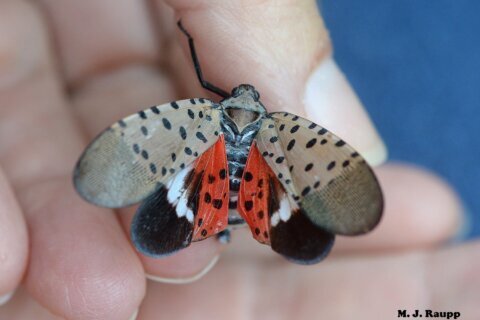
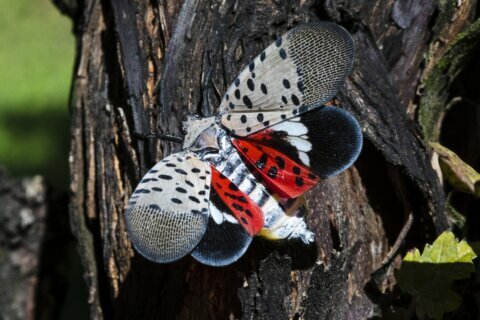
Montgomery County, Maryland, is staring down a population boom in Maryland — not of people, but of pests.
County transportation officials say residents should expect a dramatic increase in spotted lanternflies over the next three to five years.
Originally from Southeast Asia, the invasive insects were first spotted in the U.S. in Pennsylvania back in 2014, and made their way into Maryland in 2018.
By 2022, they’d reached Montgomery County — and they haven’t let up since.
“The further northeast you are, the worse it’s going to be,” said Ashley Dykes, an arborist and entomologist with the Montgomery County Department of Transportation’s Highway Services Division.
“In certain parts of the County, particularly areas such as Damascus and Brookeville, while it’s not quite on par with peak cicada season numbers yet, we are getting there.”
That comparison is to 2021’s Brood X cicadas, a literal bug blizzard for parts of the region.
Lanternflies come with their own brand of nuisance.
The good news, according to MCDOT, is that they don’t sting, bite or carry toxins — meaning pets are safe, even if they decide to snack on one. They also don’t cause long-term damage to most trees.
But they do feed off tree sap, especially from the invasive tree of heaven plant. As they feed, they excrete a sugary substance called honeydew, which grows a sooty black mold and causes a sticky mess.
Residents are urged to avoid parking near tree of heaven plants and inspect vehicles when traveling between areas with lanternfly activity — the bugs are notorious for hitching rides. Still, Dykes says, “Squashing them will not really help. The population is well-established at this point.”
Instead, MCDOT is asking residents to focus on destroying the next generation. Starting late summer through early winter, lanternflies lay their eggs in gray, putty-like columns that can stretch over an inch long. These egg masses show up on trees, stones and just about any hard surface. If you see them, officials say: scrape them off, seal them in a bag, smash them and toss them.
At the moment, there are no plans to remove Tree of Heaven from county property. But education and vigilance remain key.
“We know the presence of an invasive species can cause concern for our residents,” said MCDOT Director Chris Conklin. “Although a nuisance, we do not expect to see a widespread negative impact on our native plants or species.”
Get breaking news and daily headlines delivered to your email inbox by signing up here.
© 2025 WTOP. All Rights Reserved. This website is not intended for users located within the European Economic Area.