This article was republished with permission from WTOP’s news partners at Maryland Matters. Sign up for Maryland Matters’ free email subscription today.
The House gave final approval Monday to a bill that would redraw the state’s eight congressional districts, following an exhaustive four hours of passionate, sometimes personal debate.
The House passed House Bill 488 by a vote of 99-37 that broke mostly along party lines: Del. Sheree Sample-Hughes (D-Lower Shore) joined 36 Republicans voting against the measure.
The bill now heads to the Senate, where it is expected to stall. Senate President Bill Ferguson (D-Baltimore City) and the Democratic majority in the chamber have long said they are opposed to redistricting in the middle of a decade, and fear it could backfire on Democrats seeking an advantage in this fall’s elections.
Even so, House Speaker Joseline Peña-Melnyk said she hopes Ferguson will soften his stance. She pointed to Republican states that have redistricted already in an effort to get a leg up in this fall’s congressional elections.
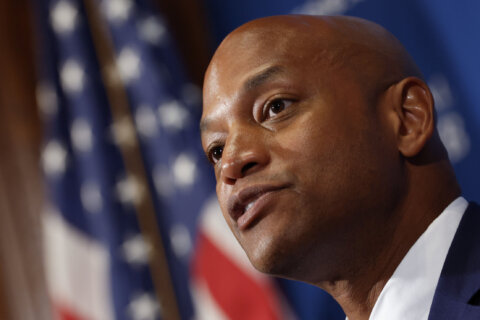
“I have spoken to the Senate president respectfully,” Peña-Melnyk said during an appearance on MSNOW with Gov. Wes Moore (D), moments after the vote. “I have told him that Florida is next. They have already called a special session for April, and this is simply the right thing to do. We must meet the moment.”
But the bill is likely to be assigned to the Rules Committee in the Senate. Most of the committee members are also part of Ferguson’s leadership team. The committee holds no hearings, does not meet regularly and has no staff. It serves as a legislative island of misfit toys for late-filed or unwanted bills.
Pressure on Ferguson and Senate Democrats by redistricting supporters has intensified over the last week, with Moore and Lt. Gov. Aruna Miller calling and texting senators in recent days.
Ferguson is expected to meet with reporters Tuesday morning. His spokesperson declined comment Monday following the House vote.
That vote followed hours of debate in the House, when each side reiterated its position on the bill: Republicans call it nothing more than a “rigged” process to eliminate the one GOP-held seat in the state’s congressional delegation, Democrats saying that the new map is both more fair and a necessary response to partisan redistricting in other states being driven by President Donald Trump (R).
Ferguson has repeatedly said he believes approval of a new map would not pass judicial muster. Additionally, he said he believes passage would reopen a 2022 court case that led to the state’s current map, where Democrats enjoy a 7-1 advantage.
That compromise came after a successful legal challenge, led by Del. Kathy Szeliga (R-Baltimore County), to a map that would have made all eight congressional districts in the state favorable to Democratic candidates. A state judge rejected that map, calling it a product of “extreme partisan gerrymandering.”
On Monday, Szeliga said she would go back to court if the current proposal becomes law.
“The Maryland courts already condemned intentional discrimination, voter dilution and retaliation based on a political party,” Szeliga said during the House debate.
“But you know what? Maryland Republicans, we won’t be erased,” she said. “We will not be silenced, and we will not accept this. We will see you in court, and once again, the Maryland Constitution will uphold our position and strike down this bill.”
Moore, in response to questions about the legal sufficiency of the proposed map, said “we have been working with lawyers and working judges.”
His office did not respond to a reporter’s question regarding judicial involvement, but the comment drew swift rebukes from House and Senate Republicans.
“Governor Moore’s admission on national television that he is trying to persuade judges to back a partisan gerrymander is extraordinary and inappropriate,” said Senate Minority Leader Stephen S. Hershey Jr. (R-Upper Shore).
Ex parte communication with judges, especially in cases that could come before them, is typically frowned upon.
In 2002, then-Senate President Thomas V. Mike Miller Jr. called two judges on what is now called the Supreme Court of Maryland to discuss a pending challenge to the state’s legislative redistricting maps at the time. The incident was reviewed by the Maryland Attorney Grievance Commission. Miller, an attorney and the longest-serving Senate president in state history, was not sanctioned but later told reporters he attended a class on professional conduct.
“If Governor Moore believes his map is lawful, he should defend it openly and, on its merits, — not pressure the judiciary behind the scenes,” Hershey said. “Marylanders deserve a governor focused on the people and the process, not one auditioning for national political favor at the expense of our institutions.”
House Minority Leader Jason C. Buckel (R-Allegany), who is an attorney, said such contact is inappropriate by potential litigants.
“It’s an absolute no-brainer. You cannot communicate with judges when they hear the case, regardless of what your posture is,” Buckel said. “If you do, the only remedy is for them to recuse themselves.”