This article was republished with permission from WTOP’s news partners at Maryland Matters. Sign up for Maryland Matters’ free email subscription today.
When it comes to solving Maryland’s significant housing shortage, the Moore administration believes that time is of the essence — and that current state processes aren’t moving fast enough.
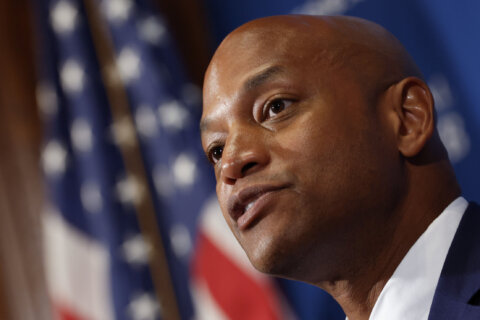
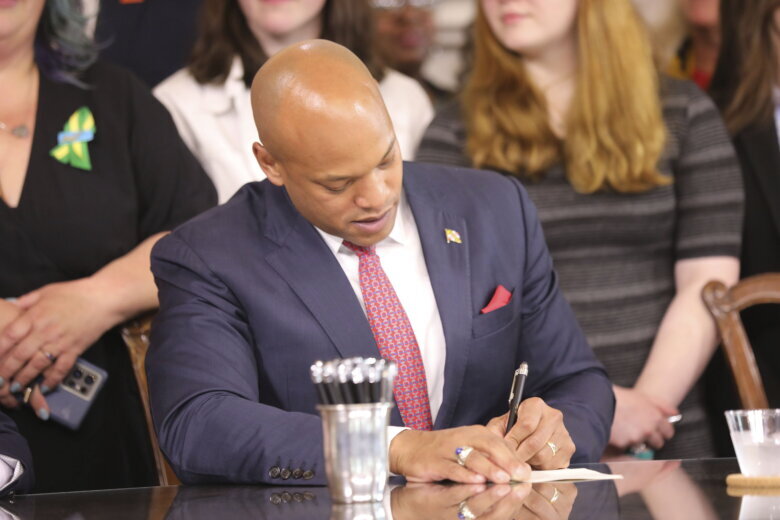
Gov. Wes Moore (D) signed an executive order Wednesday that aims to reduce administrative hurdles to new housing projects across the state and hasten the development of new units.
“This executive order can be wrapped up in one word – speed,” Moore said at a signing event at the Legacy at Twin Rivers housing complex in Howard County.
“We need to move faster to build new homes. We need to move faster to make homes more affordable and protect our renters. We need to move faster to create a housing market that is more competitive,” he said.
The executive order aims to fast-track housing development to reduce the approximately 96,000-unit shortage Maryland currently faces. That shortage was driven by “insufficient housing construction over the last 15 years,” said the order, which said the lack of affordable housing options has created an “imminent threat of widespread social and economic disruption.”
“We believe that housing is a foundation on which we will build everything else,” Moore said. “If you want to create wealth, start with housing. If you want to create jobs, start with housing. If you want to attract new businesses, create housing.”
To counter stagnating housing development, the order instructs state agencies to cut red tape in the approval process for new housing projects, prioritize development near transit, and identify surplus state-owned land for potential sites of new affordable housing development opportunities.
Moore added that environmental impacts and community voices will still be considered but that the state must “not allow process to institute paralysis.”
The order also creates a state housing ombudsman to oversee permit-approval processes and offer recommendations about where those processes could be improved. In addition, the Department of Housing and Community Development will establish housing targets for the state and each jurisdiction every five years, starting in January. The agency will also track the progress of jurisdictions.
Some of the priorities outlined in the executive order already exist in state law, but housing officials say the current framework must work faster to address the state’s housing needs.
“Housing doesn’t just happen. It’s planned, it’s designed, and it’s thoughtful,” Housing Secretary Jake Day said at Wednesday’s event. “We’re taking another critical step toward ensuring everyone in Maryland has access to a safe, affordable place to call home.”
The executive order follows Moore’s previous efforts to boost housing supply in the state – some that were successes and some, not so much.
During the 2024 legislative session, the General Assembly passed Moore’s three-pronged housing package to incentivize higher-density housing, among other initiatives.
But Moore did not fare so well in this past session, when he proposed legislation that tied housing development initiatives to areas with high job growth. It did not get its first hearing until March and quickly faced criticism from local officials. Lawmakers struck the original bill and replaced it with language that granted vesting rights for developers, among other measures. The legislation ultimately died in a Senate committee.
This year, the administration has already started workshopping “predecisional” bill language with county officials to get a conversation going well before the start of the 2026 legislative session.
“The reality is simple folks – without housing, we cannot solve the housing affordability crisis,” Day said Wednesday. “Nearly one in three Maryland families are cost-burdened by rent or mortgage payments. More than half of the renters in this state, 53%, are paying greater than 30% of their income just to keep a roof over their heads, and that is unacceptable.”
YOU MAKE OUR WORK POSSIBLE.
Maryland Matters is part of States Newsroom, a nonprofit news network supported by grants and a coalition of donors as a 501c(3) public charity. Maryland Matters maintains editorial independence. Contact Editor Steve Crane for questions: editor@marylandmatters.org.