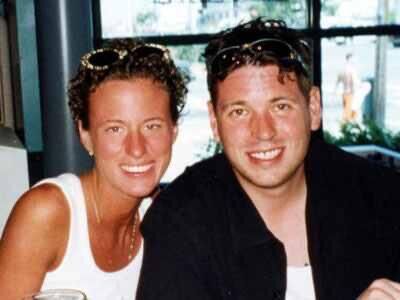
Jesse Dougherty was among those who lost their jobs Wednesday as part of the mass layoffs that gutted the staff of the D.C.-area’s hometown newspaper, The Washington Post.
The newspaper laid off one-third of its staff, eliminating its sports section, several foreign bureaus and its books coverage in a widespread purge that represented a brutal blow to journalism and one of its most legendary brands, The Associated Press reported.
Dougherty joined the paper in 2017. He spoke with WTOP evening anchor Nick Iannelli and shared what he and his colleagues felt upon hearing the news.
Listen below or read the transcript, which has been lightly edited.
- Nick Iannelli :
The Washington Post announced layoffs that will end its sports section and reduce its local and international coverage. The paper is cutting about 30% of its staff, including more than 300 newsroom jobs.
Executive Editor Matt Murray told employees that the paper has been losing money for far too long and isn’t meeting the needs of its readers. Washington Post sports reporter Jesse Dougherty was among those laid off today.
- Jesse Dougherty:
I’ve been angry. I’ve been mad, I’ve been frustrated. I’ve been confused at what has been an information vacuum for a lot of this until today. To be honest, at least today, I’m just sad. I’m just really sad for people who, up until the email notice came out, just wanted to do good work. I’m sad for the communities we won’t cover quite as well. I’m sad for the communities we’ll no longer cover it all.
I counted the other day — I wrote 2,011 stories for The Washington Post from February of 2017 to now, almost nine years, and there wasn’t one time where I saw my byline either online or in the paper, and it didn’t feel special.
There’s so many emotions. There’s so many things to feel about our management, our owner, whatever it may be, but I think just a really deep and profound sadness is what I’m feeling right now.
- Nick Iannelli:
You mentioned there was something of an information vacuum within The Washington Post, and you weren’t sure what was coming. We knew that there were going to be cuts, we knew they were going to be significant. But were you and your colleagues surprised when you saw the breadth of the cuts?
- Jesse Dougherty :
It’s been a few weeks now of rumors, both internally and in the media. It’s just been a really hard waiting period, a lot of dread, a lot of nostalgia for all the great stories and times we had. I don’t think there was much blindsiding today.
Now, as the news trickled to everyone over the last month, there was definitely blindsiding that the Post would take such a drastic action and ax the entire sports section. But as far as the actual, “You’re all laid off now, and we’re going in a new direction.” When that was announced, I think we all knew it was coming.
- Nick Iannelli:
And it sounds like everybody got the news a little bit differently. We were seeing on social media that reporters in war zones, for example, got the news and that was just a devastating experience for them. As far as the local coverage that’s going to be lost with these cuts, do you think that this is transforming The Washington Post into an outlet that is simply not a local outlet anymore?
- Jesse Dougherty:
Yeah. I mean, certainly there’s not going to be sports coverage in the way there was. I do know that there’s a small metro staff still around, and it might not be the same number of people covering the area, but every person who’s there is going to do that to a level that you can’t find almost anywhere else, if anywhere else. So while obviously this does not feel like The Washington Post of 10 hours ago, let alone 10 years ago. I do know that anyone there who is assigned to a local role, who made it through these devastating cuts, is going to just give it 150% to inform the community.
And the sad part about the question you’re asking is that information to communities, to people who open up the paper to know what their favorite sports team did, or what’s happening on their corner, or what restaurants are opening in their area, or why that restaurant closed, or what their local government is doing, that information and that reporting is more essential than ever at a time when the freedom of the press is being challenged every day, at a time when trust in the press is being challenged and stretched every single day.
What The Washington Post is funding less right now and taking away a lot of ways, is at a real inflection point, and that’s what makes me the most sad about what’s happening.
- Nick Iannelli :
I’m sure a lot of listeners have been on social media and have seen disappointed Washington Post subscribers deciding to unsubscribe because of this news. Maybe you’ve even seen a screenshot on social media of somebody who has canceled their subscription and has said, “That’s it. That’s enough. I’m not going to be supporting this anymore.”
You have to have mixed emotions being someone who just got laid off seeing things like that.
- Jesse Dougherty :
I’m certainly not in the business at the moment of trying to help the people at the top who profit off this newspaper or stand to profit, but for those who have the thought of canceling their subscription right now, I think I can speak for a lot of my laid off colleagues and say while it feels good to know you have our backs, investing in media and investing in storytelling and investing in information is really, really, really critical right now.
And there’s so many people that I work with, or worked with, that are going to keep going, and they’re going to keep telling stories and trying to find information, and they need people to support that work more than ever. So if your knee-jerk reaction is to cancel a subscription over this, I would just say that it just might not be exactly what we need at the moment.
Get breaking news and daily headlines delivered to your email inbox by signing up here.
© 2026 WTOP. All Rights Reserved. This website is not intended for users located within the European Economic Area.