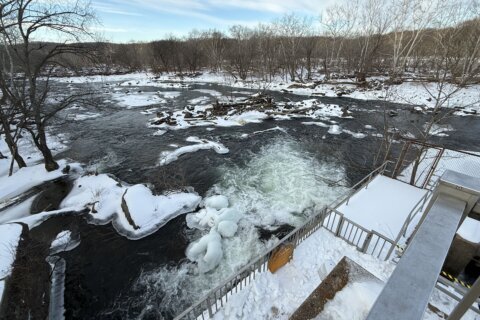
The large sewer pipe that collapsed on Jan. 19, resulting in millions of gallons of wastewater being spilled into the Potomac River, is going to take four to six weeks longer to repair.
That’s because D.C. Water has discovered a giant rock dam south of the site of the original collapse.
“This will require us to bring in additional equipment to remove the obstruction,” said D.C. Water spokesperson Sherri Lewis, adding the sewage flow has been successfully bypassed around the failed pipe, known as the Potomac Interceptor.
“These giant industrial vacuums that we use can’t suck the boulders out because they are so big,” she said.
Personnel will have to go into the pipe to remove the rocks manually. Additional pumps are being brought in from Texas and Florida to complete the task, but that will add more time to complete the repairs.
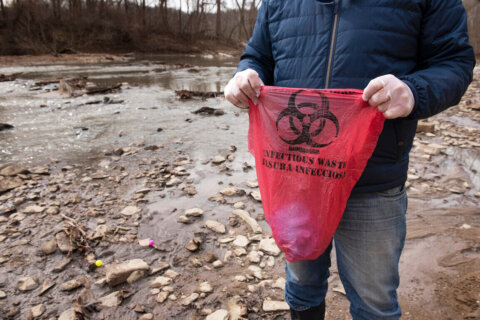
In the meantime, water quality tests conducted by the University of Maryland and the Potomac Riverkeeper Network have found alarmingly high levels of E. coli and Staphylococcus aureus, which causes staph infections, in several samples taken from Jan. 21 to Jan. 28.
Contamination levels are much higher near the break site, which is in Montgomery County along the C&O Canal and Clara Barton Parkway. But bacterial contamination has been detected nine miles down river.
Potomac Riverkeeper Dean Naujoks urged the local health departments to issue a public alert about the contamination.
“We’re getting calls and emails literally every day from people who are concerned,” Naujoks said. “We’re demanding that these public health agencies in Maryland and most importantly D.C. do their jobs and start protecting public health and just err on the side of caution and issue an advisory.”
Leaders of the Washington Aqueduct have said drinking water isn’t being impacted by the spill. The main pumping station that supplies water to the aqueduct is several miles north of the failed pipe.
A station closer to the spill site has been offline since before the break — and the aqueduct’s general manager said it will stay that way until water quality levels are back to normal.
D.C. Water will build a large pit upstream of the collapse site in order to access the existing sewer line and to install new, high-capacity pumps. Five more pumps — coming from Florida and Texas — will increase the pumps on site to 13 and expand the capacity to more than 100 million gallons per day, allowing the diversion of wastewater so crews can safely remove the rocks.
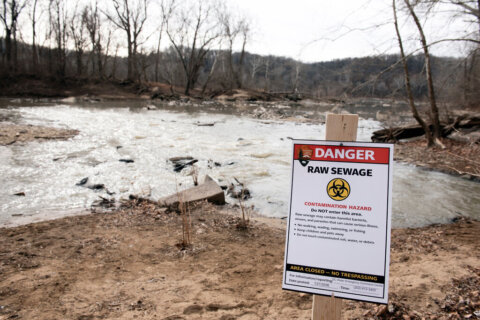
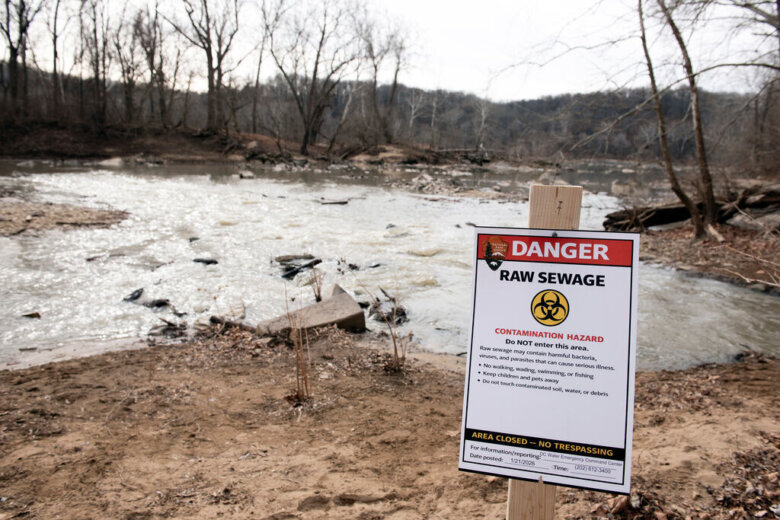
D.C. Water has put up signs along the C&O Canal at river access points alerting people to the dangers of coming into contact with the water.
Get breaking news and daily headlines delivered to your email inbox by signing up here.
© 2026 WTOP. All Rights Reserved. This website is not intended for users located within the European Economic Area.