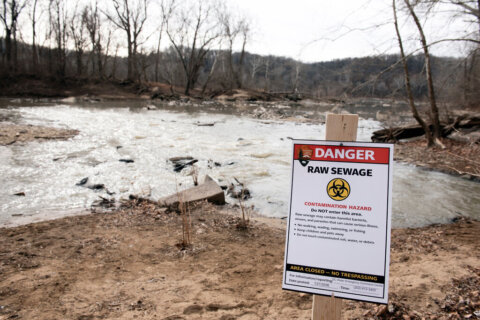
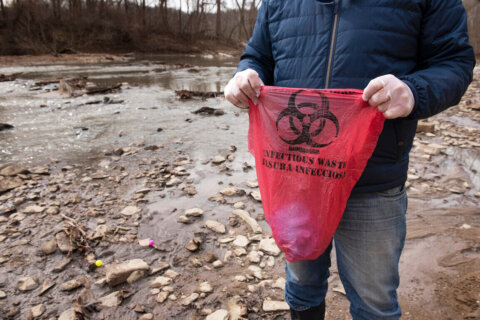
More than 200 million gallons of sewage have spilled into the Potomac River this month, creating an ecological disaster. Bacteria levels near the break, which occurred just south of the American Legion Bridge, have soared, but on Friday morning the leaders of the Washington Aqueduct worked to reassure and explain why drinking water isn’t being impacted by the spill.
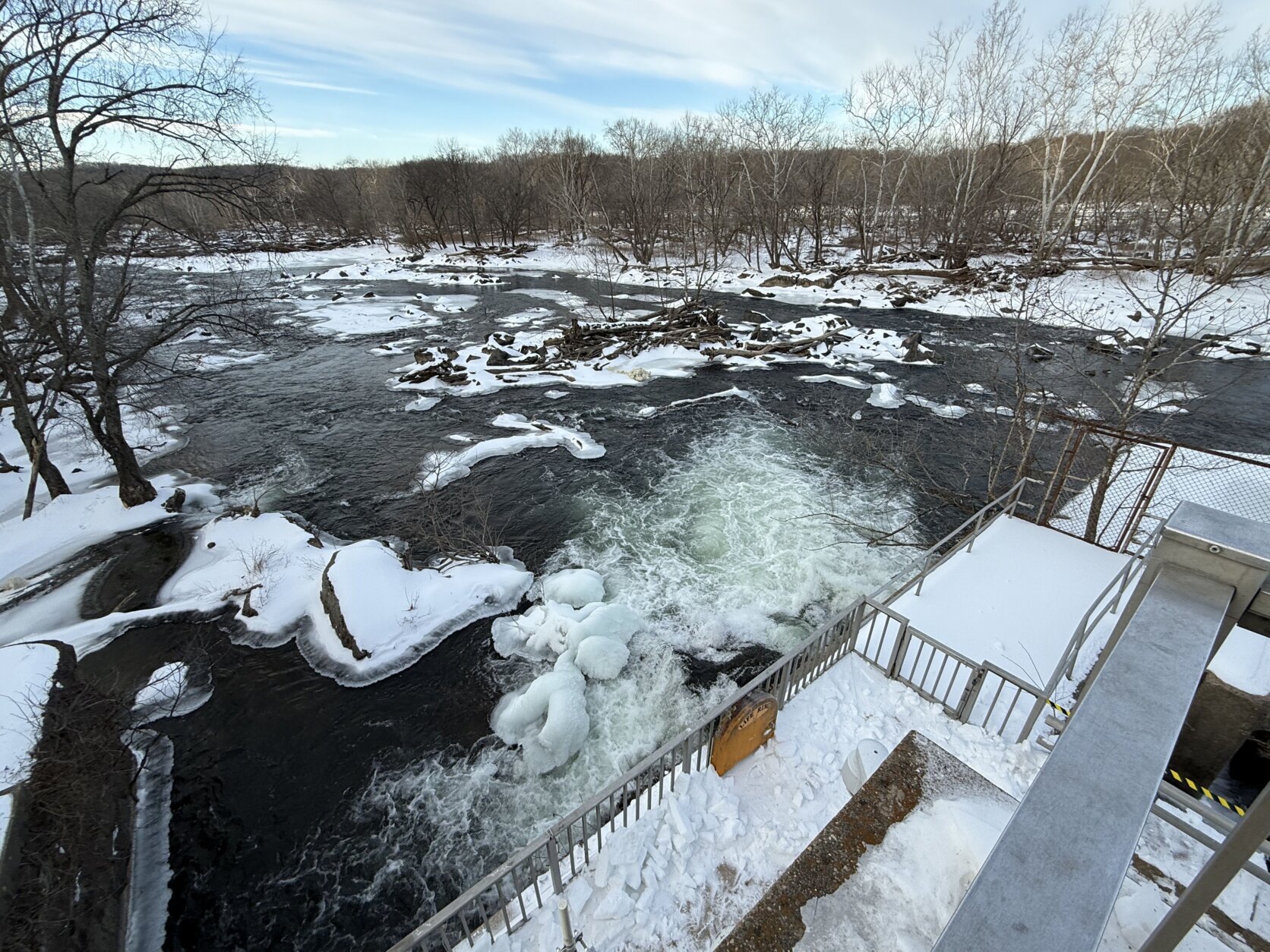
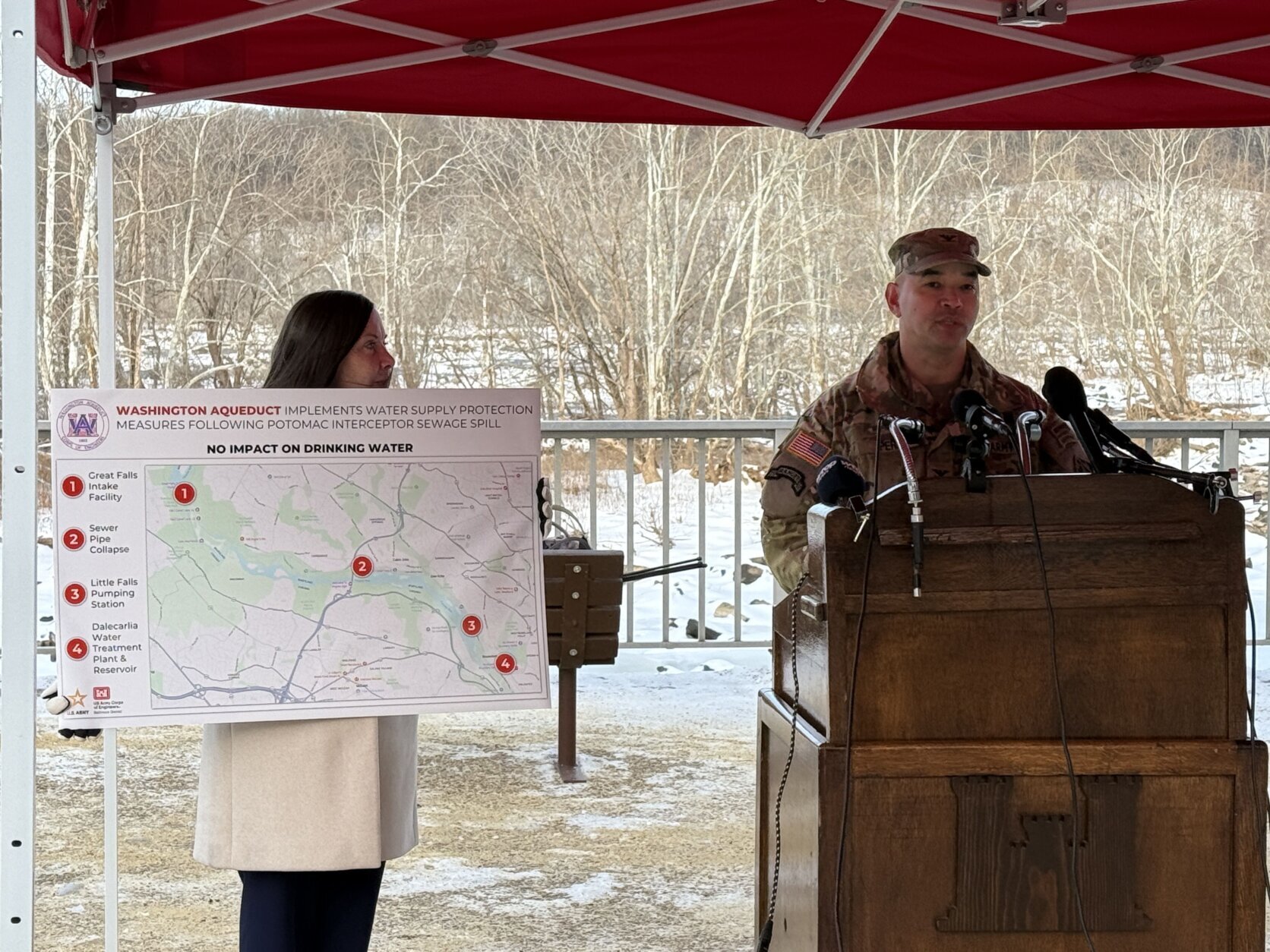
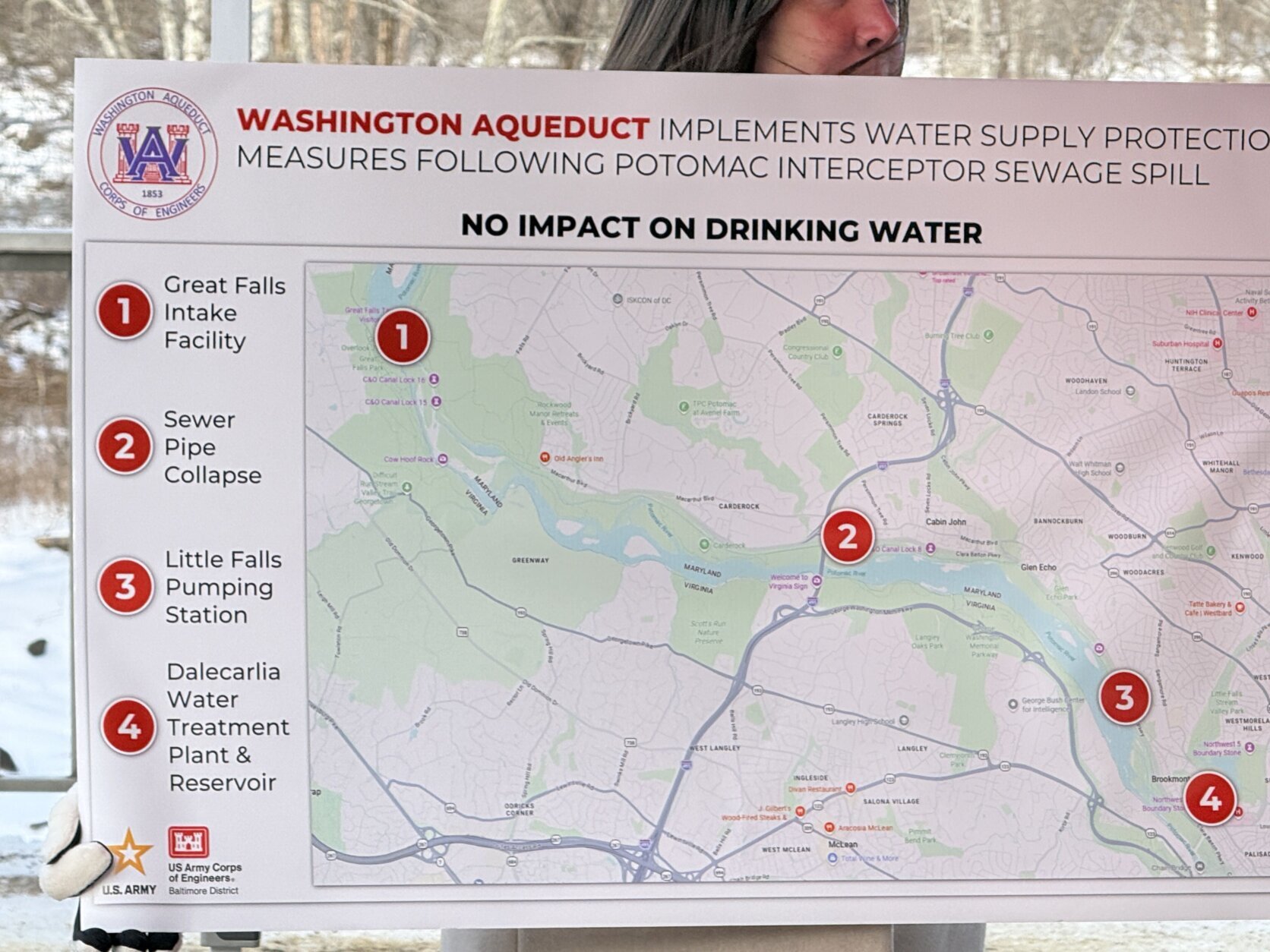
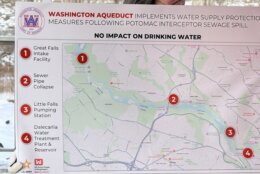
The main pumping station that supplies water to the aqueduct, which provides the water for D.C., and Fairfax and Arlington Counties, is the Great Falls station which is several miles north of the spill.
“Our water quality is excellent,” said Rudy Chow, the general manager of the aqueduct. “We meet and exceed all EPA environmental requirements under the Safe Drinking Water Act.”
Water quality testing, which is normally done five days a week, has been bumped up to seven days during this incident. Downstream of the spill sits the Little Falls Pumping Station, and it’s a different story there.
“The sample results are very high concentration of bacteria and fecal coliforms, as well as E. coli,” Chow said. While bacteria levels have gone down a bit since D.C. Water stopped the overflow a week ago, it’s still thousands of times above the normal average.
But the Little Falls station is only operated when the river isn’t flowing as strong into the Great Falls Station — typically in the summer — when demand is also up. Little Falls Station has been offline since before the break, and isn’t expected to be needed anytime soon. He vowed it wouldn’t go back online until water quality levels are back to normal either.
“We’re not taking any water from there at all,” Chow said. “Our water is all upstream from here, and the concentration and water quality is normal as always.”
Chow is confident that number will continue to drop as long as there’s no more spill and the rest of the river keeps diluting the sewage as it flows south. The Army Corps of Engineers said the sewage spill also isn’t affecting water treatment at the Dalecarlia plant in Northwest D.C.

Get breaking news and daily headlines delivered to your email inbox by signing up here.
© 2026 WTOP. All Rights Reserved. This website is not intended for users located within the European Economic Area.