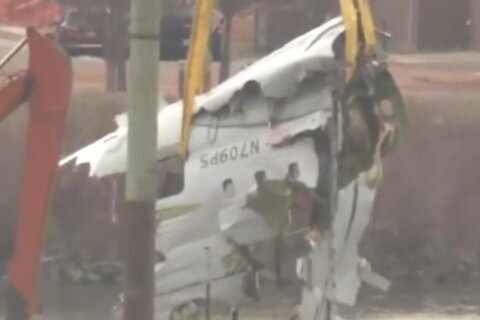
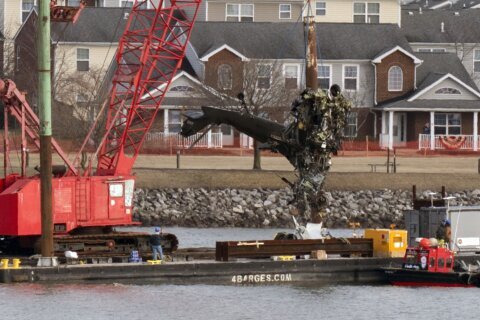
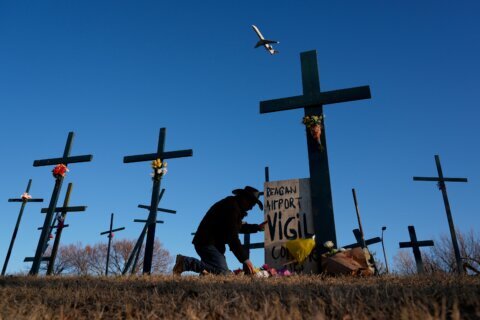
On the anniversary of the D.C. plane crash that claimed the lives of 67 people, WTOP takes a look back in our series “Disaster on the Potomac, 1 year later” — and the changes that followed in its aftermath. Find it this week on air and here on WTOP.com.
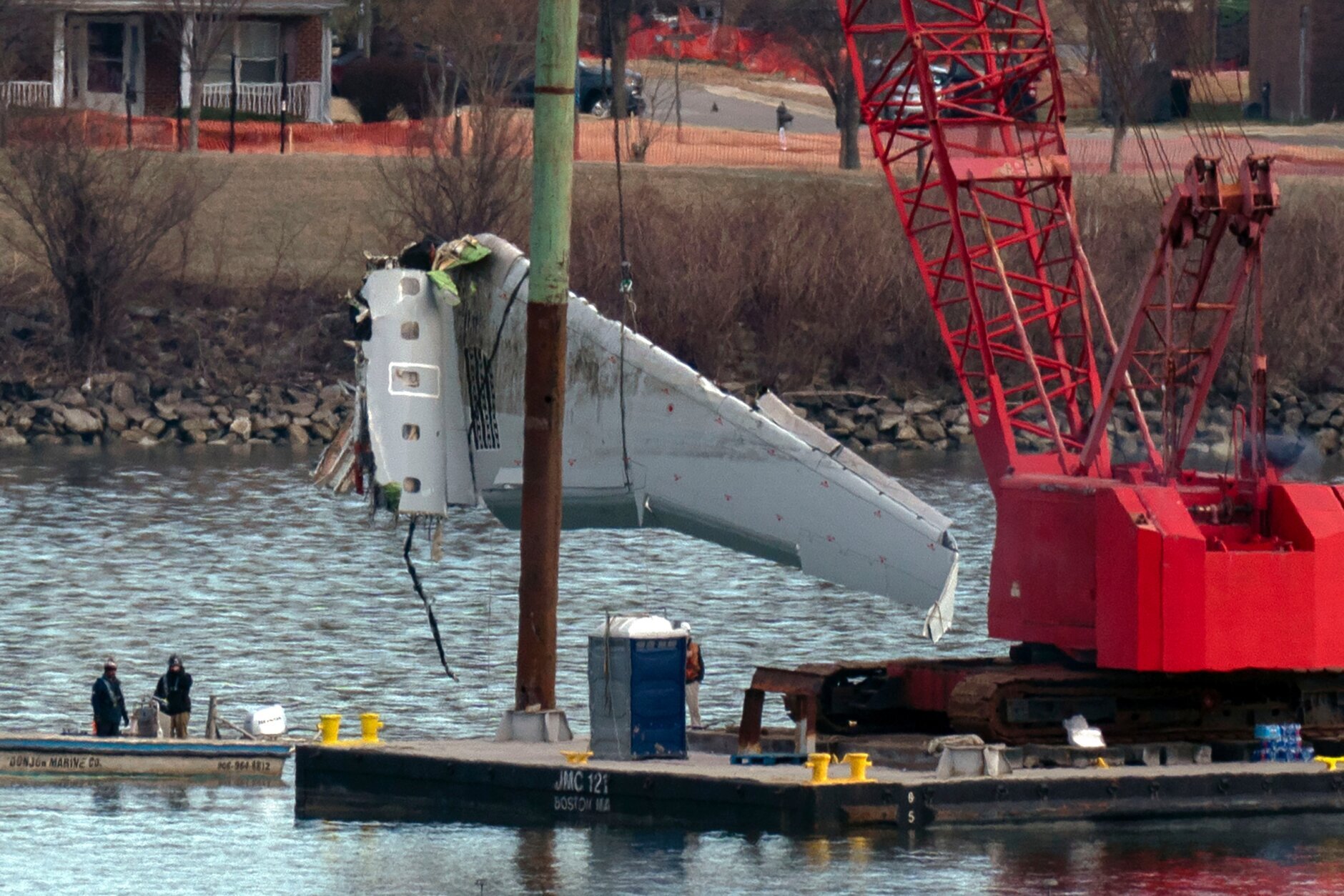
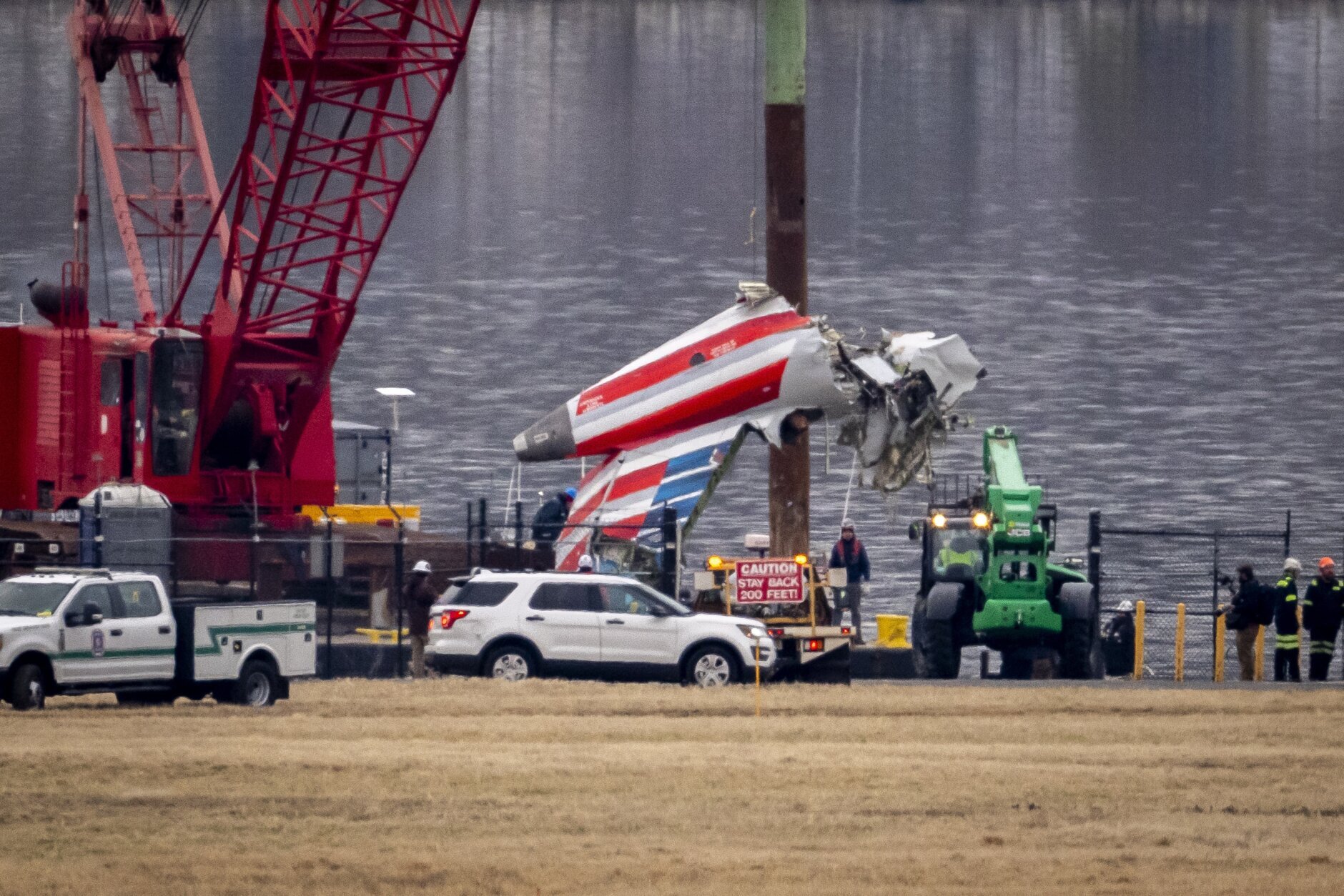
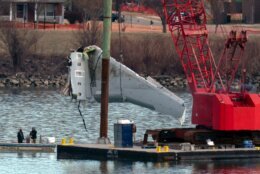
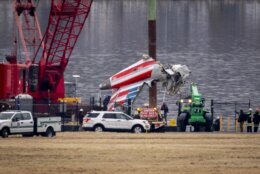
Exactly one year ago, the nation’s deadliest plane crash in decades occurred over the Potomac River, when an American Airlines regional jet on approach to Reagan National Airport in Arlington, Virginia, crashed with an Army helicopter on a training flight.
Everyone on board both aircraft — 64 in the plane and three in the helicopter — were killed. The midair collision vaulted air safety issues into the spotlight, and changes have been made to operations in the D.C. airspace as a result.
More changes are likely to come.
“There are several lessons learned that are coming out of this. One of them is that the DCA airspace needs to be redesigned,” said Jeff Guzzetti, former safety investigator for the National Transportation Safety Board and Federal Aviation Administration.
“Another one is that there were warning signs flashing about the deficiencies in the DCA airspace, and no one seemed to take any action on that.”
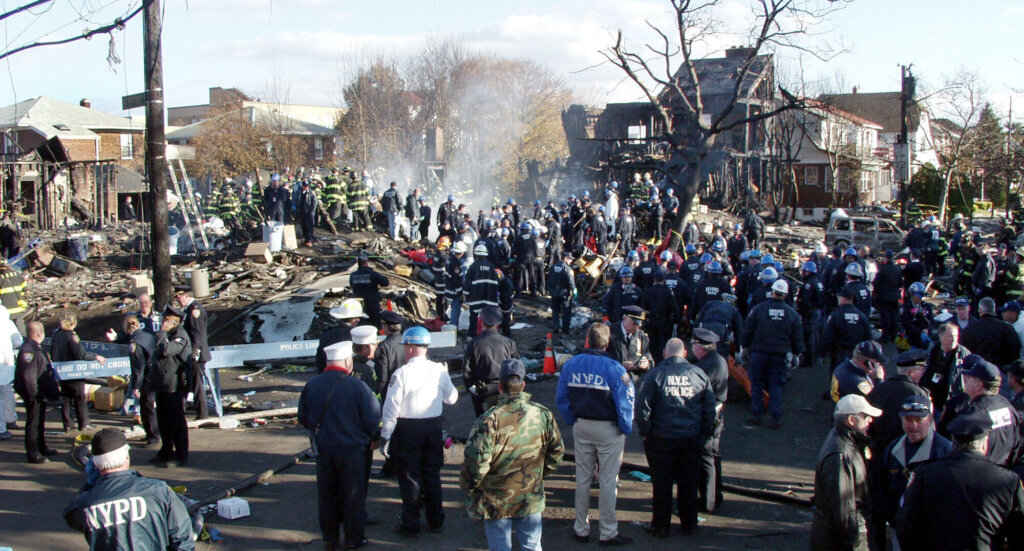
The crash was the deadliest air disaster in the U.S. since the November 2001 crash in Queens, New York, that claimed 265 lives.
“The Army had some lessons learned regarding how they conduct operations and the experience levels of their pilots and the air worthiness of their helicopters that need to be on par to mix it up with commercial airliners. And then it’s just the overall message that complacency and inaction can lead to accidents,” said Guzzetti, who’s now an independent aviation consultant based in D.C.
It became clear in the months after the crash that there were warning signs of a potentially catastrophic event, as reported by the Washington Post and other news agencies. The NTSB found there had been dozens of near misses in the airspace around Reagan National in the years leading up to the crash.
“No one seemed to take confirmed action on that,” he said. “There were a lot of people that were concerned about it, and tried to elevate those concerns, but I think that the politics of the matter, the fact that DCA airport is beloved by politicians and D.C. residents, that seemed to be a barrier to having any change happen to improve the situation.”
In the aftermath of the 9/11 terrorist attacks, the FAA placed additional restrictions on where planes can and cannot fly around Reagan National, due to its proximity to the Pentagon, White House, U.S. Capitol and other national landmarks. As a result, pilots must navigate several narrow corridors on approach to the airport.
Threading the needle
Overworked air traffic controllers are also tasked with moving additional flights in an airport designed and built in the early 1940s, sometimes using equipment that was installed 40 years ago. FAA officials said upgrades are desperately needed.
While the airport has three runways, the main runway, 1/19, is the busiest in the U.S. On the night of the crash, the passenger jet flew north up the Potomac River and crossed the Woodrow Wilson Bridge. While on approach to runway 1, controllers made the decision to change the landing to the shorter runway 33. The plane then made a slight right turn to line up with runway 33 and put it on final approach.
A departing airplane needed some additional time, and it was believed the smaller regional jet could safely land on the shorter runway. It was the type of routine decision made dozens of times by controllers to make sure there was sufficient spacing between departing and arriving jets.
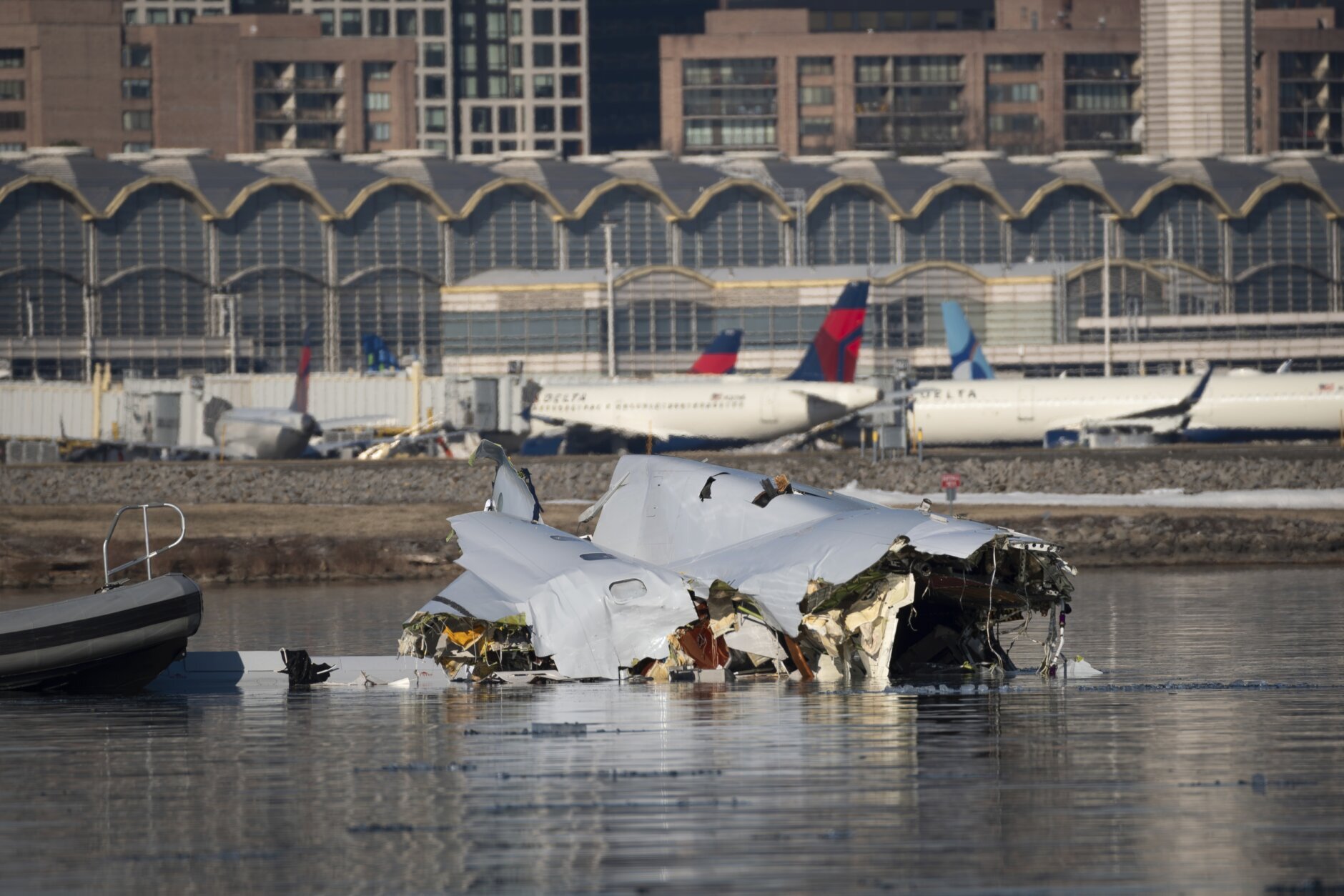
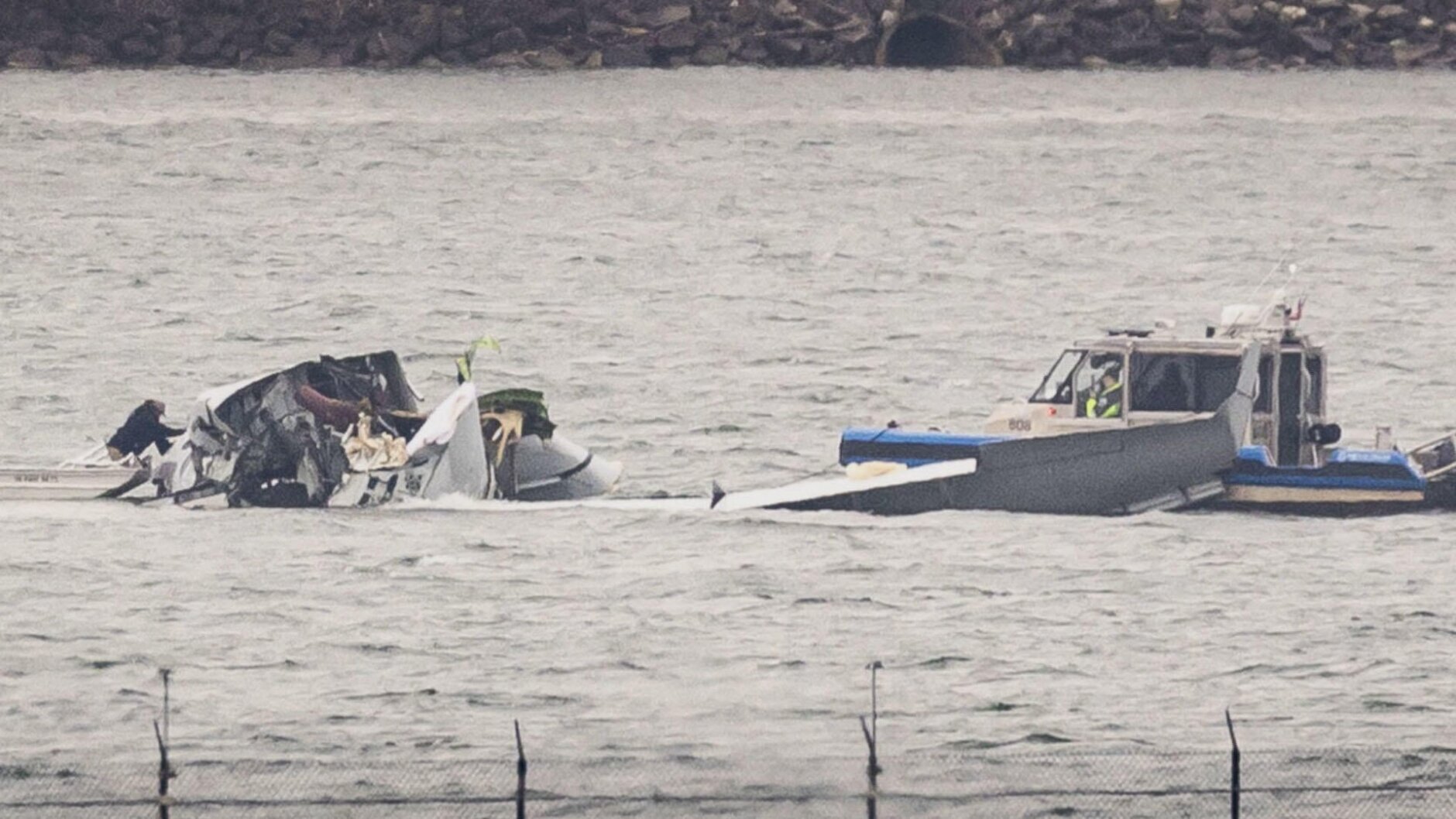
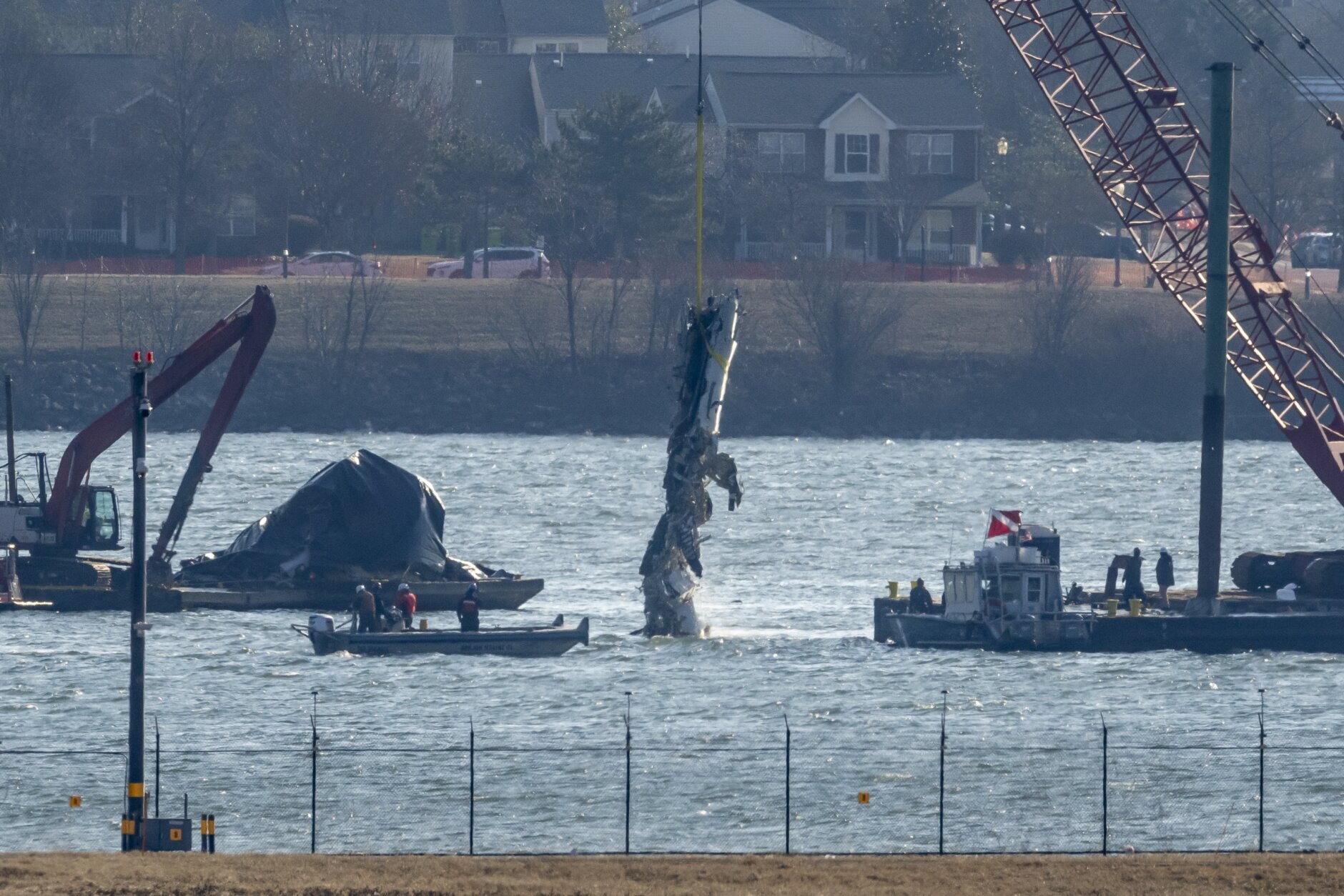
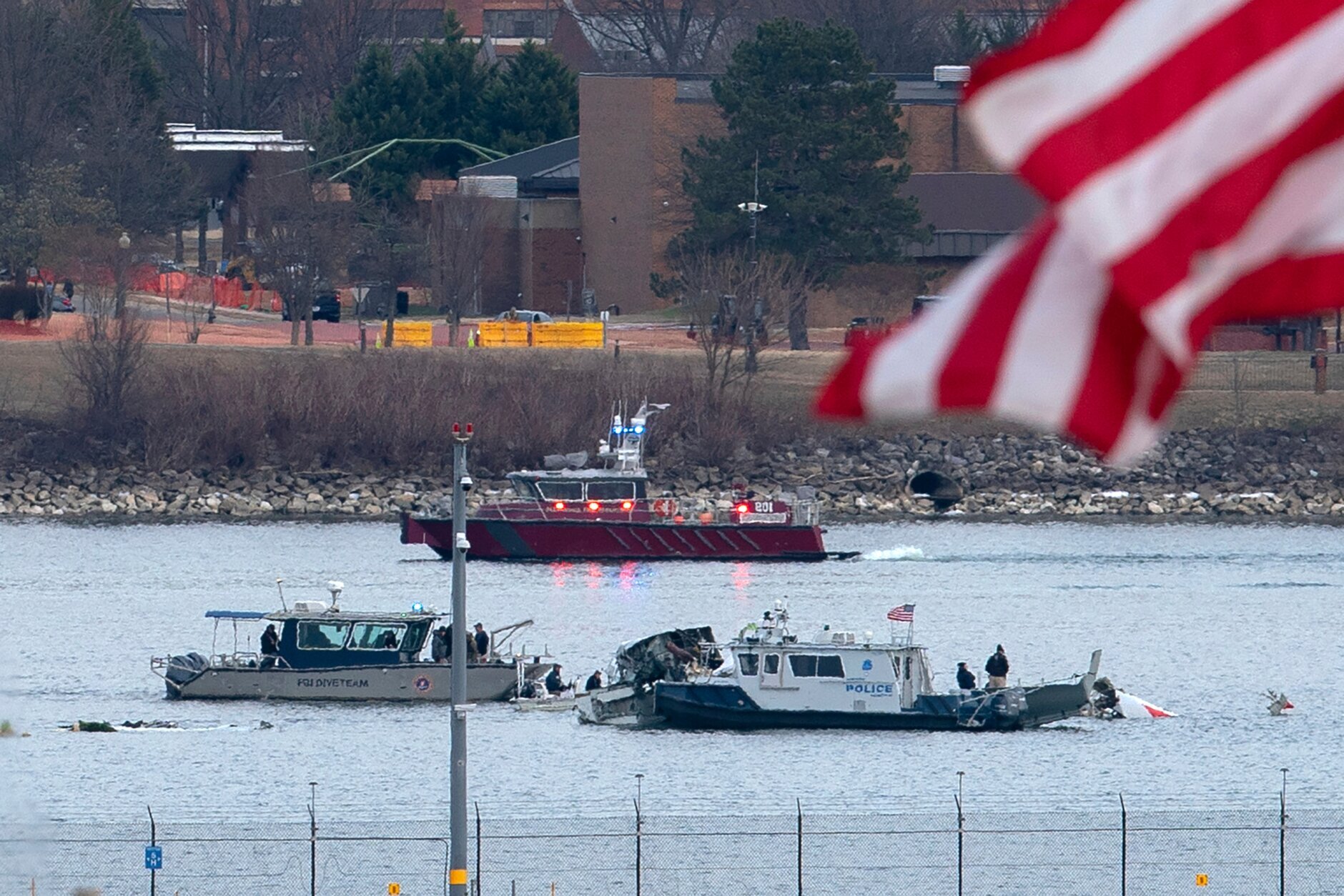


“That airport was really never meant to handle that kind of traffic, because whenever you land and take off in that airport, you have to thread the needle. There is prohibited airspace. There’s restricted airspace, like over the White House, for example. There are numerous residential buildings. There’s the Pentagon,” Guzzetti said.
“And not only that, but there’s a high propensity of military aircraft transiting that while the passenger airlines are trying to take off and land,” Guzzetti added. “It is a unique, congested airport with a small footprint. There are a few other airports in the United States that kind of approach that, but DCA is at the top of the list for that complexity.”
Other airports including John Wayne in Orange County, California, LaGuardia in New York and Midway in Chicago are smaller airports and bring their own set of challenges. But experienced pilots have said the airspace at Reagan National can be tough — even in ideal flying conditions.
What’s happened with the case so far?
Since the moments after the crash, a full team of NTSB investigators has been reviewing every element of what happened, deconstructing the final days of the pilots on the Army helicopter and in the regional jet, inspecting the maintenance records of the two aircraft and dissecting the work of the air traffic controllers.
Guzzetti said he expects the report to contain numerous recommendations to improve safety at Reagan National, as well as other airports where helicopters and fixed-wing aircraft frequently share the airspace.
“I think there’s going to be plenty of recommendations. They’ve already made some with regard to the DCA airspace, but I think there’s going to be a slew of recommendations related to how military helicopters should equip their vehicles,” Guzzetti said.
“There’s going to be recommendations regarding how to improve data collection to identify hazards before they become accidents. And I think there’s going to be recommendations related to air traffic controller training, airspace design considerations and even maybe a few to the airlines with regards to their operations.”
On the night of the crash, the Pentagon was conducting a military training operation, and it’s already known that the Black Hawk helicopter was at the wrong altitude. When flying near an airport with numerous inbound and outbound aircraft, even 50 feet in altitude can mean the difference between life and death.
The helicopter crew had turned off its ADS-B transmitter, which sends critical real-time positioning information to both air traffic controllers and other nearby aircraft. Most aviation experts believe, had that system been turned on, the regional jet pilots would have had enough time and information to take evasive action to avoid the approaching helicopter.
However, that ADS-B information is available on public websites and it’s possible the Pentagon did not want the helicopter’s location tracked.
It’s also likely the three crew members on the helicopter were wearing night vision goggles as part of their training. In a dark environment, the goggles make it easier for pilots to see by taking the small amounts of available light and amplifying it, so they can see terrain, obstacles and visible clues.
However, they also present a much narrower field of vision, significantly reducing peripheral vision and creating a periscope effect.
“NTSB accident investigations rarely result in a single probable cause for one single person. It’s usually a complex array of factors and causes that all kind of come together, and you have to attack all of those,” Guzzetti said.
Tightening up regulations
No one is recommending closing Reagan National Airport as Denver’s Stapleton International Airport was decommissioned 30 years ago.
But Guzzetti and other aviation officials said that after watching the events of the past year, going back to the way things were before 8:47 p.m. on Jan. 29, 2025, is not acceptable.
“We can make sure that those 67 souls didn’t die in vain by not only improving the airspace design of DCA airport, but by applying those lessons learned to all the other similar airports around the country, and also to heighten the awareness that identifying hazards and mitigating them is extremely important,” he said.
“There are several things that need to be done. I think they need to cut back on the number of arrivals and departures into DCA airport.”
He added that if the Pentagon is going to continue to fly military training helicopter flights near Reagan National, those designated helicopter routes need to be moved farther from the airport, especially away from the approach and departure ends of the runways.
ADS-B transmitters on helicopters need to be turned on, Guzzetti said, unless the choppers are carrying top government officials whose identity and location need to be kept secret.
“I think they need to tighten up the air traffic control rules about helicopters and other aircraft that are transiting that airspace. I think the military has a role here to ensure that their pilots are properly trained and that their missions are really needed to fly in and out of that airspace,” he said.
“Probably the most important thing is to continuously monitor the potential near misses and hazards that exist on a day-to-day basis at that airport to make action so that those hazards are mitigated.”
Get breaking news and daily headlines delivered to your email inbox by signing up here.
© 2026 WTOP. All Rights Reserved. This website is not intended for users located within the European Economic Area.