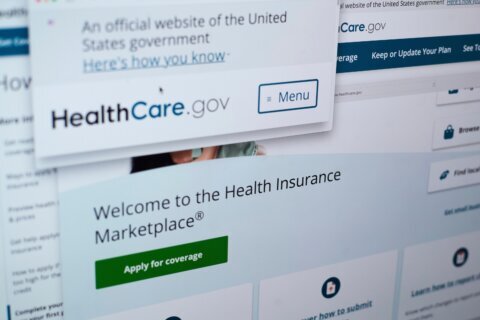
In about two weeks, Affordable Care Act subsidies are set to end with no agreement over extending them.
So, what does this mean for the millions of Americans who have a premium tax credit? And is there anything people can do to save money?
Matthew McGough, a policy analyst at KFF who covers the Affordable Care Act, says one option is to switch and drop to a lower monthly premium like the Bronze Plan. But that comes with a price.
“People are going to have higher out-of-pocket costs,” McGough said. “That means that there’s a deductible, which is going to be thousands of dollars more than they’re used to, and higher coinsurance or copays every time they go to the doctor’s office.”
Is there anything people can do to save money other than dropping to a lower plan?
“A lot of these plans can be paired with a health savings account. That’s a great way to save money and be able to pay for some medical procedures and appointments tax-free,” McGough said.
But next year, in comparison to the last few years, McGough said people with “Affordable Care Act market coverage are going to be paying more than what they’re used to, at least on a monthly basis for their premiums,” he said. That’s been the case at least since the COVID-19 pandemic.
He said Americans who are older or more middle income, “who exist around 400% of the federal poverty line, or $63,000 for an individual in 2025,” will be impacted the most.
“They could see how much they pay toward their premiums increase, on average by $10,000 in some high premium states, like Wyoming and West Virginia, this could actually be closer to $20,000,” he said.
McGough added that half of those on Affordable Care Act Marketplaces “work for a small business, own a small business, or are self-employed and part of the gig economy. Additionally, nationwide, over a quarter of all farmers and ranchers receive health insurance through the Affordable Care Act Marketplaces.”
McGough said you can either pay the higher premium, drop to a lower tier plan or become uninsured. He said some people could have another option.
“People may consider limiting their hours, limiting their income — if that’s something they can do, if they have a non-salary job — just so that they can qualify for some subsidized premiums,” he said.
Get breaking news and daily headlines delivered to your email inbox by signing up here.
© 2025 WTOP. All Rights Reserved. This website is not intended for users located within the European Economic Area.