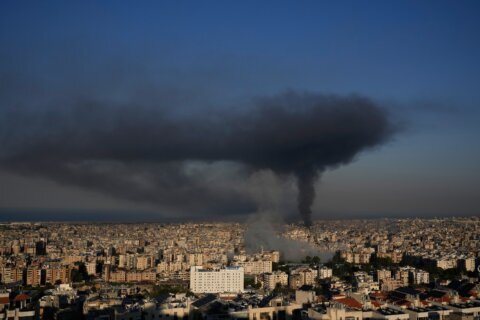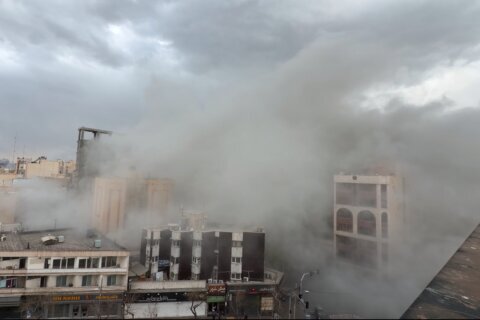
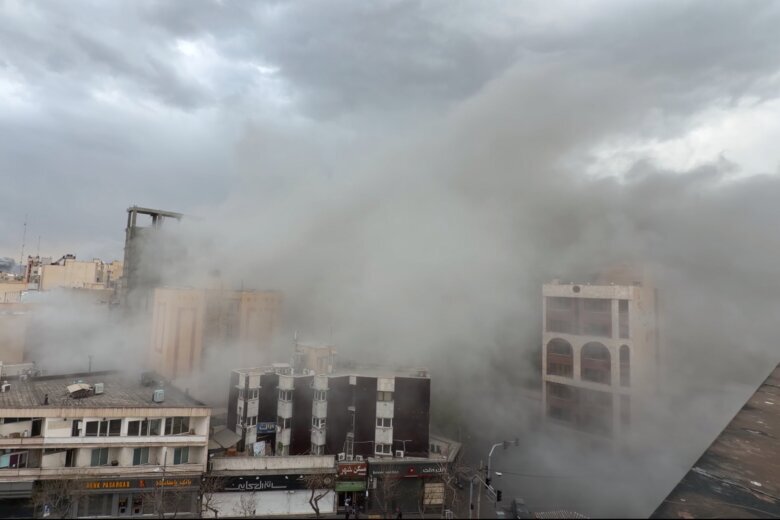
The most dangerous feature of this conflict may not be the missiles themselves — it may be the airspace.
Over the past 72 hours, the Middle East has seen rolling airspace closures, widespread flight diversions and cascading airport disruptions as civilian aircraft are pushed out of a battlespace saturated with fighters, armed drones, cruise missiles, ballistic missiles and overlapping air-defense systems.
What looks like aviation inconvenience is actually a signal of something far more consequential: the sky has become congested, contested and volatile.
In this environment, risk multiplies quickly. More radar tracks. More interceptors in the air. More unidentified returns. More split-second decisions.
U.S. military planners have long warned that dense, multicountry air operations compress reaction time to dangerous levels. Even highly disciplined forces can misidentify aircraft or misinterpret sensor data — especially when drone swarms and missile launches unfold simultaneously.
Friendly fire is no longer theoretical.
Add another layer: This is not a broad, Desert Storm-style coalition. The operational burden rests primarily on the U.S. and Israel. With fewer allied air assets, limited shared basing and munitions stockpiles already under scrutiny, deconfliction becomes harder. Sustained, high-tempo strike-and-defense cycles strain systems and personnel alike.
In short: Congestion breeds miscalculation.
But the battle space extends far beyond the sky.
This is not a single-front war. It is a region teeming with tripwires. Iran’s retaliation calculus stretches across American bases in Iraq and Syria, Gulf shipping lanes, diplomatic facilities, maritime choke points and partner nations that host American forces.
The objective in such retaliation is not necessarily battlefield victory, it’s cost imposition. Raise energy prices. Disrupt shipping. Increase insurance premiums. Trigger political pressure.
Recent reporting underscores that U.S. facilities have faced incoming fire and that force protection measures have intensified.
That combination of persistent attack pressure and finite interceptor capacity is precisely what military planners worry about in a prolonged exchange. The longer the tempo continues, the more a cumulative strain builds on air-defense networks and supply chains.
And then there is the shadow domain.
The most unpredictable dimension of this conflict lies in Iran’s asymmetric architecture, proxy networks, aligned militias, cyber units and influence operations cultivated over decades. Escalation in this sphere does not require Iranian aircraft to launch from Iranian soil. It can emerge from Lebanon, Iraq, maritime harassment units or cyber operations targeting infrastructure.
Attribution becomes complicated. Response thresholds blur. The risk of overreaction increases.
Inside the United States, authorities have heightened security posture in major cities and around sensitive sites. Officials emphasize there is no specific, actionable plot publicly disclosed, but vigilance has increased. That is consistent with a heightened-risk window: harden likely targets, surge patrols and expand monitoring.
The final layer is informational.
Air incidents, missile interceptions and explosions produce immediate viral footage, often stripped of context. In the next several days, claims of aircraft “shot down,” bases “overrun” or “false flag” events will circulate rapidly. Early images rarely tell the full story.
In conflicts defined by speed and saturation, ambiguity is inevitable in the first hours.
The strategic takeaway is this: A narrow operational partnership can deliver sharp tactical effects, but it becomes strategically fragile when the fight spreads across domains, air, sea, cyber, proxies and narrative warfare. Congested skies increase the chance of miscalculation. Regional tripwires increase the chance of spillover. Shadow networks increase the unpredictability of response.
This is not a contained exchange; it is a layered contest where military pressure, economic stability, alliance cohesion and information control intersect simultaneously.
And in that kind of battlespace, the greatest risk is not just escalation, it is misunderstanding.
Get breaking news and daily headlines delivered to your email inbox by signing up here.
© 2026 WTOP. All Rights Reserved. This website is not intended for users located within the European Economic Area.