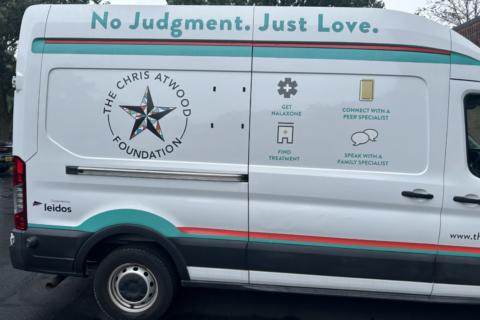
The number of drug overdose deaths in Virginia is down 43% in one year, according to the head of addiction services at Inova Health System. She said while the number is encouraging, more needs to be done to prevent people from dying.
Since 1989, September is National Recovery Month — an awareness campaign created by the U.S. Substance Abuse and Mental Health Services Administration.
Dr. Zeina Saliba, chief of addiction services at Inova Health System, said the availability of naloxone, or Narcan, “certainly has something to do with the decrease in overdose deaths,” in 2024.
Preliminary data provided by the Virginia Department of Health shows about 1,400 overdose deaths statewide in 2024, down 43% from 2023, with 79% involving fentanyl or similar synthetic opioids.
Nationally, the Centers for Disease Control and Prevention reported a 27% decline in overdose deaths in 2024 — the lowest level since 2019.
Saliba told WTOP that naloxone is an example of harm reduction: “It can be seen as a set of strategies or practices that ultimately decrease the harms that are associated with the use of substances.”
Other common harm reduction methods include needle or syringe exchange programs, fentanyl testing strips and supervised consumption sites.
To those people who question the practice of supporting people using illegal substances, Saliba said: “People who use substances deserve safety and dignity. … They’re not using drugs as some sort of moral failing.”
She offered the following analogy: “When we have patients who have diabetes, they might make some choices that are not in the best interest of their health,” Saliba said. “Yet, we don’t keep them from their insulin or other treatments.”
Citing a recent study, Inova said 53% of survey respondents had never heard of the term ‘harm reduction,’ but 92% agree that it saves lives.
“Awareness is strongest among Millennials (55%) and Gen Z (47%), suggesting the effectiveness of progressive, digital-first outreach,” according to an Inova news release.
Stigma prevents many from seeking help
Nearly three-quarters of survey respondents cite fear of exposure or stigma as a major barrier to care, according to Inova.
“This impacts communities and it impacts families,” said Saliba, referring to stigma. “So, there is a much wider reach than just the individual.”
Another barrier, according to the Inova survey, is that 75% of respondents believe they can solve their personal substance use on their own.
“There may be some who do that, but for a lot of people, having support from a professional and other people with lived-experience is really important, Saliba said.
And even if a substance user becomes comfortable with the idea of seeking care, Saliba said it’s important that “we remove the potential negative consequence,” which extends beyond the discomfort of acknowledging a substance use problem.
“If, in fact, someone coming to see me may result in their loss of job, or an increase in the cost of their health insurance, all of these factors are really important,” Saliba said. “Stigma is not just an idea by itself.”
Inova’s “Act on Addiction” web resource is available at ActOnAddictionNow.org.
Get breaking news and daily headlines delivered to your email inbox by signing up here.
© 2025 WTOP. All Rights Reserved. This website is not intended for users located within the European Economic Area.