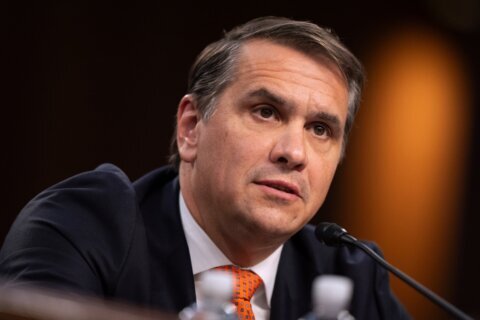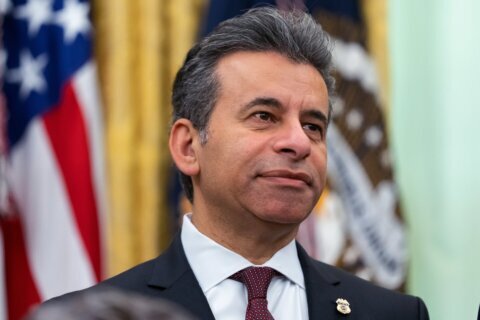
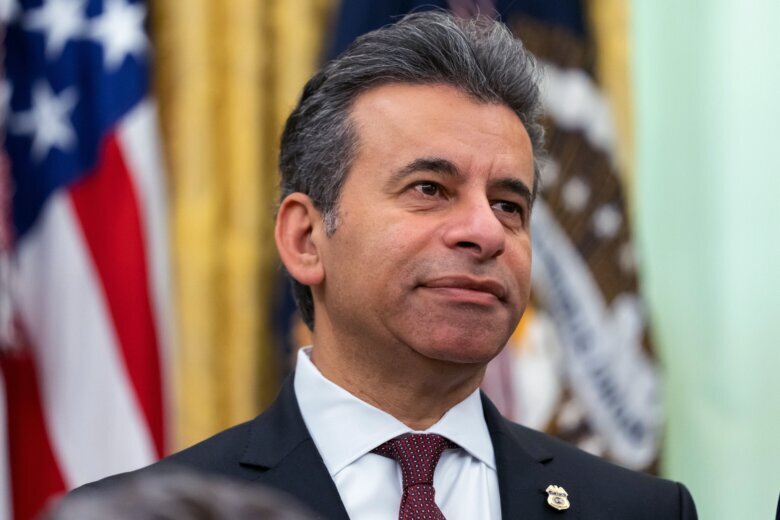
WASHINGTON (AP) — The head of the Food and Drug Administration, Dr. Marty Makary, is resigning after a rocky tenure that drew months of complaints from health industry executives, anti-abortion activists, vaping lobbyists and other allies of President Donald Trump.
News of Makary’s departure Tuesday came just 13 months after he was confirmed to lead the powerful regulatory agency.
A surgeon and health researcher, Makary came to prominence among Republicans as an outspoken critic of public health measures during the COVID-19 pandemic, when he frequently appeared on Fox News Channel. But he struggled to manage the FDA’s bureaucracy and failed to win the confidence of its staff after mass layoffs, leadership upheavals and a series of controversies in which the agency’s scientific principles appeared to be overridden by political interests, including those of Health Secretary Robert F. Kennedy Jr.
“He’s a great doctor, and he was having some difficulty,” Trump told reporters outside the White House. “But he’s going to go on and he’s going to do well.”
Trump later confirmed in a social media post that Kyle Diamantas, the agency’s chief for foods, is expected to take over as acting commissioner. Diamantas is an attorney with personal ties to Donald Trump Jr.
In that post, the president included what appeared to be a text message from Makary submitting his resignation. In it, he noted: “I announced 50 major FDA reforms. Joe Biden’s FDA had none.” He thanked Trump for the chance to serve.
The FDA commissioner, as the leader of an agency that regulates billions of dollars in consumer goods and medicines, is often required to juggle competing priorities that straddle science and politics.
Makary faced a unique challenge in balancing calls by Trump and other Republicans to cut red tape at the FDA, while also tending to Kennedy’s interest in scrutinizing the safety of vaccines, drugs and food additives. The decision to get rid of Makary was made by Kennedy, and then the White House signed off on it, according to an administration official who was granted anonymity because they were not authorized to describe internal dynamics.
Virtually all of the FDA’s senior career officials resigned, retired or were forced out in the first year of the second-term Trump administration, leading to a steady stream of leaks and negative stories in the media cataloging low morale, dysfunction and frustration among staff.
Makary’s handpicked deputy, Dr. Vinay Prasad, was pushed out of the agency twice in less than a year for running afoul of specialty drugmakers and groups for patients with rare diseases. Makary appeared poised to weather the controversy, despite an ongoing pressure campaign calling on Trump to fire him.
Recent weeks brought fresh criticisms from other interest groups that the White House considers key to Republican chances in November elections.
Anti-abortion groups have accused Makary of slow-walking an internal review of the abortion pill mifepristone, which has been on the market for 25 years but remains a target for conservative activists. They are seeking to roll back FDA rules that currently allow the pill to be sent through the mail.
“We look forward to a new FDA commissioner who will put an end to the mail-order abortion drug regime,” said Marjorie Dannenfelser, president of Susan B. Anthony Pro-Life America.
Vaping executives told Trump that Makary was blocking approval of their products, including new flavored e-cigarettes seen as crucial to the industry’s survival.
Last week, the agency abruptly changed course, authorizing the first fruit-flavored e-cigarettes and issuing guidelines that loosened marketing for major manufacturers. But it wasn’t enough to keep Makary in the job.
A permanent replacement for the FDA job will need to be nominated by Trump and confirmed by the Senate.
Faster drug reviews are overshadowed
As a former regular on Fox News, Makary was aggressive about promoting his accomplishments on cable television and podcasts and in online opinion pieces.
A string of initiatives from Makary aimed to speed up or streamline FDA drug reviews, including dropping certain study requirements, incorporating artificial intelligence into drug evaluations and offering expedited reviews to medicines that support “national interests.”
But pharmaceutical executives rely on the predictability and consistency of FDA decisions, even more than speedy reviews. Makary’s efforts on drug reviews were overshadowed by internal conflicts and disputes that created headaches for drugmakers, investors and patients.
More than a half-dozen drugmakers studying therapies for rare or hard-to-treat diseases said they received rejection letters or requests to run additional studies for drugs that had previously been given the go-ahead by FDA staff. Those drugs were primarily overseen by Prasad, who stepped down for a second time from his role as the FDA’s vaccine and biotech chief in April.
Vaccine moves denounced
Prasad repeatedly overruled vaccine staffers to restrict eligibility for new coronavirus shots. In February, Prasad initially refused to even consider Moderna’s mRNA shot for flu. The FDA was forced to reverse itself after Moderna pledged to formally challenge the decision and called for intervention by the White House.
Some of Makary and Prasad’s most controversial vaccine proposals never came to fruition, despite stoking confusion and anxiety within the FDA and beyond.
In an internal memo in November, Prasad claimed — without publishing evidence — that the FDA had linked COVID-19 shots to the deaths of 10 children. Prasad used that to justify a planned overhaul of the agency’s approach to approving vaccines.
A dozen former FDA commissioners issued a scathing denunciation of the plan, warning it would “undermine the public interest” and decimate vaccine development. The FDA has not released its analysis of the deaths or its plan for the vaccine overhaul.
FDA’s drug center had a revolving door
In the FDA’s drug center, which is the agency’s largest division, Makary oversaw a revolving door of leadership changes. Six people served as director over the course of one year.
Makary’s initial pick for the job, Dr. George Tidmarsh, was forced to resign after allegations that he used his FDA position to pursue a personal vendetta against a former business partner.
His replacement, longtime FDA cancer specialist Dr. Rick Pazdur, announced he would retire after just three weeks on the job, after clashing with Makary on multiple issues surrounding drug reviews.
With Makary’s departure, the fate of many of his fledgling initiatives is uncertain.
Most of the programs Makary introduced have not gone through federal rulemaking required to enshrine them in U.S. law. Democrats in Congress have questioned the legality of some of those efforts, including a program that offers drugmakers expedited reviews for innovative medicines.
___
The Associated Press Health and Science Department receives support from the Howard Hughes Medical Institute’s Department of Science Education and the Robert Wood Johnson Foundation. The AP is solely responsible for all content.
Copyright © 2026 The Associated Press. All rights reserved. This material may not be published, broadcast, written or redistributed.