A purple yam called ube is having a moment.
When Toby Bantug first began selling ice cream with ube and other Filipino flavors at D.C.-area festivals in 1999, “Nobody knew about it except for Filipinos, and kids were attracted to it because of its purple color,” he said.
Bantug continued selling ube-flavored ice cream when he opened his first Toby’s Homemade Ice Cream location in Arlington’s Westover neighborhood in 2008.
Still, he said, “I had a flavor tag that said ube and then taro in parentheses because that’s what people were familiar with … It was easier to explain it in that way, but it is not exactly the same.”
As the years passed, Bantug said he eventually removed ube from the menu entirely due to how “a lot of people kind of stayed away from it.”
But that’s no longer the case.
“When we brought it back shortly before the pandemic, it took off again, and now it’s our most popular flavor in all three shops,” he said. Ube ice cream now outsells vanilla.
“Honestly, we will run out of the ube because it’s in high demand,” said Monina Bantug, Toby’s wife and Toby’s Homemade Ice Cream co-owner.
The Bantugs’ business is not the only one seeing this ingredient soar in popularity. Ube, pronounced “ooh-beh,” is native to Southeast Asia and is a major vegetable crop in the Philippines. The purple yam’s flavor is sweet, nutty and similar to vanilla. Toby described it as “very subtle.”
The ingredient is often used in sweets like ice cream, cake, cocktails, lattes and halo-halo, which is a layered shaved ice dessert.
Ube is not to be confused with purple sweet potato or taro, the Southeast Asian root vegetable that is much nuttier, subtly earthy and with an off-white flesh.
It’s more than just a pretty color, though. Almost 1.7 million kilograms of ube products worth over $3.2 million were exported by the Philippines in 2025, CNN reported citing to data from the Department of Trade and Industry. That’s a 20.4% rise from 2024.
“It’s great to see not just the growth of it, but also the education and the spread of Filipino culture,” Toby said.
Ube can now be found across several major brands, including Starbucks, Peet’s, Dunkin’ Donuts, Trader Joe’s and Baskin-Robbins.
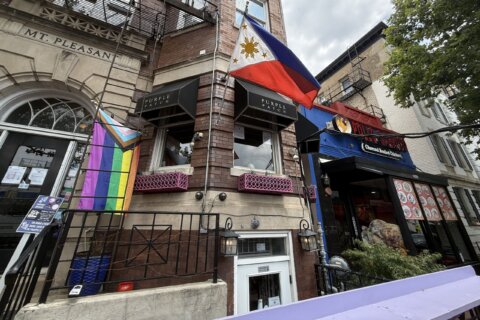
Local businesses featuring the flavor include as Joia Burger, Kayu, Purple Patch, Rose Ave Bakery, Gwenie’s Pastries, Toi Moi Bakery, Rice Culture and, of course, Toby’s Homemade Ice Cream.
Monina recommended learning about other Filipino flavors, such as buko pandan, calamansi and Philippine mango, all of which are available at their ice cream shop.
“Don’t get intimidated just because you don’t recognize the name of the flavor. We always have tasters … Sometimes, describing it is not enough. They really should just taste it themselves,” she said.
Get breaking news and daily headlines delivered to your email inbox by signing up here.
© 2026 WTOP. All Rights Reserved. This website is not intended for users located within the European Economic Area.