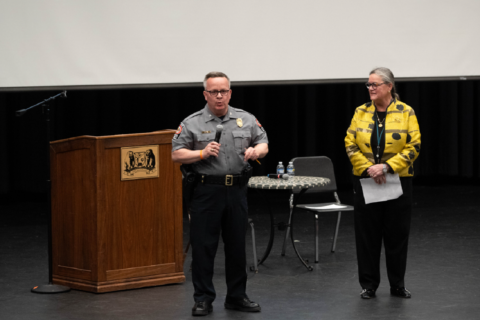
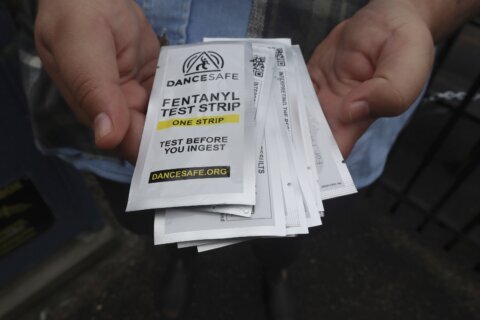
This story is Part 2 of WTOP’s four-part series, “Fighting Fentanyl,” which explores how the drug is impacting students, families and schools in the D.C. area.
When Sean and Afrodita Foster prepare to speak to Loudoun County Public Schools students about the dangers of fentanyl, the kids anticipate “another boring assembly.”
This video is no longer available.
But instead, students share.
“This is exactly what we needed to hear. We had no idea that these pills were as dangerous as they were,” Sean Foster said.
There’s one student, though, who didn’t get that message in time.
Cayden Foster, Sean and Afrodita’s only child, died of a fentanyl overdose in early 2023 at 18 years old. Afrodita found him dead in his bed one morning when he should have been getting ready for school.
Sean said his son’s death had left him and his wife without purpose, but now, their mission is to make sure other parents don’t have to feel their pain.
“We don’t want this to happen to anybody else,” Afrodita said. “I want to believe that if there would have been more awareness at the time, around the time when this happened with Cayden, our son, that it might have not happened.”
Sharing their stories to other students
She and her husband have spoken to thousands of Loudoun County Public School students, as part of programming that brings community members into schools. They also communicate with college students and stay in touch with the Fairfax County Police Department’s overdose task force.
Sometimes, after a presentation, school officials follow up with small group classroom discussions to debrief. The feedback from students has been positive, and many kids have opened up about their experiences with drugs.
One student had heard about fake blue Percocet pills, which were found in Cayden’s wallet at the time of his death, but shared that’s the reason they take Xanax. It gave Sean the opportunity to explain that if pills aren’t from a prescription bottle, they’re likely fake.
In other cases, the assembly has led students to approach school counselors with concerns about their friends.
“We stress that, in Cayden’s case, if one person would have said something to us that he was hanging out with these people, or that night, it was preventable,” Afrodita said. “But nobody said anything.”
‘You’ve got an obligation to say something’
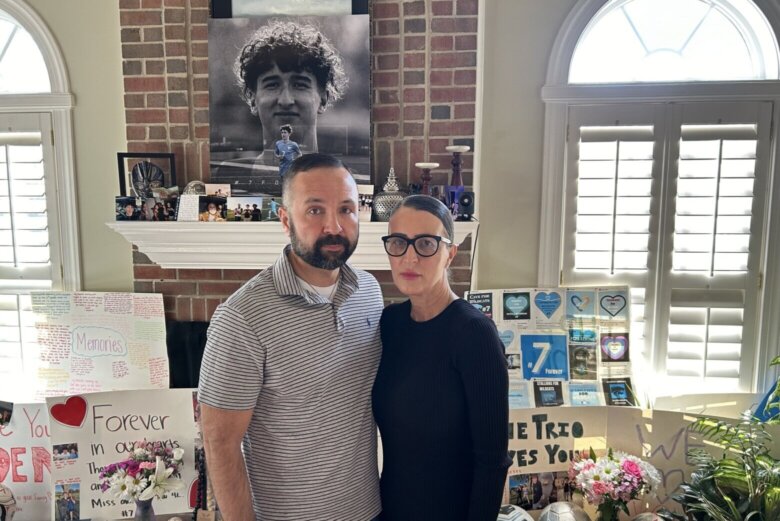
The Fosters remain in touch with Cayden’s friends, who are now in college. When they come back to their hometowns for breaks, the Fosters continue to warn them about fentanyl. Some of the students describe seeing cocaine use on college campuses across the country.
“We keep on stressing that you don’t know where that deadly amount of fentanyl is,” Afrodita said. “You can be first, you can be last. It can be your first time, your third time, but it can get you. Just don’t trust anybody with your life.”
They also rely on Fairfax County police’s overdose task force to learn about the latest trends. Officials told them that, along with pills, powder is getting mixed into substances, such as cocaine and marijuana. They’ve testified before state lawmakers too.
After learning new information about Cayden’s death about a year ago, the couple has tweaked their messaging. They found out Cayden was on FaceTime with someone when he started going into respiratory distress, and that person looped in another friend.
“They essentially watched him die and didn’t do anything. Even more so in our messaging is, you’ve got an obligation to say something to your friend, who thinks you’re their friend,” Sean said.
Cayden’s parking spot at Centreville High School has been retired, so nobody else can park there. Last year, students painted on it. The Fosters placed a binder there with Cayden’s story inside, as one last reminder.
“We just try to speak to as many students and adults — so that they can speak to their children — as we can,” Afrodita said. “That’s the only thing we can do.”
In Part 3 of WTOP’s “Fighting Fentanyl” series, schools and community groups warn about emerging substances.
Get breaking news and daily headlines delivered to your email inbox by signing up here.
© 2025 WTOP. All Rights Reserved. This website is not intended for users located within the European Economic Area.