D.C. Mayor Muriel Bowser this week described the possibility of difficult decisions ahead, as the city works on its spending plan for fiscal year 2027, her last as the District’s leader.
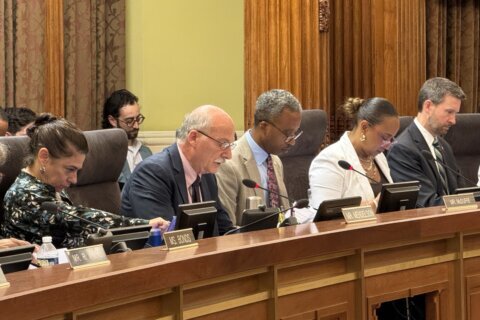
During a morning session with council members Tuesday, Bowser and other city leaders said while revenue has been modest, costs are soaring.
Keeping all services and programs in place this year in next year’s budget would require a $1.1 billion revenue increase, City Administrator Kevin Donahue said. However, according to city documents, revenue growth is modest. In fiscal 2027, revenue is projected to increase by $9.6 million.
And if President Donald Trump signs a measure that passed Congress, preventing D.C. from opting out of the Trump administration’s tax cuts, hundreds of millions more could be at stake.
“I did budgets during the recession,” Donahue said. “This is as hard as anything that we did in the recession.”
Costs of all kinds are projected to increase, including agency overtime spending, contributions to WMATA and Medicaid and child care costs. With some cases of one-time funding set to expire, there are $700 million worth of programs funded in the fiscal 2026 plan that aren’t funded in the fiscal 2027 plan.
Bowser’s budget proposal is expected this spring, and she said it’s hard to know exactly which programs and services may be reduced or cut.
“The best way to answer is to look at our overall budget just like you would do in your own household budget, and the areas where there’s the largest spending and the most costly types of programs are the ones that could more likely sustain decreases,” Bowser told WTOP.
During the presentation earlier this week, Bowser and other agency heads highlighted examples of programs that could be vulnerable.
For one, the city’s child care subsidy program, which offers eligible families support with child care payments, has a deficit of $32 million, according to Antoinette Mitchell, D.C.’s state superintendent of education. It could increase to $42 million without changes.
There are 7,380 kids in the program and almost 300 providers. One idea could result in paying providers the same rate, instead of three different rates. Using a waiting list, Mitchell said, would enable the city to cap enrollment.
There are many programs, Bowser said, that are “emblematic of some of the issues that we will go into in this budget formulation — more demand, higher cost equals greater total program cost. And so the question for all budget makers is, what do you do with that when the demand and the cost and the inflation outpace your ability to pay for it?”
Wayne Turnage, D.C.’s deputy mayor for health and human services, said changes in eligibility for programs offering health care to low income residents have resulted in some savings. But, Donahue said, “a 2% or 3% inflationary pressure in health care, because the base spending is so high, translates to sometimes a $10 or $100 million spending pressure.”
While Bowser proposes the city’s budget, final approval is up to the D.C. Council.
In the coming weeks, Bowser said, “My biggest concern is that all policymakers take our decision seriously. It’s not good enough to say, ‘I want more, I want more, I want more,’ without a strategy to pay for it.”
Get breaking news and daily headlines delivered to your email inbox by signing up here.
© 2026 WTOP. All Rights Reserved. This website is not intended for users located within the European Economic Area.