New research from the Interstate Commission on the Potomac River Basin shows the region’s water supply could fail to meet the area’s needs by 2030, in the event of an extreme drought.
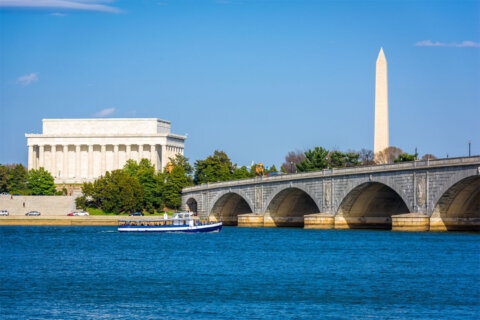
Changing weather patterns and increased water would strain the Potomac River, which serves as the primary — and, in some cases, sole — water supply for water companies in D.C., Virginia and Maryland.
The report by ICPRB shows the region will have enough water in most years, but there is an increasing chance — up to about 1% in 2030 and up to about 5% in 2050 — that there will be water shortages.
Shortages could “range from water use restrictions, to possibly water not coming out of people’s taps,” said Cherie Schultz, director of ICPRB’s Cooperative Water Supply Operations on the Potomac.
ICPRB was commissioned by Congress in 1940 to protect and enhance the waters and related resources of the Potomac River Basin. Appointed representatives to the commission are from D.C., Maryland, Virginia, West Virginia, Pennsylvania and the federal government.
The Potomac River is the sole source of drinking water for the District of Columbia and Arlington County. After purification in the Washington Aqueduct, DC Water provides water to homes and businesses in D.C. and Arlington.
WSSC Water, which serves most of Montgomery and Prince George’s counties in Maryland, draws 30% of the water it sends to customers from the Patuxent River. Fairfax Water, which serves Fairfax and Prince William counties, gets a portion of its water from the Occoquan Reservoir. Loudoun Water’s backup supply is the Goose Creek Reservoir.
Why is the risk of shortages increasing?
“It’s climate change, combined with the increase in demand that may be putting the whole system at risk,” said Mike Nardolilli, executive director for ICPRB.
The researchers predict an increase in water demand in coming decades, with a 17% increase in usage by 2050.
“Extreme hydrological droughts may become more severe due to increasing temperatures,” Schultz said. “Wet years we expect to be wetter, but future dry years, especially extreme dry years, are going to make droughts more stressful in our region.”
Another unknown is how much data centers will affect the area’s water resilience.
“The study finds that upstream data center water use is expected to grow over time and could become comparable to several established water-using sectors, such as commercial, industrial, and thermoelectric facilities,” according to ICPRB.
Part of the challenge for planners is that they currently don’t know how much water from the Potomac is being used at local data centers.
“Right now, there are no requirements or limits on water usage,” at data centers, Nardolilli said. “We are hopeful that legislators in the various states could at least require data centers to provide that information, so that we all can get a sense of how much water they are using.”
Nardolilli said a recent study found that Virginia’s exemption from sales and use taxes for data centers amounts to a $1 billion subsidy.
“We think it would be nice to link that support for data centers with at least a requirement that they report on their water usage,” he said.
The search for another water source and more storage
This past November, DC Water announced it had identified a second source of water — recycled water from the utility’s Blue Plains Advanced Wastewater Treatment Plant, the largest of its kind in the world.
Nardolilli, while supportive of DC Water’s plan to provide more resilient service to its customers in Washington and Arlington, said it won’t help everyone in the area.
“It is really incumbent upon us to have a regional solution, that can then be supplemented by other water supplier initiatives, like the reuse proposal from DC Water,” Nardolilli said.
He characterized ICPRB’s preference as “quarry, plus,” referring to the Travilah Quarry in Rockville, Maryland, which could eventually become a backup water supply if the Potomac River was temporarily unavailable.
Tunnels would need to be built to connect the quarry to the Washington Aqueduct, WSSC and Fairfax Water’s processing plants, including tunnels underneath the Potomac River.
“Balancing the costs and benefits are going to be something that the Army Corps of Engineers is going to do in its feasibility study,” Schultz said.
The Army Corps began a three-year study in October 2024, with funding from Congress and the Metropolitan Washington Council of Governments.
Nardolilli said the vulnerability of the nation capital’s water supply is both an unacceptable economic and national security risk.
“(The U.S. Department of Defense) has a requirement that all military bases should have a 14-day backup supply of water, but that’s not the case here in the D.C. area, where there’s a one-day backup for a lot of the military installations here, including the Pentagon,” Nardolilli said.
Get breaking news and daily headlines delivered to your email inbox by signing up here.
© 2025 WTOP. All Rights Reserved. This website is not intended for users located within the European Economic Area.