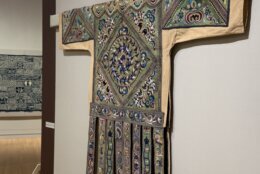
For 100 years, a D.C. museum has offered views of some of the rarest and most beautiful handmade kimonos, intricate Persian rugs and vivid robes of Taoist priests.
The Textile Museum at George Washington University is celebrating its century long mission to educate visitors about, historically, some of the most valuable materials humans have created.
“We should keep in mind that before the Industrial Revolution, textiles were some of the most precious, if not the most precious objects that people owned,” said Lee Talbot, a senior curator at the George Washington University Museum and the Textile Museum. “A great deal of time, effort, expense, went into the creation of textiles.”
The museum has collected a staggering 25,000 textiles that are rotated throughout the gallery on the Foggy Bottom campus.
“We don’t have any permanent displays, and so we’re always rotating,” Talbot told WTOP. “You can come back to the Textile Museum over and over again and always see new textiles.”
The Textile Museum was established in 1925 by textile collector George Hewitt Myers in the Kalorama neighborhood of D.C.
He specifically collected handmade textiles from non-western cultures, “and it was very important to him to introduce American audiences to these textiles,” said Talbot.
It is the only museum in the U.S. that has focused specifically on international textiles to examine the artistry of creating the fabrics.
For decades, the museum stayed in its original building, which was once a residential building complete with fireplaces, which they had to work around to display the textiles. But 10 years ago it moved into new facilities at George Washington University.
The museum’s gallery in D.C. is the public facing building, but they also have a state-of-the-art facility at the university’s science and technology campus in Ashburn, Virginia, with a full team of conservators who are trained in storing and preserving the fragile materials.
“Textiles are organic,” Talbot said. “They start to deteriorate as soon as they are created. So, it takes a great deal of effort to preserve them over the years. We have textiles that are 5,000 years old.”
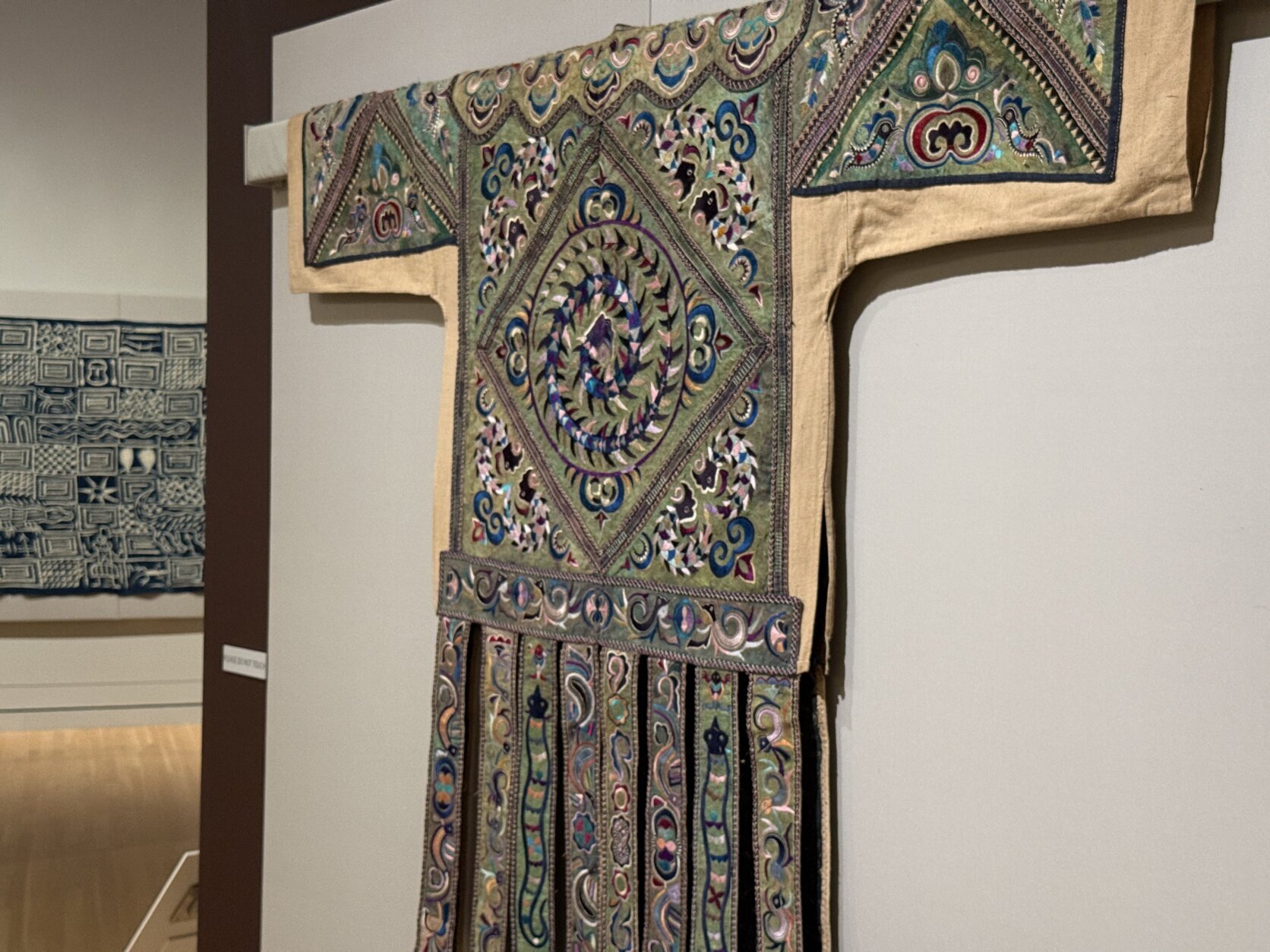
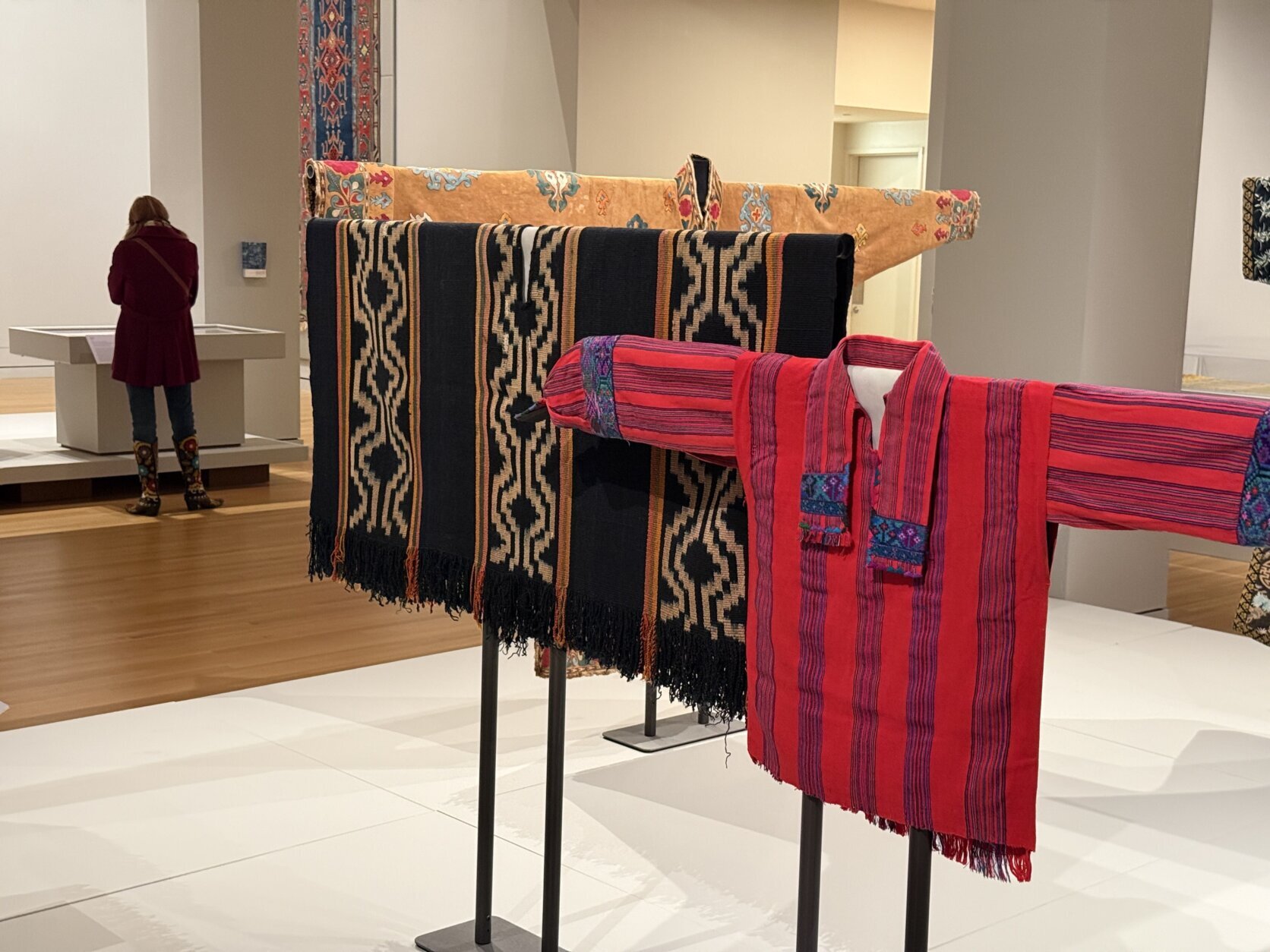
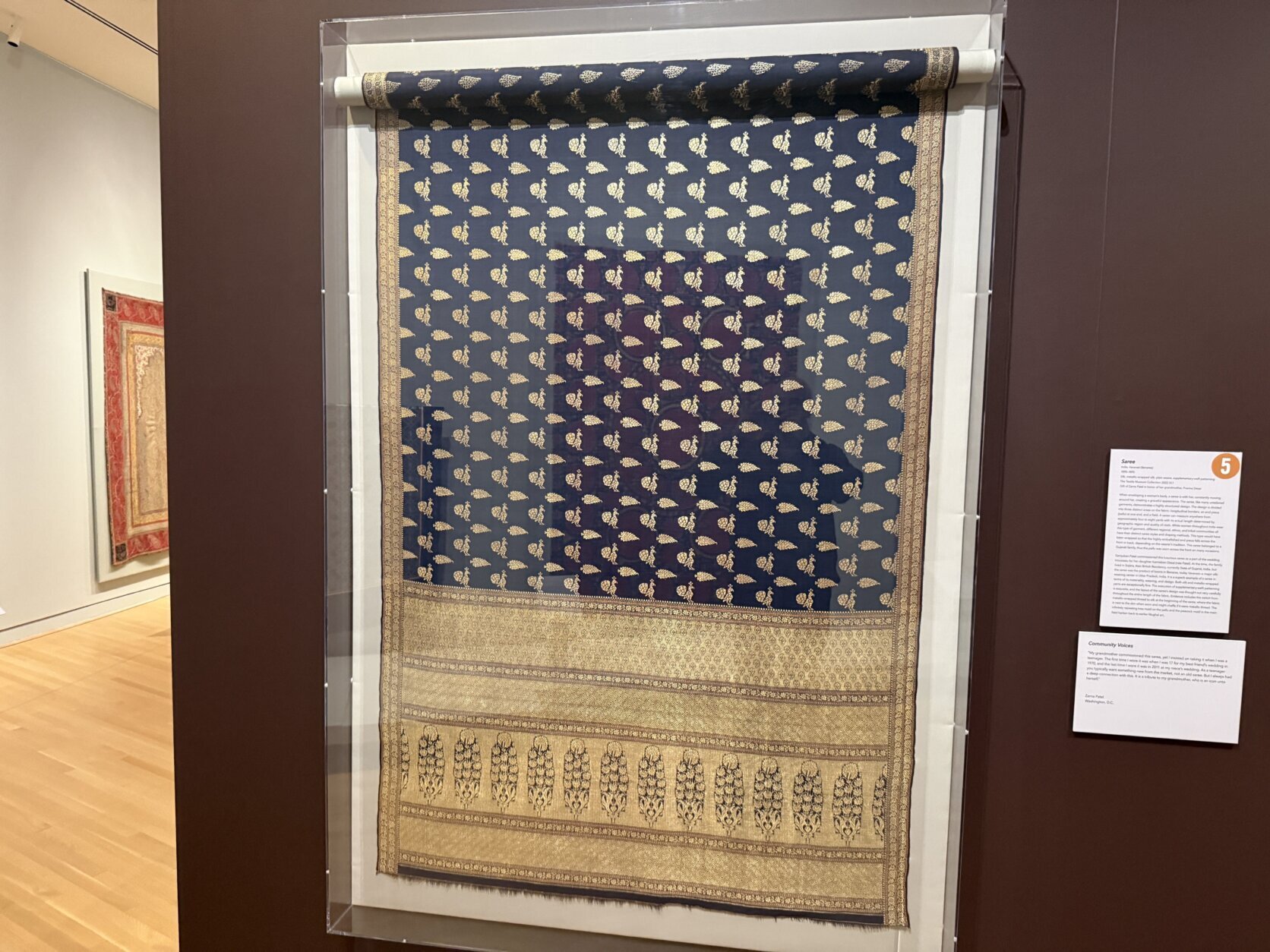
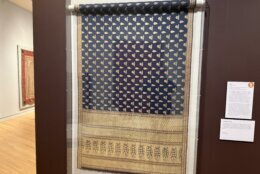
And preserving those fabrics that are anywhere from hundreds to thousands of years old takes a very long time.
“We usually plan exhibitions three to five years in advance, and that’s primarily because of the extensive conservation work that it takes to prepare these textiles for public viewing,” he told WTOP.
Their care has made them a destination not only for visitors but also patrons that have entrusted family heirlooms to the museum for preservation for generations to come.
“People know that we are the preeminent center for that their textiles will be cared for in perpetuity, in the best manner possible when they are coming into our collection,” Talbot said.
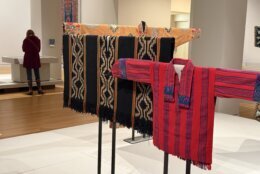
Numerous of those pieces donated by family’s can be seen in the current exhibition “Enduring Traditions: Celebrating the World of Textiles” which focuses on textiles gathered since the inception of the museum by Myers.
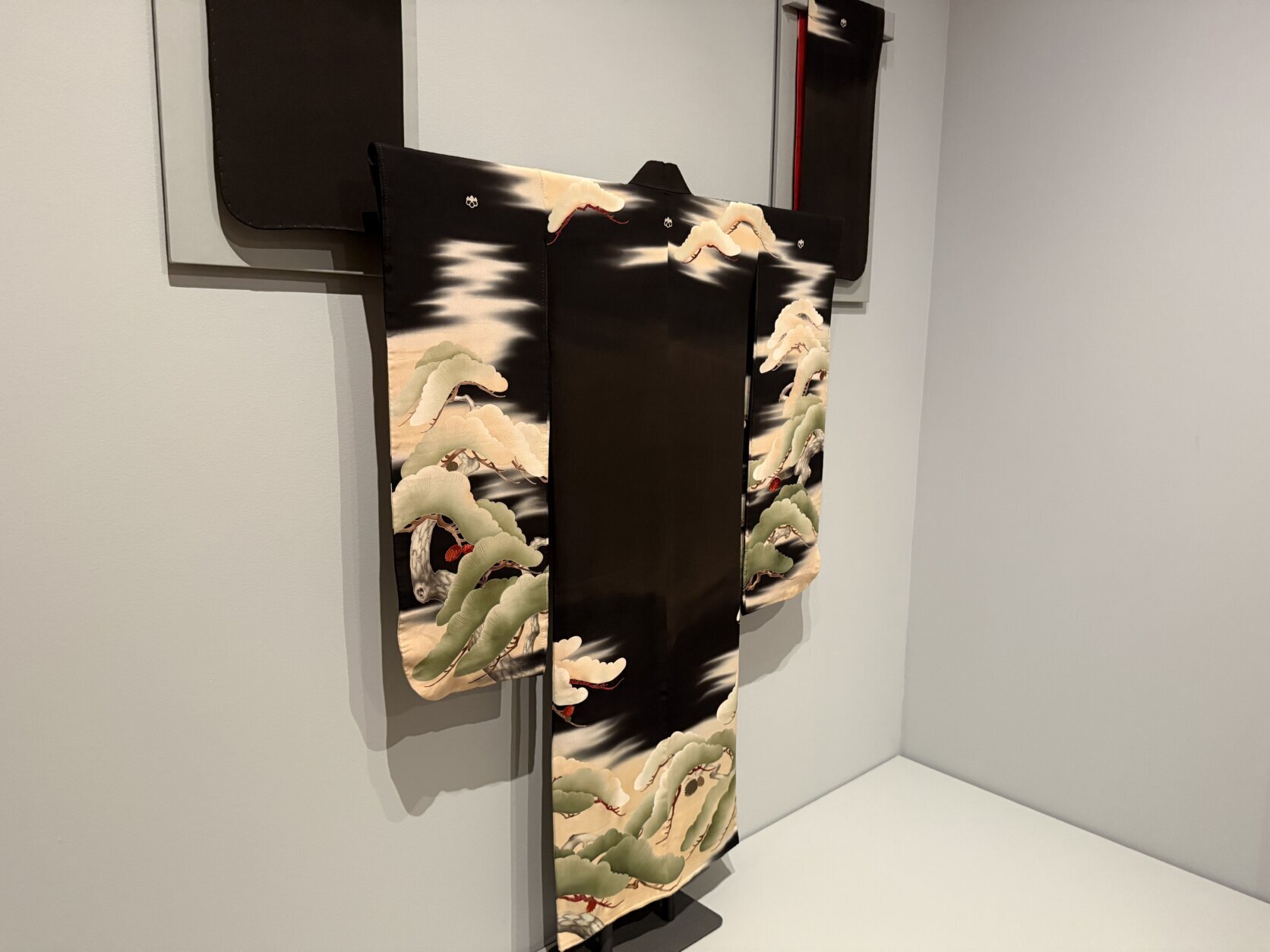
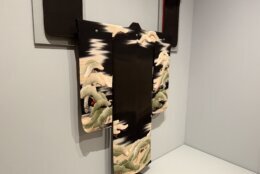
Stories often come with the textiles, especially if they come from a more recent acquisition. A kimono made in Japan during World War II for a wedding can be seen on display, given by the family, it features a simple pattern of pine trees on a black background.
“Resources were very scarce during the Second World War,” explained Talbot. So, they made a simple wedding kimono that could be later worn again for the rest of the bride’s life.
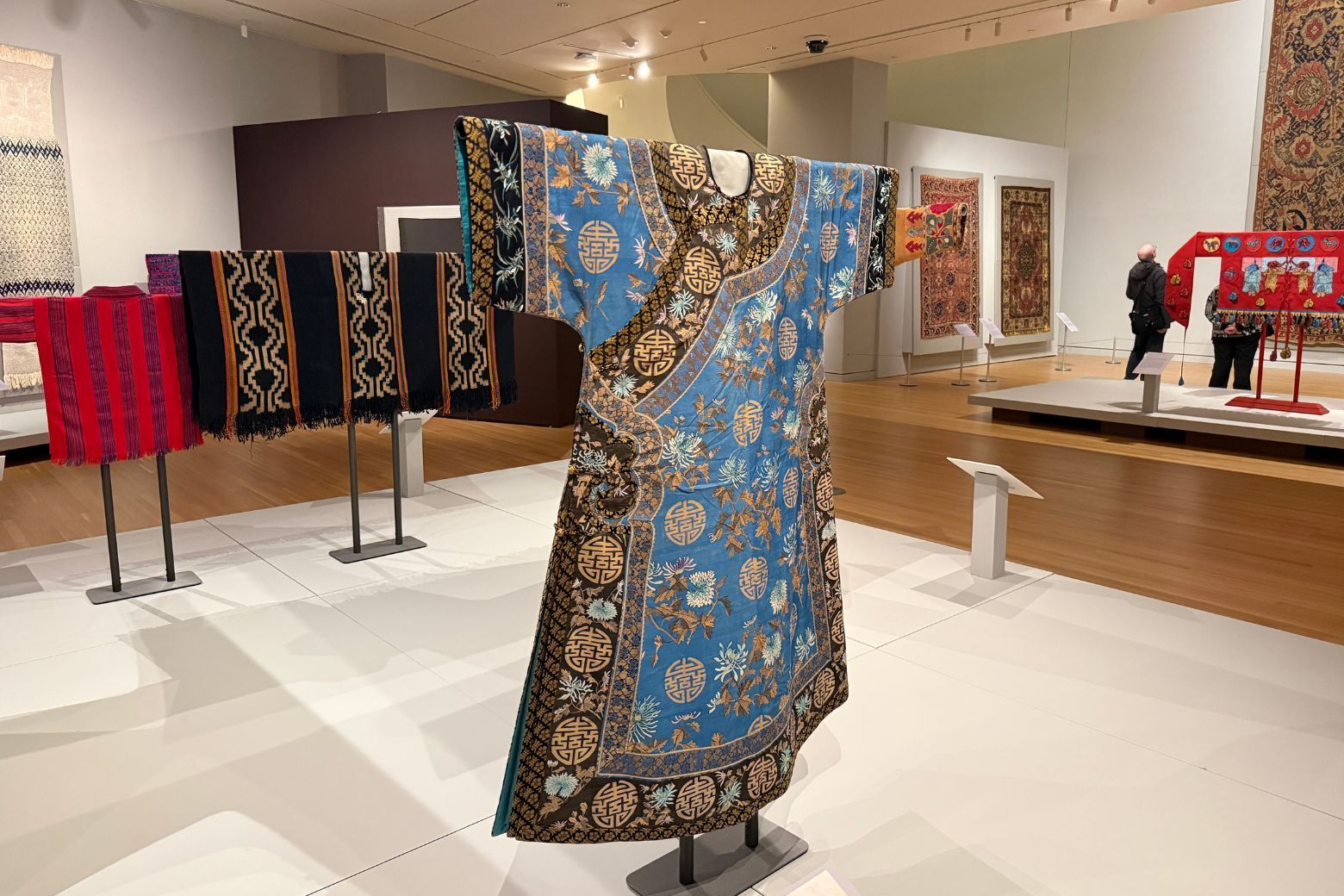
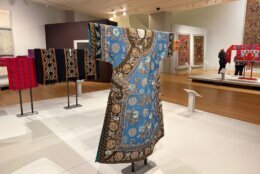
Another highlight of the collection is a robe that was made for the last Dowager Empress of China Cixi.
“It has an interesting D.C. connection in that it came to us through the collection of Elizabeth Ickes and her father, Harold Ickes was the Secretary of the Interior under FDR,” Talbot said. “Her mother actually wore these Chinese imperial robes for her dinner parties that she very famously hosted. So this robe has both Imperial Beijing and a ‘New Deal’ Washington D.C. connection.”
In addition to displaying some of its most extravagant pieces the museum has also, for the first time ever, published a large book of collection highlights called “Textile Treasures,” a project that Talbot said has been decades in the making.
Get breaking news and daily headlines delivered to your email inbox by signing up here.
© 2025 WTOP. All Rights Reserved. This website is not intended for users located within the European Economic Area.