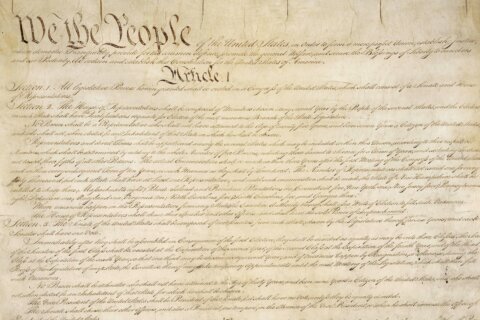
Americans celebrated Constitution Day on Wednesday, marking the ratification of the founding document for the nation’s government. To mark the occasion and ahead of the U.S. semiquincentennial, the National Archives for the first time in history displayed all the pages of the Constitution for public viewing.
“You can’t talk about the declaration without the Constitution and vice versa. They tell a complete story of our country, and all these amendments are part of that story,” Grace McCaffrey, the National Archives representative for America 250, told WTOP.
The original four pages of the Constitution and the Bill of Rights are usually displayed in the dimly lit rotunda, but the rarely seen “fifth page” and the amendments that were later added to the Constitution after it was ratified are now on display.
“We have the rarely seen 11th through 27th Amendment. And this is the first time all of those documents together have ever been in the same place for the public,” McCaffrey said.
Those amendments had previously been held in Congressional records and were bound with the documents of that specific Congress, but conservation staff were able to remove them and start preservation work so they could be displayed.
“This was the first time that we were able to actually get them and they’ve been taking out their volumes incrementally over the years,” said Jessie Kratz, a National Archives historian.
“You can read the actual text online. You can find it, but, like, there’s not too many opportunities to actually see the original documents,” Heather Barbier, a visitor on the first day of the exhibit, told WTOP.
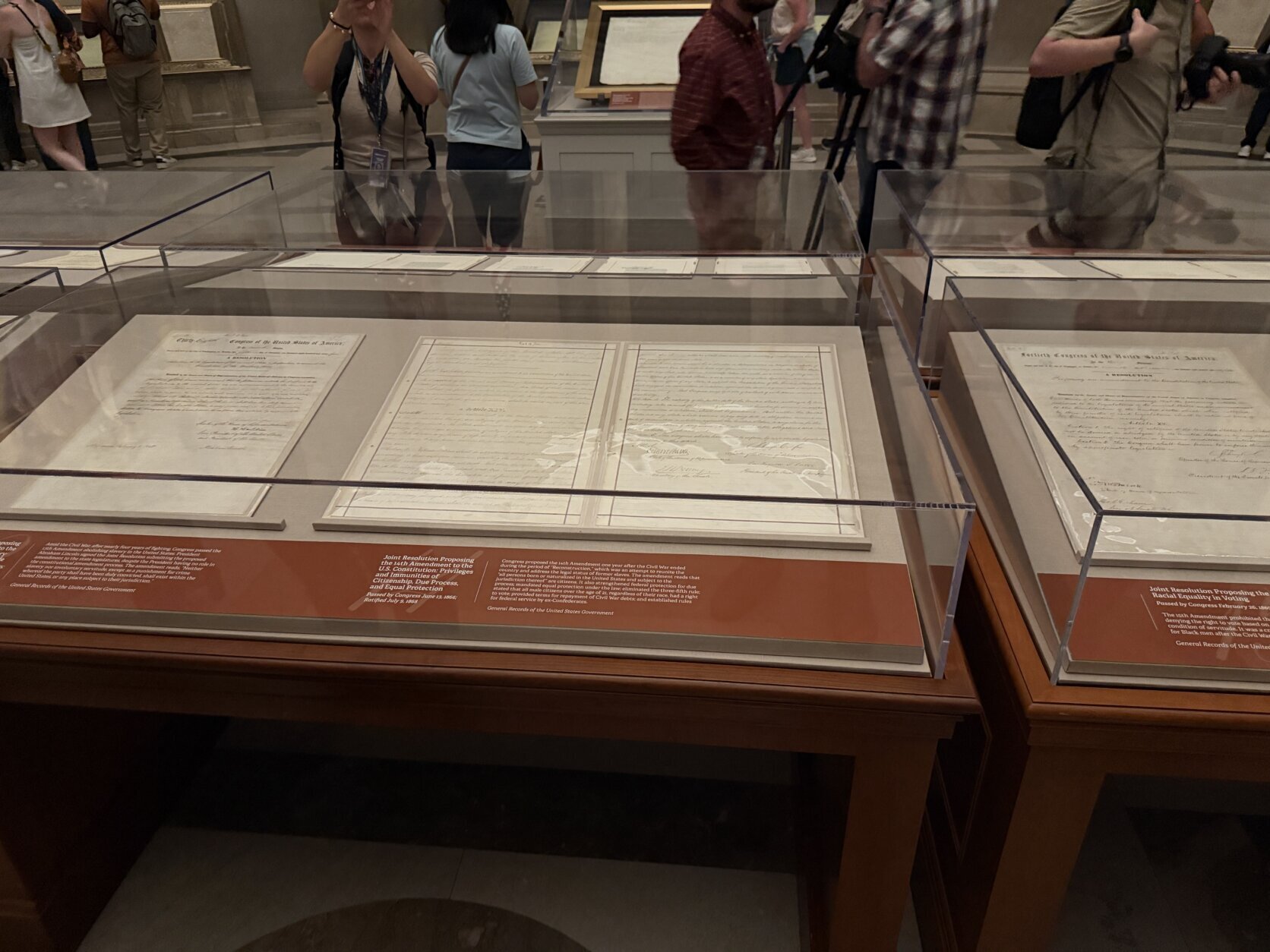
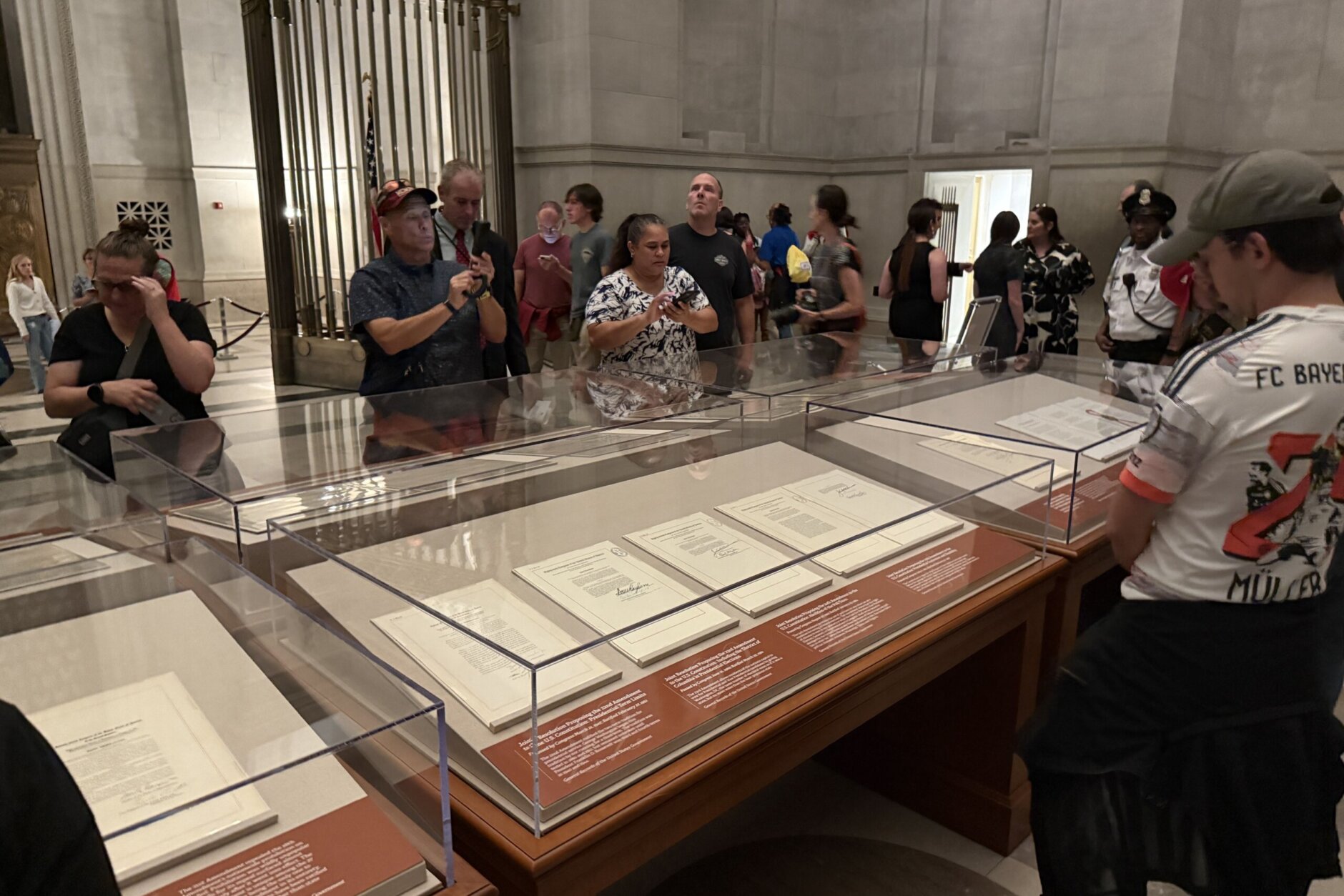
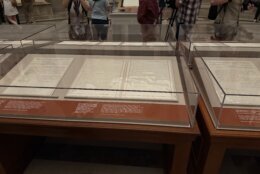
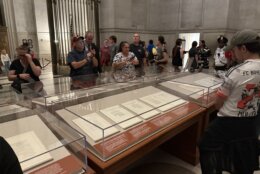
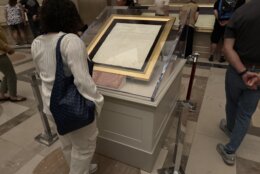
The exhibit starts with the 11th Amendment, ratified in 1795, and winds all the way to the 27th Amendment, ratified in 1992.
“You can tell from looking at the 11th Amendment moving through the 27th, we have them all in order, it starts with handwriting, so we move from handwriting to typewriting. So it just, you can tell they don’t all look the same, which I think is just so special, and just makes it even more unique,” McCaffrey said.
Visitors will be able to see the 13th Amendment, which abolished slavery. Kratz said clerks who wrote the document in 1865 knew it would be historic, so they each crafted a single line rather than one writing it out fully. President Abraham Lincoln also signed the joint resolution from Congress, the only time the written amendment bears a presidential signature.
The 16th Amendment is where you begin to see typed documents and Kratz said that the following documents share in the same style.
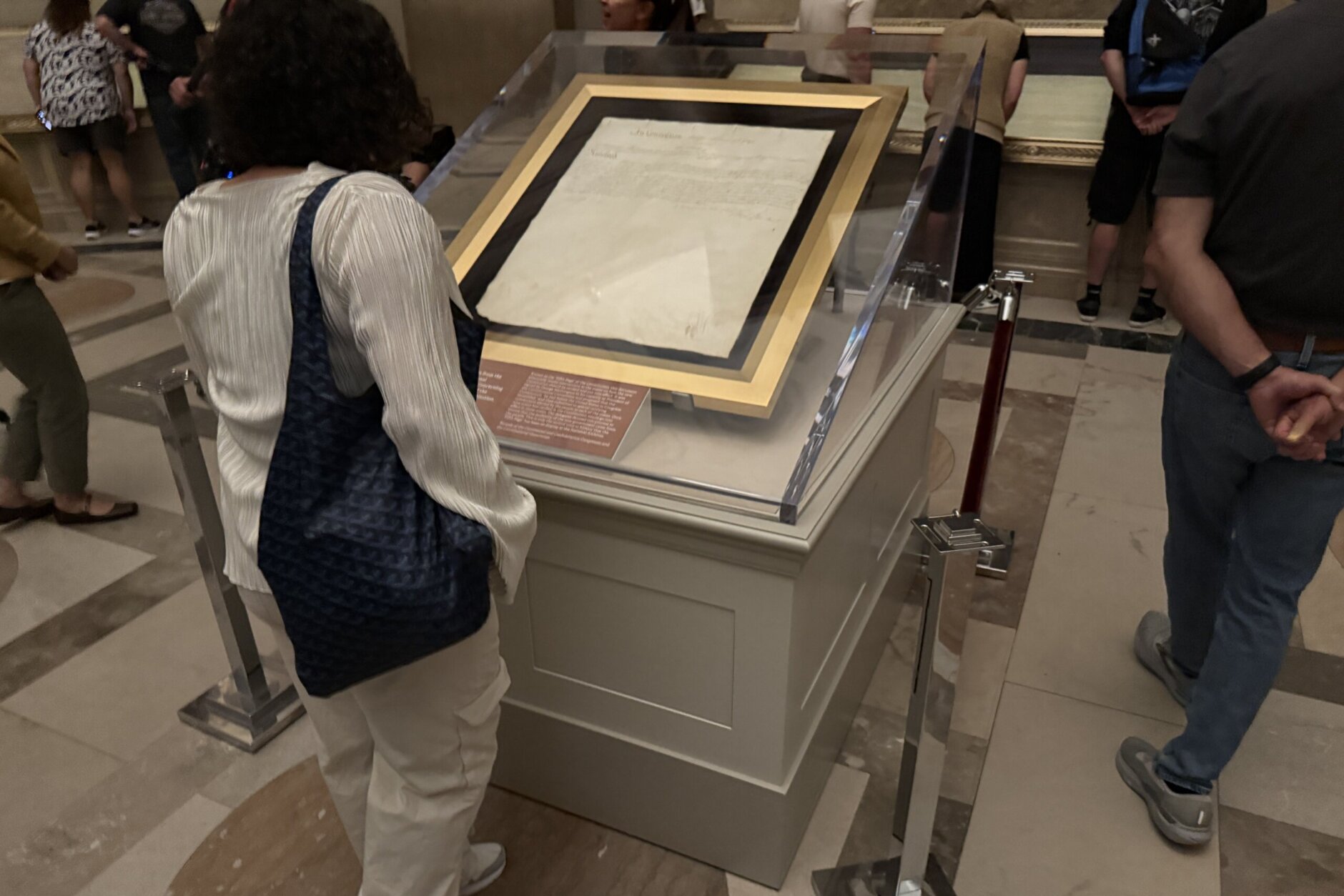
Beyond the additional amendments, the National Archives is also displaying the Constitution’s fifth page.
This document outlines a set of instructions to the states on how to implement the Constitution. At the bottom, visitors will see George Washington’s signature as president of the Constitutional Convention.
“I think it’s just so special. And of course, as our first president, and he’s just someone that people really recognize. So I think it’s important to realize you don’t have to be a history buff, you don’t have to be an expert, you don’t have to be a historian to come and really interact with these documents and have it hit home,” McCaffrey said.
Kratz said political polarization is nothing new in this country and it actually bore out the Constitution. The first government, the Articles of Confederation, required unanimous agreement by the states, handicapping the national government. That led to the Constitutional Convention.
“It was basically a secret meeting of some of the most elite members of society that came in, met behind closed doors in Philadelphia and crafted this document,” Kratz said.
Kratz said many things were trial and error for the conventions, such as the Electoral College, which was conceived during the last four days of the convention.
Shortly after the Electoral College system was changed under the 12th Amendment, after the presidential election of 1800 was a tie, and it went to the House of Representatives to decide the president.
“They also didn’t want a president from one party and a vice president from another party,” Kratz said, which was a stipulation in the original document.
The Constitution in its entirety will be displayed at the National Archives until Oct. 1. During the weekends during this stretch, the museum will remain open later than normal, until 7 p.m.
“We really want people to be engaged with the 250th birthday, and engaging with original records is one of the best ways,” Kratz said.
Get breaking news and daily headlines delivered to your email inbox by signing up here.
© 2025 WTOP. All Rights Reserved. This website is not intended for users located within the European Economic Area.