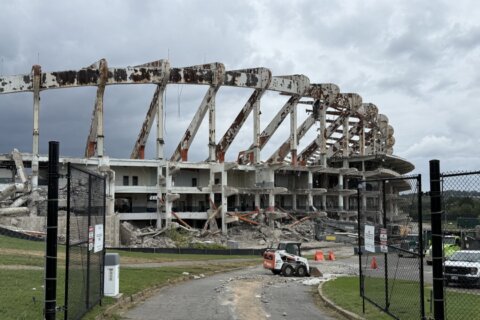
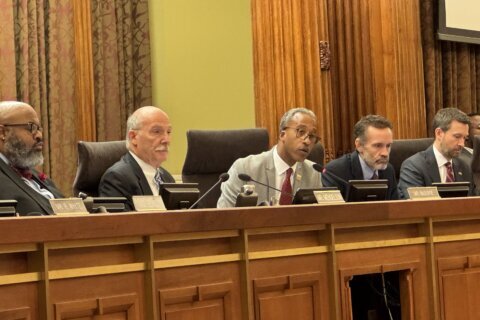
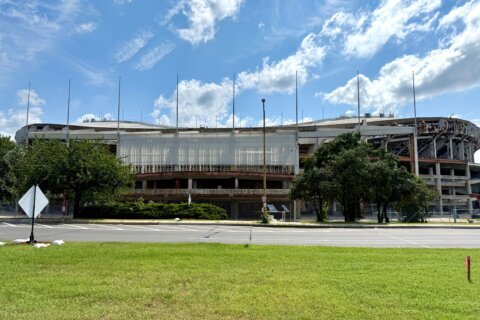
The D.C. Council will take its final vote Wednesday afternoon on the Washington Commanders stadium deal. If it passes, the vote will bring the NFL team back to the District. The passage of the RFK Development Act would also bring redevelopment to the long-neglected 180-acre RFK Stadium campus.
This video is no longer available.
“I’m expecting that there will again be a clear majority in support at second reading,” said D.C. Council Chairman Phil Mendelson on Tuesday.
Seven votes are needed for the 13-member council to pass the legislation. Only three members voted against it during the first vote in August.
Mendelson said an amended deal has been put together, but the changes do not affect the “major economic terms” of the agreement. Instead, they clarify certain elements of the deal.
“It’s not changing the abatements. It’s not changing what happens with the tax revenues. It’s not changing the funds that are set up to support the ongoing maintenance of the stadium,” Mendelson said.
But the team says it has a “deep concern” regarding the “last-minute new demands” just hours before the final vote.
In a letter, team President Mark Clouse said the team was presented “with a list of unworkable and impractical new last-minute demands by Councilmembers.”
The letter states that the team cannot agree as it “jeopardizes the deal.”
Some of the changes clarify how a $20 million transportation fund can be used. The amendment also adjusts the timeline for when affordable housing must begin to be delivered, starting three years after zoning for residential properties is approved.
The initial deal had the first portion of housing due by the end of 2030, but Mendelson called that schedule “a little aggressive,” due to the many zoning steps and approvals required before construction can begin.
The team said said the new proposals impact its ability to deliver the project as envisioned and “will restrict the value this project would deliver, including limiting or precluding construction, reducing the ability to attract major events and limiting the District’s ability to deliver on proposed housing, among others.
In a release, Mayor Muriel Bowser said: “I am incredibly excited that with passage of these bills, the District will finally be able to welcome the Washington Commanders back home.”
“I urge the Council to support Chairman Mendelson’s Amendment in the Nature of a Substitute and to pass the bill. Because some of the deal’s details will be contained in other legally-binding documents, they should not be legislatively mandated through further amendments of this legislation. I share the concern over constructing the required affordable housing, which is why the bill contains financial penalties for development delays.”
She warned the council against “creating additional penalties or requirements that may undermine the District’s ability to close the deal and bring the Commanders back to D.C.”
Some want to save heritage trees
Some residents and organizations have expressed concerns over portions of the bill, including a coalition of more than 30 groups calling for, among other changes, protections for large, established trees on the campus, known as heritage trees.
Speaking near the RFK stadium site, in the median area of East Capitol Street, Nina Albert, D.C. Deputy Mayor for Planning and Economic Development, said many of those trees will remain.
“We’re standing in the festival grounds, and we’re surrounded by, I think, 20 heritage trees. This represents the vast majority of the heritage trees, and I believe we’ll all work very hard to preserve them. That said, there are some trees that will need to either be relocated or taken down to make way for this project,” Albert said.
Mendelson also said the project will not lead to the removal of all heritage trees.
“The waiver that was in the bill at first reading and is in the amendment in the nature of a substitute, doesn’t say every heritage tree is going to be cut down and the team has made clear that they have no intention of cutting down every heritage tree,” Mendelson said.
Displacement of area residents has also been a concern, which could come up during discussion of expected amendments to the deal. Council member Robert White is among those who have been vocal on the issue, expressing concern that development of the campus could result in residents of the Kingman Park area being pushed out of their homes.
Possible ‘wealth building’ for residents
Mendelson said while the council should monitor whether displacement becomes an issue, the project could also benefit many who live nearby.
“This is not a development project that is taking an existing block of homes or businesses and tearing them down and displacing them. This is a development at the site where there has been a stadium historically. So there may be increased property values, which I rephrase as wealth-building for the residents in the adjacent neighborhoods,” he said.
Some who live near the stadium have expressed concern about whether the roads and Metro station can handle the crowds.
Albert said discussions with the community will take place, and that conversations are already underway about whether a new Metro station is needed at the site.
“Metro is going to be kicking off a study as to the feasibility of expanding their station and maybe even building a new station,” Albert said.
She said she is confident that at least seven “yes” votes are secured to pass the legislation, which she described as a major economic driver.
“The project has been significantly vetted, and the deal has been significantly vetted during the first vote. It got overwhelming support by the council, nine to three vote. And so, I believe that the council has been satisfied with the material points of the deal,” Albert said.
As for whether the city is preparing for the possibility that the deal fails, Albert said she “can’t even conceive” a future with that outcome.
“If that were the outcome, our work to make sure that D.C. residents have jobs, that there’s continued and certain economic activity over the next four years, that profile would change,” she said.
Get breaking news and daily headlines delivered to your email inbox by signing up here.
© 2025 WTOP. All Rights Reserved. This website is not intended for users located within the European Economic Area.