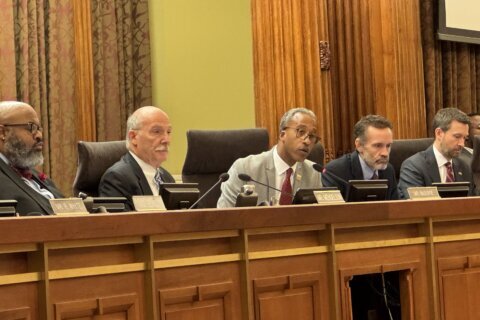
On Friday, the eight members of the D.C. Council cleared the $3.7 billion RFK Stadium deal through a first vote. For the vote to turn out the way it did, several members who were on the fence about the measure had to be convinced to advance the agreement.
Ward 6 Council member Charles Allen was among those convinced to vote in favor of the deal. He said the deal simply wasn’t good enough when the council first received it from the mayor, but that it’s since become a better deal.
“We needed to reduce parking. We needed to increase Metro. We’ve been able to knock out 2,000 parking spots in a garage and put hundreds of millions that will go toward public transit improvements,” Allen said.
Allen also said some additional environmental protections — and the team promising to build under LEED Platinum guidelines — got him to a “yes.”
“We will now have, I think, the nation’s preeminent environmental stadium,” Allen said.
Among those who voted “no” was At-Large Council member Robert White, who said his main concern was the lack of strong housing protections outlined in the bill for residents.
“As somebody who was elected to protect residents, I can’t be a part of voting for something that is going to hurt them, because there are future promises that are not locked in,” White said.
White wasn’t alone in that sentiment, and Allen said his hope is some more protections would be added before the second and final vote on Sept. 17.
Another topic several members said they would want to discuss before a second vote is whether stronger penalties for missing development deadlines — for the mixed portions of the project — should be in the legislation.
Council Chairman Phil Mendelson pushed back at some of those calls for stricter penalties.
“They’ve been good partners, which is why all the discussion about what if they miss deadlines and what the penalties should be; I think they want to be good corporate citizens,” Mendelson told WTOP.
Before the second vote, the council could introduce more amendments, but At-Large Council member Kenyan McDuffie said it’s unlikely there will be dramatic changes.
“Anything that we do between first and second (votes) would likely be more of a tweak and not some huge change, because I think we spent tremendous amount of time over the last several weeks getting to the point where we are today,” McDuffie said on Friday.
The bill, on its second vote, will only need seven votes to pass.
Get breaking news and daily headlines delivered to your email inbox by signing up here.
© 2025 WTOP. All Rights Reserved. This website is not intended for users located within the European Economic Area.