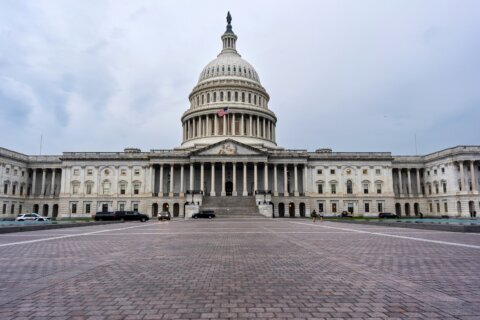
With a government shutdown just hours away, one of the key sticking points between Republicans and Democrats involves health care, specifically whether to extend premium subsidies under the Affordable Care Act.
The debate centers on enhanced tax credits that help millions of Americans afford insurance through ACA marketplaces. These subsidies are currently scheduled to expire at the end of 2025, but Democrats are pushing for action now to avoid disruptions during the upcoming open enrollment period.
“Twenty-two million people across the country get their coverage through the Affordable Care Act marketplaces,” said Anne Reid, policy director of the Funders Forum on Accountable Health at the Milken Institute School of Public Health at George Washington University.
“The vast majority of those folks have some level of subsidization of their coverage, which is tied to their income.”
Reid warns that without an extension, millions could lose coverage or face unaffordable premiums.
The credits were expanded in recent years to raise income thresholds, allowing more Americans to qualify for help.
“The credits were enhanced in the sense that a higher minimum income was set so more people could qualify to receive some relief toward these premiums,” Reid said.
Reid previously served as a senior congressional staffer, where she contributed to health workforce policy during the development of the Affordable Care Act.
Democrats want the extension included in the continuing resolution needed to keep the government open. Reid said they view it as a must-pass provision.
“Democrats are arguing that we need to handle this in must-pass legislation, which at the moment is the appropriations bill.”
They also want to reverse earlier Medicaid cuts that could result in more than 10 million people losing coverage.
But Republicans argue the funding bill should be a “clean” continuing resolution, focused solely on keeping the government running.
“Let’s just keep the government going on current fiscal year levels through the middle of November, to give us some time to work things out and negotiate a longer-term package,” Reid said, summarizing the GOP position.
University of Maryland finance professor David Kass said Democrats are pushing to extend the expanded benefits into 2026, but Republicans want to debate the issue separately from the stopgap funding measure.
“Fewer Americans would be able to purchase health insurance” if the premium help isn’t available as open enrollment begins, Kass said.
Reid said the timing is critical, not just for consumers, but for insurers who need clarity to set rates.
“Days and weeks matter in terms of being able to rightsize the premium levels.”
The potential shutdown could also hit the D.C. region particularly hard, given its large federal workforce.
“Job security and financial security would very acutely be felt in the D.C. region, given our demographics and who all comprises the federal workforce,” Reid said.
With open enrollment approaching and budget negotiations stalled, Reid said the lack of clarity could leave consumers in limbo and millions of Americans at risk of losing affordable health coverage.
Get breaking news and daily headlines delivered to your email inbox by signing up here.
© 2025 WTOP. All Rights Reserved. This website is not intended for users located within the European Economic Area.