NEW YORK (AP) — Sales at U.S. retailers and restaurants were unchanged in October from September as consumers moderated their spending amid worries about higher prices and other economic uncertainties after splurging over the summer.
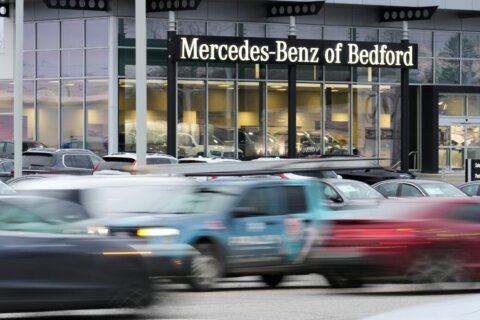
But a big factor dragging down the figure was a 1.6% drop in sales at motor vehicles and auto parts dealerships, hurt by the expiration of federal government subsidies that sliced demand for battery-powered electric cars. Excluding that category, retail sales rose 0.4%, the Commerce Department said Tuesday in a report delayed more than a month because of the 43-day government shutdown.
The overall flat spending in October was less than economists expected and followed a revised 0.1% increase in September, the agency said. Retail sales jumped 0.6% in July and August and 1% in June.
The federal government is gradually catching up on economic reports that were postponed by the shutdown.
“The retail sales report for October was a dud, but the underlying details offer more encouraging signals for (fourth quarter) consumer spending and an elevated starting point for the critical two-month stretch for holiday sales,” Tim Quinlan, an economist at Wells Fargo, wrote Tuesday.
Still, Quinlan said other data suggest some slowdown through mid-December and leave the firm cautious on how the consumer crosses the finish line.
The government retail sales figures, which aren’t adjusted for inflation, show that Americans remained selective in October as many households struggled with high prices for groceries, rent, and many imported goods hit by tariffs.
The latest job report, released by the Labor Department Tuesday, also shows a souring employment picture.
The retail sales report covers about one-third of consumer spending, with the rest going to services such as travel, haircuts, and entertainment.
Sales at clothing and accessories stores rose 0.9%, while business at furniture and home furnishing stores increased 2.3%, likely due to rising prices because of tariff costs. Most furniture is made in China.
Online retailers posted a 1.8% sales increase, while department stores saw business rise 4.9%.
But business at restaurants, the lone services component within the Census Bureau report and a barometer of discretionary spending, posted a 0.4% sales dip.
The report comes as retailers are preparing for the crowds of last-minute shoppers with expanded hours and stepped up deals for the last stretch of holiday shopping before Dec. 25.
Hiring has generally been weak, while the unemployment rate has ticked higher, which could hurt consumer spending and the broader economy. The latest job report showed that the U.S. gained a decent 64,000 jobs in November but lost 105,000 in October as federal workers departed after cutbacks by the Trump administration.
The unemployment rate rose to 4.6%, the highest since 2021.
Despite lots of uncertainty, holiday shopping season had a solid start, with shoppers focusing on deals, according to data over the Black Friday weekend. But spending hasn’t been even across the board.
Third-quarter results from retailers released last month have been mixed. Walmart, the nation’s largest retailer, posted strong sales as it pulls shoppers across a wide spectrum of incomes who are drawn to its low prices. TJX Cos., which operates stores under such names as T.J. Maxx and Marshalls, has seen an influx of shoppers looking for a treasure hunt experience.
But Home Depot has seen slower spending as shoppers focus on small home projects, while Target, grappling with weak sales, is trying to revive its reputation as a place for affordable but stylish fashion and home goods.
The National Retail Federation, the nation’s largest trade group, still expects sales over November and December to increase 3.7% to 4.2%, compared with last year.
Retailers rung up $976 billion in holiday sales last year, or a 4.3% increase from the prior year, the group said.
But spending trends by income continue to show a K-shaped pattern, with higher-income Americans thriving with their salaries and wealth rising, while the bottom part points to lower-income households struggling with weaker income gains and steep prices.
Based on spending from its credit card and bank customers, Bank of America Institute found that high-income shoppers increased spending by 2.6% in November compared with the year-ago period, while lower-income groups lagged behind with a gain of just 0.6% compared with a year ago.
“Near-full employment has continued to support broad-based consumer demand,” Moody’s Rating’s Claire Li, vice president of credit strategy, wrote in a report published earlier this month. “But slowing hiring, cooling wage gains, and mounting affordability pressures are eroding households’ consumption growth.”
Copyright © 2026 The Associated Press. All rights reserved. This material may not be published, broadcast, written or redistributed.