The National Transportation Safety Board on Tuesday is holding a public hearing into the March 26, 2024, crash and collapse of the Francis Scott Key Bridge across the Patapsco River in Baltimore, Maryland.
The NTSB said its board will vote on findings, probable cause and safety recommendations during the hearing.
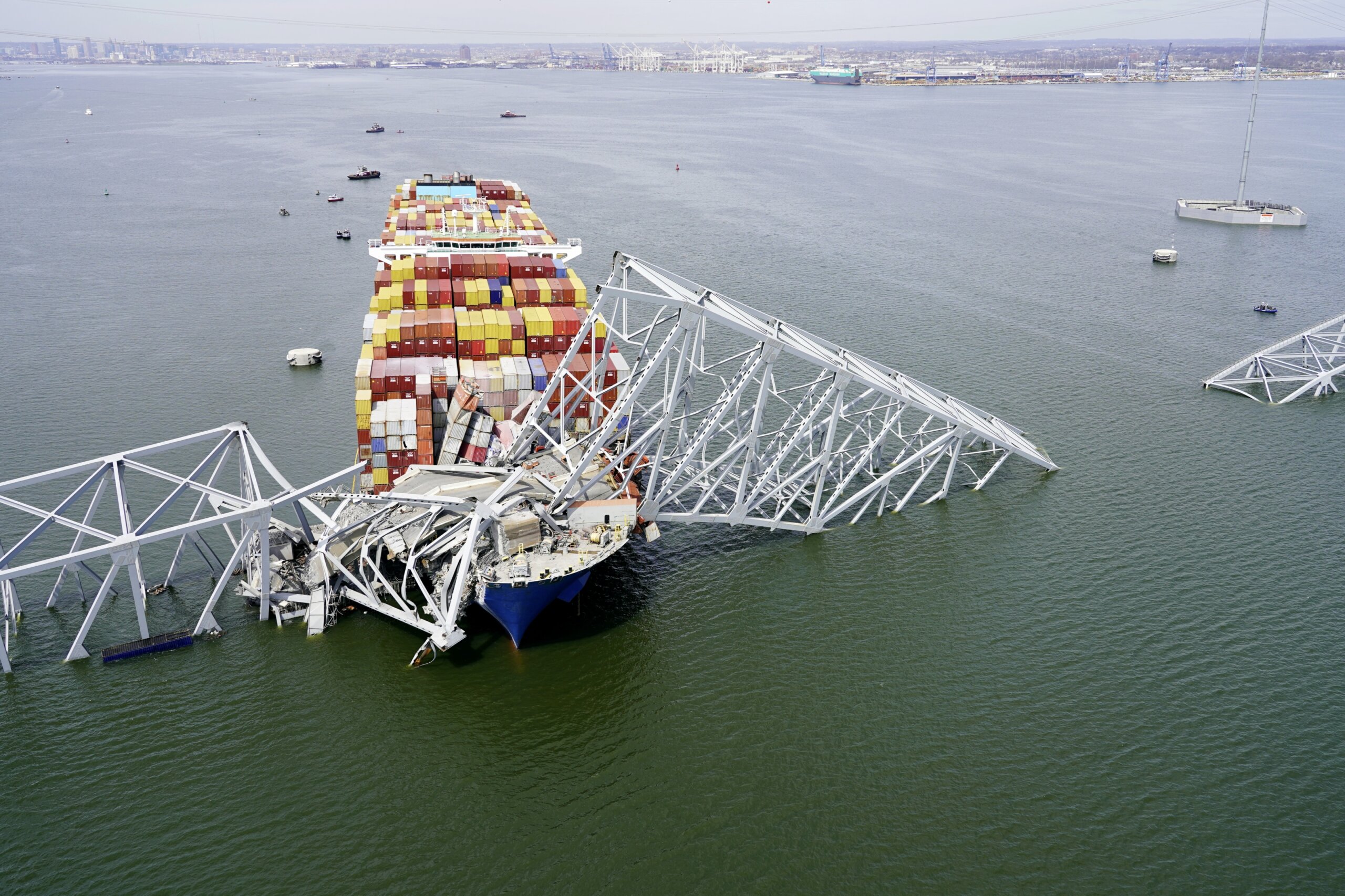
Six construction workers died when the container ship MV Dali struck the bridge around 1:30 a.m., bringing the structure down in less than a minute.
Stacy Tetschner, CEO of the Virginia-based American Traffic Safety Services Association, said the tragedy underscores the need for worker safety.
“You would have thought it was the safest time to be up there and that a vessel wouldn’t have lost power and crashed into the bridge like that,” Tetschner said. “These are six people whose families were relying on them, and so worker safety has to remain at the forefront of everything we do when we see people working out on the roadways.”
The six workers who died were on the bridge to patch potholes when the ship hit:
- Alejandro Hernandez Fuentes, 35, foreman
- Dorlian Ronial Castillo Cabrera, 26
- Maynor Yassir Suazo Sandoval, 38
- Carlos Daniel Hernández Estrella
- Miguel Angel Luna Gonzalez, 49
- José Mynor López, 37
Two other workers were rescued with injuries.
The collapse is among the most expensive infrastructure disasters in U.S. history. Maryland officials said it will be remembered for decades.
On Monday, the Maryland Transportation Authority announced that it was updating its cost estimate range for the new bridge to between $4.3 billion and $5.2 billion. It is well over double the state’s initial estimate of around $2 billion, with federal funds and insurance expected to cover most of it.
President Donald Trump has signaled he may revisit a congressional commitment made under former President Joe Biden’s administration to fully fund the replacement.
Meanwhile, families of the victims, along with Maryland and Baltimore officials, have not reached a settlement with the ship’s owners and are pursuing lawsuits. The NTSB is expected to reveal the definitive cause of the disaster and issue safety recommendations to prevent similar crashes.
“Sometimes there is a perfect storm, and it happens on occasion. Unfortunately, this is one of those times,” Tetschner said. “These aren’t just six random workers that were out working one night. These are six people that didn’t come home. Those are still six people, six people that deserve our respect and six people that deserve to be remembered.”
What happened on March 26, 2024
Video of the collision, seen worldwide, showed the ship’s lights flicker moments before impact. A backup generator restored power shortly after, but it was too late to steer the vessel away from a bridge support.
The ship had just left the Port of Baltimore, beginning a voyage to Colombo, Sri Lanka.
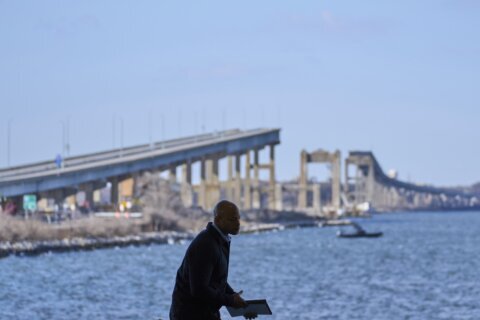
Investigators said the crew reported electrical problems before the crash, and moments before impact the ship suffered a “complete blackout,” drifting at low speed out of the shipping channel toward the 47-year-old, four-lane, 1.6-mile bridge that carried Interstate 695 between Hawkins Point in Baltimore and Sellers Point in Dundalk.
The NTSB’s preliminary report was released May 10, followed by a Sept. 12 update that cited multiple electrical issues aboard the MV Dali. The ship experienced two electrical failures while docked in Baltimore the day before departure. Investigators believe a loose cable in the electrical system was the likely cause.
Structural engineers with the American Association of State Highway and Transportation Officials estimate the slow-moving ship, which is larger than three football fields, hit the Key Bridge with a force possibly eight times greater than a Saturn V rocket launch. A mayday call allowed police to stop traffic from driving onto the bridge before impact.
Recovering from collapse and rebuilding Key Bridge
The collapse disrupted freight traffic at the Port of Baltimore, the nation’s busiest port for what’s called ‘roll on, roll off’ cargo, such as cars, trucks and heavy equipment. Coal shipments were also affected. For 11 weeks, shipping nearly halted, though smaller channels were opened to move some cargo. Cleanup and recovery have cost at least $100 million so far, and litigation could last years.
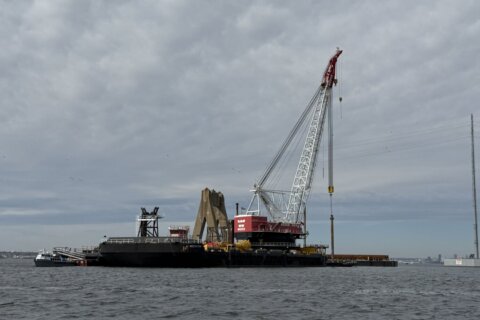
At the same time, the U.S. Coast Guard, Maryland officials and hundreds of highly skilled workers, including divers, welders and crane operators, removed tons of metal and other debris from the bridge to eventually open the full channel so the port could resume operations.
Maryland officials have begun planning a replacement bridge.
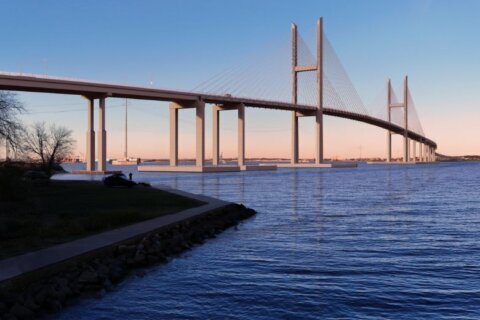
In February, Gov. Wes Moore unveiled a design concept with a 230-foot vertical clearance to accommodate larger container ships.
The new cable-stayed bridge will be two miles long, slightly wider than the old span, and include two 12-foot lanes in each direction with wider shoulders, according to design renderings released in October.
Construction is expected to begin next year and finish in late 2028.
Get breaking news and daily headlines delivered to your email inbox by signing up here.
© 2025 WTOP. All Rights Reserved. This website is not intended for users located within the European Economic Area.