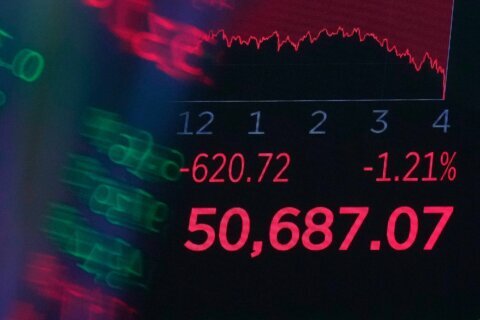
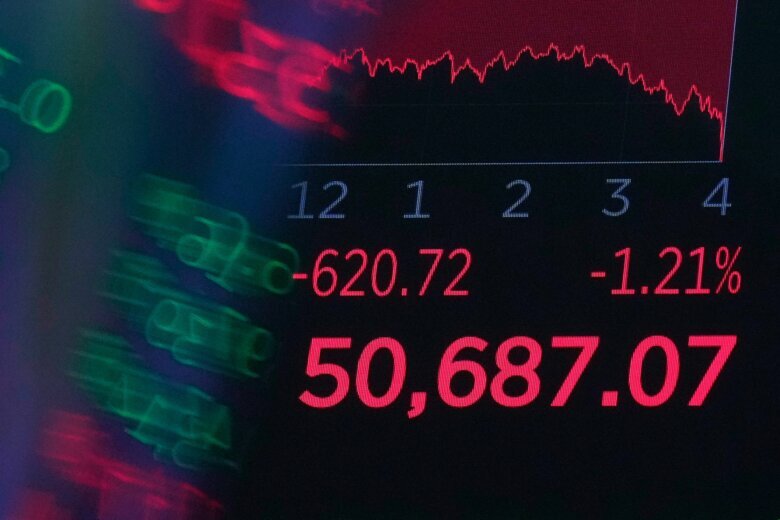
The U.S. stock market had its worst day since October Friday as a sell-off in big technology companies weighed down the broader market and a strong jobs report boosted expectations that the Federal Reserve will be forced to hike interest rates at some point this year.
The S&P 500 sank 2.6%, its biggest one-day drop since October 10, when the Trump administration threatened to impose a 100% tariff on imported goods from China. The losses helped push the benchmark index to its first losing week in the last 10.
The Dow Jones Industrial Average fell 1.4%, while the Nasdaq composite slumped 4.2%.
Tech stocks dragged the broader market lower as companies that had powered the S&P 500 to a series of records the past two months saw losses. Nvidia fell 6.2%, Broadcom dropped 7.9% and Micron Technology slid 13.3% for the biggest loss among stocks in the S&P 500.
Shares in Meta fell 5.5% following a published report that the social media giant may seek to do a new stock offering to raise funds for spending on AI infrastructure.
Stocks within the S&P 500 were not far from being evenly split between gainers and losers. But, many of the bigger tech stocks have pricey values that tend to give them outsized influence on the broader market.
Meanwhile, bond yields jumped after a report showed the U.S. added a surprising 172,000 jobs in May, according to the Labor Department. It is the latest report showing that employment remains solid, despite the squeeze inflation is putting on businesses and consumers.
The latest reading on employment comes two weeks before Kevin Warsh heads his first policy meeting as chair of the Fed. Policymakers are widely expected to keep rates steady at the June 16-17 meeting despite pressure from President Donald Trump to lower borrowing costs. Longer-term, the market sees a better than 60% chance the Fed will push rates higher by the end of the year, according to CME FedWatch, and little to no chance of a cut.
“Any hopes of a Fed rate cut have effectively been eliminated with this morning’s strong jobs report,” said Ronald Temple, chief market strategist at Lazard, in a research note.
The yield on the 10-year Treasury rose to 4.54% from 4.50% just before the report was released. The yield on the 2-year Treasury, which more closely tracks the Fed’s actions, jumped to 4.16% from 4.04% just prior to the report.
The Fed has been holding interest rates steady as it tries to gauge the ongoing impact from rising inflation. Prices were already ticking higher from the impact of tariffs. The U.S. war with Iran has essentially blocked crude oil shipments from moving through the Strait of Hormuz.
The price of Brent crude, the international standard, fell 2% to settle at $93.09. It was about $70 per barrel before the war. The surge in oil prices prompted a jump in fuel prices. That has fueled a broader rise in inflation as prices for anything being shipped move higher and threaten to slow economic growth.
A measure of inflation preferred by the Fed showed that prices rose 3.8% overall in April. That marked the biggest increase in two years.
Wall Street has been anticipating that negotiations to end the war will eventually be successful. American and Iranian negotiators reached a tentative deal last week to extend their ceasefire, but the agreement has not been finalized.
The latest round of corporate earnings is coming to a close. Lululemon slumped 8.6% after trimming its revenue and profit forecasts.
Most reports from companies have been surprisingly good and helped Wall Street on its record run. Encouraging profits and forecasts helped overshadow lingering worries about the direction of the economy amid tariffs and high energy costs because of the U.S. war with Iran.
With earnings now in the background, analysts have been warning that the tech companies benefiting from interest in artificial intelligence may have become too expensive. That could result in a slowdown for a market that has posted a solid gain in 2026, with the S&P 500 up 7.9% for the year.
All told, the S&P 500 fell 200.57 points to 7,383.74 on Friday. The Dow dropped 695.15 points to 50,866.78, and the Nasdaq lost 1,121.53 points to close at 25,709.43.
Markets were mixed in Europe after markets in Asia fell.
___
AP Business Writers Chan Ho-him and Matt Ott contributed to this report.
Copyright © 2026 The Associated Press. All rights reserved. This material may not be published, broadcast, written or redistributed.