Follow WTOP’s team coverage of the D.C. primary and Election 2026 online, on air at 103.5 FM or on the WTOP News app.
Ahead of D.C.’s primary election in June, WTOP sent a questionnaire to all the candidates in each contested race, asking them to introduce themselves to voters, share their priorities and weigh in on some of the most pressing issues facing the District.
Candidates submitted their responses through an online form, and the answers published are verbatim.
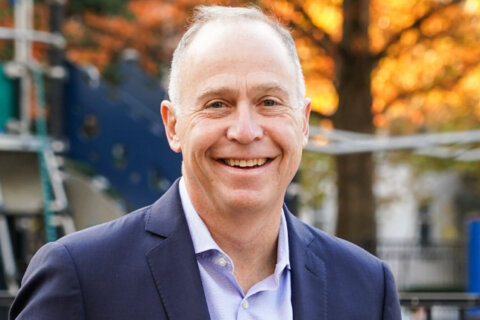
The answers below are from Gloria Ann Nauden, who’s running for the Ward 6 seat on the D.C. Council against Michael Murphy (link their answers on their name) and incumbent Charles Allen.
- WTOP:
Please briefly describe your professional background. What is your current job, and what experience or skills best prepare you to serve in this role?
- Gloria Ann Nauden:
I have spent over 30 years living and working in Ward 6, building a career grounded in economic development, public service, and community leadership. I began at Black Entertainment Television, in strategic business development under the company’s chairman before moving into public service at the DC Commission on the Arts and Humanities, where I expanded funding access by 77% and helped create programs that still circulate millions of dollars into DC’s creative economy today.
I served as Vice President of Marketing and Corporate Communications at City First Bank, a leading national CDFI, where I helped drive over $100 million in asset growth and supported hundreds of small businesses. Today, I serve as interim CEO of Philanthropy DMV and lead DC Community Development Consortium Institute, channeling capital to underresourced businesses and communities.
As an elected ANC Commissioner for 6A-02, I represented neighbors directly. I have helped nearly 1,000 DC small businesses survive and grow, created youth internship pathways, and built public-private partnerships that deliver results. Ward 6 needs that experience on the Council.
- WTOP:
What are your top three priorities if you are elected?
- Gloria Ann Nauden:
My top three priorities are public safety, affordability, and stronger communities. On public safety, I will focus on fully staffing MPD, strengthening community policing, and investing in youth prevention and workforce programs that address violence at its roots. On affordability, I will expand housing and homeownership opportunities, protect long-term residents from displacement, and address rising costs pushing families out of Ward 6. In the community, I will support strong neighborhoods and commercial corridors by improving cleanliness, lighting, and public safety, while ensuring residents and small businesses receive responsive city services and real support from their government.
- WTOP:
Crime remains one of the top issues residents talk about, especially violent crime and youth‑involved offenses. At the same time, there are concerns about civil rights and over‑policing. As a Council member, what would you push for legislatively to improve public safety and how would you know those changes are actually working?
- Gloria Ann Nauden:
Public safety requires trust, consistency, and systems that work. Legislatively, I would push to fully fund MPD recruitment and retention because a department that is hundreds of officers short cannot deliver reliable community policing. I would support regular reporting on response times, clearance rates, and use-of-force data by neighborhood, so residents can see clearly whether policies are improving safety. At the same time, enforcement alone is not enough. I sustained investment in violence interruption and prevention programs, which research consistently shows reduce shootings when communities have the resources to properly maintain them. I would also push for stronger coordination between MPD, social services, and mental health responders so non-criminal calls are handled by the right professionals.
On civil rights, I support strong civilian oversight with real authority because accountability is essential to public trust.
To measure progress, I would track response times, violent crime trends, repeat offenses, and community trust surveys, with annual public hearings to review the data transparently. Results, not rhetoric, are the standard.
- WTOP:
Some residents say youth‑involved crime cannot be solved by enforcement alone, while others worry there are not enough consequences when serious crimes occur. What role should the DC Council play in reducing youth‑involved crime, and how should prevention, intervention, and accountability work together? Please include where you stand on youth curfews and how, if at all, they should fit into a broader public safety approach.
- Gloria Ann Nauden:
Youth-involved crime requires early intervention, real opportunity, and appropriate accountability, not a single-tool approach. I have seen firsthand how workforce connections, mentorship, and structure change outcomes. In response to recent Teen Takeover incidents, I launched Spring Break Community Service Week, connecting students to civic engagement and career exposure. That kind of proactive leadership matters.
The Council should fund evidence-based prevention such as after-school programs, summer employment, and mental health services, along with intervention that reaches young people already in contact with the justice system before they escalate further. At the same time, when serious crimes occur, there must be clear and appropriate consequences because the system cannot feel random or toothless for victims or for young people who need to understand boundaries.
On youth curfews, I believe targeted, time-limited curfews can be a useful tool in specific circumstances, particularly in response to documented patterns of group activity in specific locations. However, curfews are not a substitute for investment in opportunity. Broadly applied, they risk criminalizing normal youth behavior and eroding trust. Any curfew policy should be paired with outreach, services, and transparent data on outcomes, and reviewed regularly to ensure it is achieving its intended purpose.
- WTOP:
The DC Council does not run schools directly but controls funding and oversight. How would you use that authority to improve outcomes in DCPS and public charter schools?
- Gloria Ann Nauden:
The Council’s most powerful levers are the budget and oversight, and I intend to use both. I hear from families who cannot find a clear educational pathway from early childhood through high school graduation in Ward 6. Some are leaving the ward to find it. That is a failure we can address.
I would use budget authority to prioritize funding for schools that are underperforming and to protect programs focused on arts, counseling, special education, career and technical education, that are often the first cut when budgets are tight. I would push for transparent, comparable reporting on outcomes across DCPS and public charter schools, so families and policymakers can see where support is needed.
On oversight, I would hold regular hearings with DCPS leadership and the Public Charter School Board, focused on outcomes: graduation rates, reading and math proficiency, teacher retention, and access to wraparound services. I would also push for stronger school-to-workforce pipelines, connecting students to internships and career pathways while still in school.
Both DCPS and charter schools serve Ward 6 families, and both deserve accountability and investment. I will work collaboratively across both sectors, with families at the center.
- WTOP:
Housing costs, including rents and home prices, have increased in many cities. What specific policies would you support regarding housing affordability, and how would you balance new development with protecting existing residents and neighborhoods?
- Gloria Ann Nauden:
Ward 6 already has some of the highest rents in the city, and the pressure on families, especially seniors, longtime renters, and working households, is real and worsening. I support a comprehensive approach. On production, I would push for legislation requiring that new development in Ward 6 include meaningful affordable units, not just token percentages, and not buyouts that allow developers to place affordable units elsewhere. On preservation, I would strengthen tenant protections and enforce existing tools like TOPA more effectively so residents have a real opportunity to stay in their homes. I would also expand homeownership assistance programs, particularly for first-time buyers and long-term renters ready to build equity.
I bring relevant expertise here because my career in CDFI banking and community development finance gave me direct experience with how public-private financing tools work in practice. I would push to leverage DC’s existing tools, including the Housing Production Trust Fund and affordable housing set-asides, more aggressively and transparently.
New development is not the enemy; we need more housing. But growth that displaces the people who built Ward 6 is not successful. Every major development decision should be evaluated through the lens of who gets to stay.
- WTOP:
Some residents have raised concerns about response times, service consistency, and follow‑through by District agencies. What role would you, as a Council member, play in using oversight and legislation to strengthen accountability and improve city services?
- Gloria Ann Nauden:
Residents should not have to chase the city government for basic services. Too many Ward 6 residents raise concerns and never hear back. Trash pickup is inconsistent. Permitting is slow and unclear. That erodes trust and makes it harder for families and small businesses to plan.
As a Council member, I would use oversight authority actively, not just for high-profile hearings, but for routine accountability. I would push for systematic performance reporting from District agencies, with clear timelines and consequences for chronic failures. When agencies fall short, I will hold public hearings, require corrective action plans, and follow up to ensure they are implemented.
I would also prioritize constituent services as a core Council function. Residents contacting my office with service complaints should receive a substantive response and a clear path to resolution, not a form email. Legislatively, I would support streamlining permitting processes, which currently burden small businesses and homeowners while doing little to improve outcomes. I would also push for better interagency coordination, since many service failures happen at the seams between agencies.
I have spent my career making complex systems deliver results. That is exactly the skill Ward 6 needs on the Council right now.
- WTOP:
The Council has a major say in how the city spends its money. When the budget is tight, what should come first, and how would you decide which programs get protected and which don’t?
- Gloria Ann Nauden:
In a tight budget, I would protect the investments that stabilize vulnerable residents and prevent larger, costlier problems downstream: affordable housing, public safety, schools, mental health services, and senior support. These are not luxuries and cutting them shifts costs onto families and eventually onto the District in more expensive forms.
I would start by looking hard at administrative overhead and contracting, not because there is always waste, but because residents deserve to know that direct services are protected before bureaucratic costs are cut. I would use comparative data to assess which programs are producing measurable outcomes and which are not, and I would make that analysis public.
I would be skeptical of cuts that fall disproportionately on Ward 7 or Ward 8 residents, or that reduce services in communities that are already underresourced. Ward 6 has political capital, and I would use it to advocate for a budget that is equitable across the District.
I would also push for greater revenue transparency. Before accepting that the budget simply cannot support a priority, I want to understand the full picture of what the District is spending and where the flexibility actually exists. Residents deserve honest answers, not predetermined conclusions.
- WTOP:
Because Congress has authority to review and overturn District laws, what do you see as the Council’s role in addressing congressional involvement in local governance? How assertive, if at all, should Council members be in advocating for home rule?
- Gloria Ann Nauden:
DC’s lack of full voting representation and the ongoing threat of congressional override of local laws is a democratic injustice. The Council must be assertive, not passive, in defending home rule.
I believe Council members should actively and vocally oppose congressional interference in DC’s local decisions. That means building coalitions with elected officials in Maryland and Virginia, engaging national advocacy organizations, and making the case directly to the public, including the national press, when Congress overrides the will of DC voters. We cannot treat this as routine or acceptable.
The Council also has a responsibility to craft legislation in ways that are legally sound and defensible, reducing unnecessary exposure to federal challenge. That does not mean self-censoring on policy; it means being strategic.
Longer term, I support DC statehood. The arguments are overwhelming: we pay federal taxes, serve in the military, and still lack voting representation in Congress. The Council should continue to advance that goal and refuse to normalize second-class status.
Home rule is not just a procedural matter. It is about whether the people of DC have control over their own lives. I will defend it consistently and loudly.
- WTOP:
From buses and Metro to traffic safety and street conditions, transportation complaints come up across the city. What changes or investments would you focus on to improve how people get around DC?
- Gloria Ann Nauden:
Ward 6 residents depend on Metro, buses, and their own two feet to get around, and too many are dealing with unreliable service, dangerous intersections, and streets in poor condition. These are quality-of-life issues with real consequences.
On Metro, I support robust District funding advocacy and strong Council oversight of WMATA performance, with particular attention to reliability, accessibility, and safety. Bus service is the backbone of transit for many Ward 6 residents, and I would push for improved frequency and better shelter infrastructure, especially on corridors serving lower-income communities.
On street safety, I would support expanding protected bike infrastructure, improving pedestrian crossings, and addressing dangerous intersections that residents have flagged repeatedly. Vision Zero commitments need actual follow-through, not just plans, but implementation and accountability.
I would also push for better coordination between DDOT and other agencies, so road conditions, signal timing, and sidewalk repairs are addressed proactively rather than reactively.
Transportation is also an equity issue. How easily a resident can get to work, school, or medical care shapes their economic mobility. The Council should treat transit investment as the core infrastructure priority it is.
- WTOP:
Development can involve tradeoffs between growth, neighborhood input, and quality of life. How would you approach development decisions, so neighborhoods have a meaningful voice while the city continues to grow?
- Gloria Ann Nauden:
Ward 6 is one of the most desirable neighborhoods in DC, and that brings constant development pressure. My view is that growth itself is not the problem; displacement and exclusion are. The question is whether development happens with communities or to them.
I would push to strengthen community engagement requirements in the zoning and permitting process, not checkbox consultations held once a project is already approved, but genuine input that can actually shape outcomes. Community Benefits Agreements should be more consistently required and better enforced, with real accountability when developers do not deliver.
As an ANC Commissioner, I saw directly how decisions made at the zoning and PUD level affect residents block by block. I would bring that ground-level experience to the Council and use oversight authority to ensure that DCRA and the Zoning Commission are hearing and genuinely weighing community input.
At the same time, I recognize that blocking all development is not the answer; we need more housing and more commercial activity. The goal is to ensure growth includes affordability, preserves neighborhood character where communities want it preserved, and does not simply transfer wealth from longtime residents to new investors. That balance is achievable with political will.
- WTOP:
How would you approach the relationship between the Council and the mayor, particularly with respect to collaboration and oversight?
- Gloria Ann Nauden:
The Council and the Mayor serve different but complementary roles, and both are accountable to residents. I believe in a working relationship that is collaborative where interests align and independent where they do not. In areas where the Mayor’s agenda and Ward 6 priorities align, including public safety staffing, affordable housing production, and small business support, I will be a constructive partner. I will not oppose proposals simply to demonstrate independence.
But oversight is a constitutional function of the legislature, not a political attack. When agencies underperform, when spending is not producing results, or when executive decisions harm Ward 6 residents, I will exercise oversight without hesitation. Hearings, budget scrutiny, and legislative corrections are exactly the tools a Council member should use.
I am not running to be an extension of any administration. I am running to represent Ward 6. That means residents can expect me to push back when pushback is warranted and to collaborate when collaboration serves the community.
- WTOP:
Residents continue to raise concerns about DC’s 911 system, from long wait times to delayed emergency response. What should the Council’s role be in fixing these problems, and what specific changes would you push for to make the system more reliable?
- Gloria Ann Nauden:
Long 911 wait times and delayed emergency response are unacceptable, and in some situations, they are life and death. The Council has both oversight and budget authority here, and I would use both.
First, I would push for a comprehensive audit of the Office of Unified Communications, focused on call wait times, dispatch accuracy, staffing levels, and technology reliability. That data should be public and reviewed in regular Council hearings with OUC leadership present and accountable. Second, I would support funding for staffing improvements and updated technology. Chronic understaffing at OUC is a known problem, and the Council has the ability to ensure it is adequately resourced. Third, I would push to expand alternative response pathways, including mental health co-responders and social service dispatch, so that 911 is reserved for genuine emergencies and call volume is managed more effectively. Residents calling 911 are often in the worst moments of their lives. They deserve a system that works reliably every time.
- WTOP:
Concerns about ethics and accountability at the DC Council have repeatedly surfaced in recent years. As a Council member, how would you help rebuild public trust and what should happen when members violate ethical standards?
- Gloria Ann Nauden:
The DC Council’s ethics problems are not hypothetical; they have involved real violations that damaged public trust and harmed the institution’s credibility. Rebuilding that trust requires structural reforms, not just statements.
I would support strengthening the Board of Ethics and Government Accountability with greater independence, real investigative capacity, and authority to impose meaningful penalties. Ethics rules that exist on paper but are rarely enforced are worse than useless because they communicate that accountability is performative.
I would also push for stronger financial disclosure requirements and limits on outside income that create conflicts of interest. Transparency is not a burden for ethical public servants; it is the baseline.
When members violate ethical standards, there must be consequences proportionate to the violation, including censure, removal from committee assignments, or referral for criminal investigation where warranted. I will model the standard I expect: accessible, transparent, and free of conflicts.
- WTOP:
Ward 6 continues to attract new development and higher‑income residents, alongside longtime renters, seniors, and small businesses. How would you approach growth in a way that balances new investment with the needs of existing communities?
- Gloria Ann Nauden:
Ward 6 has seen remarkable growth, and I want it to continue, but not at the expense of the people who built this community. Longtime renters, seniors, and small businesses deserve to share in Ward 6’s prosperity, not be pushed out by it.
I would use every tool available, including affordable housing requirements in new development, tenant protections, small business support programs, and community benefits agreements, to ensure that growth is inclusive. Development decisions should be evaluated not just by units added or tax revenue generated, but by who gets to stay and who benefits.
I would also push for greater investment in the commercial corridors that serve existing residents, not just the ones attractive to new development. Cleanliness, safety, and accessible services matter to longtime residents and should not be de-prioritized because they are less visible to outside investors.
Ward 6 can be both a destination and a home. My job is to make sure growth works for everyone who lives here, not just everyone who wants to move here.
- WTOP:
What’s one place, tradition, or moment that makes DC feel like home to you?
- Gloria Ann Nauden:
Go-go music. It still stops me in my tracks. There’s something about that sound that starts conversations, builds community, and brings people together in a way nothing else does. Over thirty years here, it’s connected me to some of the most talented artists this city has ever produced. That kind of uniqueness is exactly what makes this place home.
- WTOP:
What’s something about you that voters would never learn from your résumé or campaign website?
- Gloria Ann Nauden:
My parents ran a rock-and-roll bar, my father, a Black Army veteran, and my mother, a Korean immigrant. Growing up in that loud, unconventional environment taught me how to connect with all kinds of people and made me comfortable in any room. It shaped my belief that community is built in unexpected places and that everyone deserves a seat at the table.
Get breaking news and daily headlines delivered to your email inbox by signing up here.
© 2026 WTOP. All Rights Reserved. This website is not intended for users located within the European Economic Area.