As 2025 closes, the defining highlight in global security is not a single war but a systemic shift in how power is exercised and conflict is fought.
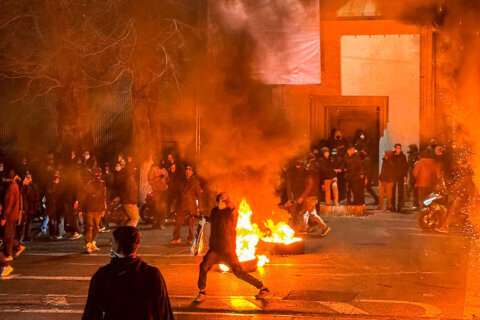
The world moved further away from formally declared wars and deeper into sustained confrontation, with gray-zone pressure, cyber intrusions, economic coercion and political warfare becoming the norm.
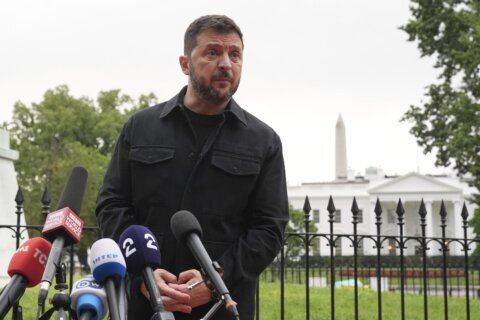
Russia’s war on Ukraine hardened into a grinding conflict of attrition, with no decisive breakthrough and mounting costs on both sides. That pressure spilled into public view during a tense exchange between President Donald Trump and Ukrainian President Volodymyr Zelenskyy, which aired live and unfiltered.
The moment, which captured the strain inside the alliance itself, began when Zelenskyy tried to warn the U.S. about Russia’s future objectives and the pain the nation would feel.
“Don’t tell us what we’re going to feel,” Trump snapped back. “You are in no position to dictate what we’re going to feel.”
It was diplomacy under pressure, conducted in public, and emblematic of a year when alliances were tested as much as adversaries.
Middle East and China
In the Middle East, movement came after years of paralysis.
Israeli hostages and Palestinian prisoners were released following prolonged negotiations, offering a rare de-escalatory moment in a region otherwise locked in cycles of retaliation and unresolved grievances. Even there, however, the releases underscored how fragile any pause has become.
China, meanwhile, escalated pressure without firing a single shot. Cyber operations, economic leverage and information warfare did the work once reserved for missiles and maneuver forces.
Virginia Sen. Mark Warner, vice chair of the Senate Intelligence Committee, put it bluntly after the exposure of a massive intrusion into U.S. networks: “The largest hack of our telecom system in American history.”
The revelation reinforced a central lesson of 2025 — that the next major conflict may begin in inboxes and data centers, not on beaches.
Back on the home front
At home, the U.S. entered a more volatile era. The return of Trump brought rapid executive action aligned with Project 2025: dismantling federal diversity, equity and inclusion programs, reshaping the civil service, cutting public media funding, tightening border policy and signaling a harder edge toward dissent and institutional resistance.
Intelligence agencies warned quietly that political polarization itself has become a national security vulnerability, an internal fault line adversaries are actively probing.
Beyond Washington, Venezuela reemerged as a flashpoint. Former CIA operative Robert Baer was stark in his assessment.
“We are clearly heading toward a war. We’re trying to provoke the Venezuelans,” he said.
U.S. tanker seizures, aggressive sanctions enforcement and blockade-style rhetoric raised fears of miscalculation in the Western Hemisphere, with immediate ripple effects across global energy markets.
Taken together, the year’s events point to a single, unsettling conclusion: The rules the world operates by are changing faster than institutions can adapt. Power is being applied continuously, often invisibly, and accountability is increasingly diffused.
The question left hanging at the end of 2025 is not whether the world is entering a new phase of conflict, but whether democracies can keep up with it.
Get breaking news and daily headlines delivered to your email inbox by signing up here.
© 2025 WTOP. All Rights Reserved. This website is not intended for users located within the European Economic Area.