As the United States marks its 250th anniversary, WTOP presents “250 Years of America,” a multipart series examining the innovations, breakthroughs and pivotal moments that have shaped the nation since 1776.
Blue Cross and Blue Shield Federal Employee Program is proud to partner with WTOP to bring you this series.
This week in 1889, more than 2,200 people were killed in Johnstown, Pennsylvania, in one of the deadliest natural disasters in U.S. history.
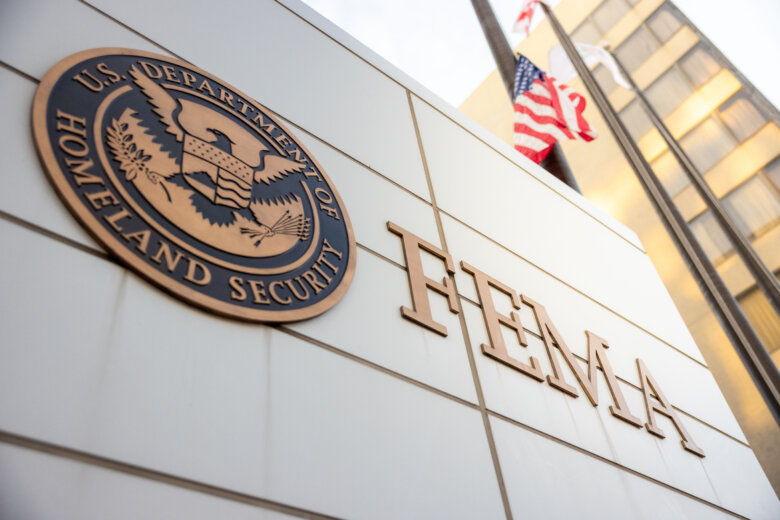
At the time, more than a century after America’s founding, there was no FEMA. The federal government rarely took an active role in local disasters, but the scale of the Johnstown Flood forced national attention.
The Johnstown Flood began when the South Fork Dam failed after days of heavy rain, including 6 to 10 inches in just 24 hours, roughly a third of the region’s annual rainfall.
When the dam of 20 million tons of water finally gave way, it transformed into a 40‑foot wall of water that raced 40 miles per hour down 14 miles of the valley, bringing homes, railcars, trees and steel mill debris with it.
Entire neighborhoods were washed away in minutes, destroying 1,600 homes. Four square miles of downtown Johnstown were demolished, causing $17 million in property damage — nearly $450 million in today’s dollars.
Among the more than 2,200 who were killed, 99 entire families were lost and 750 victims were never identified. Bodies were found more than a decade later, almost 500 miles away in Cincinnati, Ohio.
Normally, when disasters struck, the federal government viewed them as local problems. But this kind of horror was too big and too brutal for the nation to ignore.
It may not surprise many of us in 2026 that the American Red Cross came to help. But at the time, it was one of its first major relief efforts.
Joining the five members of the American Red Cross in Johnstown was its founder and president, Clara Barton.
At a time when the average American didn’t live past 40, Barton was 67 years old — and the Civil War nurse known as the “Angel of the Battlefield” became the architect of what we now recognize as modern disaster relief.
Over the next five months, under Barton’s direction, six warehouses were set up to distribute food, clothing and medical supplies. Temporary shelters, known as Red Cross Hotels, housed more than 30 families. Barton also oversaw medical care and organized supply chains.
And the federal government did play a documented role — one recorded in 1889 sources.
On June 4, 1889, Surgeon General John B. Hamilton, head of the U.S. Marine Hospital Service, sent a telegram offering federal assistance. Acting with the knowledge and interest of President Benjamin Harrison, Hamilton ordered Dr. Hereward Carrington, a federal medical officer, to Johnstown.
Carrington arrived the next day and was placed in charge of a corps of disinfectors — federal workers tasked with preventing outbreaks of typhoid and cholera. At Hamilton’s direction, the Marine Hospital Service shipped disinfectants from Washington and a large supply of copperas from Baltimore to support sanitation efforts.
Later that week, Hamilton traveled to Johnstown personally, inspecting conditions and coordinating with state health officials and relief workers. His involvement marked a significant moment in the evolving relationship between federal public health and disaster response — not necessarily the first, but certainly one of the earliest and most visible examples.
When Barton finally headed home to Glen Echo, Maryland, long before there was a Clara Barton Parkway, she wrote the Johnstown report, trained volunteers and helped establish the principle that disaster relief needed to be organized, professional and coordinated with federal agencies.
That house still stands today beside historic Glen Echo Park, preserved by the National Park Service.
Yes — federal workers are telling the story of the woman who showed up when people needed her.
From Johnstown to the Spanish Flu to COVID‑19, wildfires, tornadoes and hurricanes, when the country is hit by a storm, natural or man-made, Americans look to the people who show up.
And federal workers have been showing up for more than 200 years.
Get breaking news and daily headlines delivered to your email inbox by signing up here.
© 2026 WTOP. All Rights Reserved. This website is not intended for users located within the European Economic Area.