
As the United States marks its 250th anniversary, WTOP presents “250 Years of America,” a multipart series examining the innovations, breakthroughs and pivotal moments that have shaped the nation since 1776.
HII is proud to partner with WTOP to bring you this series.
A nuclear attack submarine may be the most formidable predator ever built.
Invisible. Quiet. Lethal.
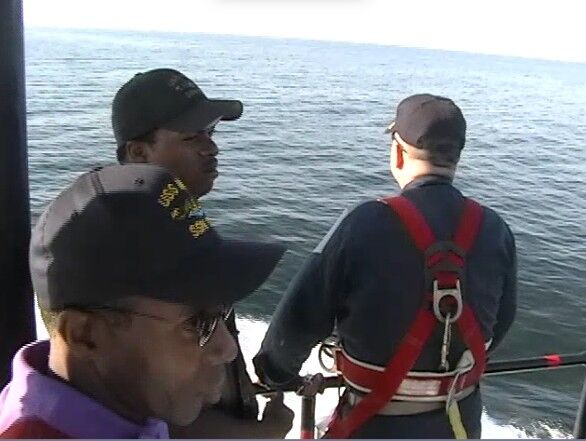
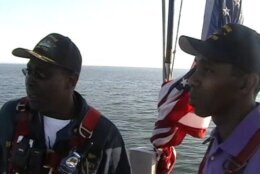
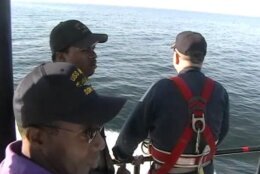
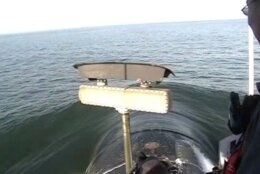
In 2009, I spent a week submerged aboard the USS Miami, a nuclear-powered Los Angeles-class submarine known to its crew as the “Fightin’ Double Nickels.” The vessel was operating in the Atlantic during sea trials.
“It’s currently 0200. We’re getting ready to submerge the ship,” Executive Officer Mike Connor told me.
Moments later came the command.
“Dive, dive.”
A loud Klaxon horn sounded throughout the submarine. The deck tilted slightly. The lighting shifted. And the ocean closed overhead.
What stood out immediately was the level of procedure guiding every movement. When the submarine altered course, the crew transmitted what amounted to a submerged turn signal a Klaxon horn-blast that alerted nearby vessels that the ship was shifting left or right.
Even when invincible, there are rules.
Life aboard required constant adaptation to a world without sunlight and with water produced through desalination.
“The sun is just not relevant,” Connor said.
The air aboard the Miami was also generated onboard, as it is on other submarines.
One crew member described the process this way: “We make air as good as God does.”
Even time was different beneath the ocean’s surface. The submarine crew operated on an 18-hour day: three six-hour blocks rotating through watch, work and sleep. There were no sunrises and no sunsets, only mission tempo.
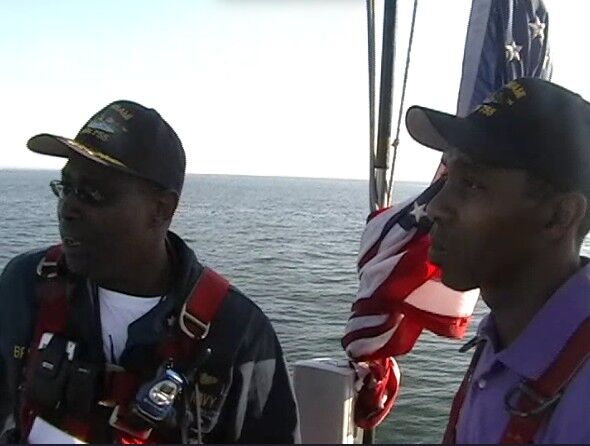
Captain Rich Bryant, on his final mission before retirement, evaluated the crew’s performance during the sea trials with understated precision.
“Good,” he said, “but we’re a little rusty.”
A history beneath the surface
The USS Miami was decommissioned March 28, 2014, the decorated descendant of an idea that dates back to the 18th century.
The story of submarines begins long before nuclear propulsion, but the concept can be distilled to one central idea: Attack from below.
In 1776, inventor David Bushnell deployed the Turtle, a small submersible that attempted to attach explosives to a British warship in New York Harbor. The mission failed, but it introduced the concept of submerged assault.
Nearly a century later, the Confederate submarine H.L. Hunley proved the idea lethal, sinking a Union ship during the Civil War before being lost itself.
By the 20th century, submarines had matured into strategic weapons.
During World War II, American submariners devastated Japan’s maritime supply lines, demonstrating that a hidden force could collapse an enemy’s economy from beneath the sea.
The next revolution came with nuclear propulsion.
In 1954, the USS Nautilus proved a submarine could remain submerged for months at a time, no longer tethered to the need for air. Stealth became sustained. Range became global.
Modern submarines
Today’s submarines are no longer simply torpedo boats.
They function as intelligence platforms, cruise missile launchers, special operations motherships and in the case of ballistic missile submarines a critical pillar of nuclear deterrence.
Modern submarines track adversaries, map the ocean floor, gather signals intelligence and, if necessary, strike targets far inland.
They operate in contested waters against peer competitors armed with increasingly sophisticated anti-submarine systems.
And they do it unseen.
Standing in the control room of the USS Miami at 0200, listening to the low mechanical hum and clipped watch reports, the strategic arc of submarine warfare felt tangible.
From wooden prototypes to nuclear-powered predators, the submarine has evolved into one of the most decisive instruments of American power.
The ocean’s surface is visible.
But power and security often move below it.
As his final command came to a close, Bryant offered a reminder about American freedom that echoed long after we surfaced in 2009.
“Just remember,” he said, “it’s free, but it ain’t cheap.”
Get breaking news and daily headlines delivered to your email inbox by signing up here.
© 2026 WTOP. All Rights Reserved. This website is not intended for users located within the European Economic Area.