This article was reprinted with permission from Virginia Mercury.
Both a reconciliation bill Congress passed last summer and its failure to renew Affordable Care Act subsidies earlier this year mean Virginia lawmakers have scrambled for solutions to make up for federal funding shortfalls. State agencies are also overhauling workflows to comply with new federal mandates for health care and social services.
More than 2 million Virginians rely on state social services like Medicaid and the Supplemental Nutrition Assistance Program, while about 400,000 Virginians get their health insurance through the state marketplace.
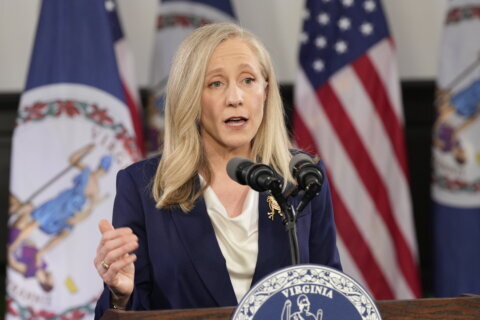
In their 2026 legislative session, state lawmakers crunched numbers to figure out how to buoy state agencies that support constituents. Though the bulk of the work concluded last weekend, they’ll reconvene next month to sort through budget differences and this year’s unique funding challenges with Gov. Abigail Spanberger.
“It’s a sea change,” said Del. Rodney Willet, D-Henrico, who chairs the House of Delegates’ Health and Human Services Committee. “We’ve never had this much of an onus on the state before. It will take a lot of work with the people, processes and systems to go with that.”
Overhauling Medicaid verifications
When the One Big Beautiful Bill Act passed on July 4, 2025, the legislation entailed new work requirements for certain Medicaid beneficiaries and twice-yearly verifications.
In a January presentation, Virginia’s Medicaid director Jeff Lunardi told state lawmakers that about 500,000 Virginians will be subject to the new Medicaid standards.
This also means the caseload for local DSS staff around the state is growing faster than state workers’ resources are, he said.
Medicaid is a joint state and federal program that provides health care for people with disabilities, pregnant people and low-income earners. Since Virginia became the 33rd state nationwide to expand their Medicaid program in 2018, thousands more people became eligible at different income levels who would have otherwise struggled to access health insurance.
But the ramped-up verification process means that social service staffers around the state must adjust their workflow processes to avoid backlogs.
“We need to be operationally ready by mid-September,” Lunardi said, since the Virginia Department of Medical Assistance Services needs to communicate changes with enrollees three months before the Jan.1, 2027, compliance date.
To support local social service workers around the state, former Gov. Glenn Youngkin proposed creating a centralized call center for around $18 million that could absorb some of the workload. It’s a part of his outgoing budget that state lawmakers did not change and Spanberger can consider keeping.
Likewise, lawmakers kept Youngkin’s earmark of $134 million to further support the more stringent Medicaid eligibility verification efforts Congress will require.
Lawmakers try to patch up a strained safety net
Losing Medicaid doesn’t have to mean avoiding the doctor, but it does mean that “safety net” providers, like free clinics, will need to catch more people falling through the health care cracks.
When Medicaid patients fall off that insurance, “they don’t leave us,” Western Tidewater Free Clinic director Ashley Greene said — “They just transition to no payment offset.”
As a hybrid facility that treats both Medicaid patients and uninsured people, Western Tidewater Free Clinic is one of about 70 free clinics in Virginia that are bracing to serve more patients with fewer resources.
For instance, a Winchester-area resident who’d been working two part-time jobs lost Medicaid because he was making “a little too much,” Sinclair Health Clinic director Mercedes Abbet said. He ultimately stayed with Sinclair as his primary care provider to treat his diabetes and mental health issues, but the clinic lost Medicaid reimbursement for the services it provided to him.
Abbet said that last year Sinclair saw its highest client load since the height of the COVID-19 pandemic. Seventy-seven percent of its 3,000 patients were uninsured and 22% had Medicaid.
She, along with Abbet and other free clinic directors, said they expect the number of uninsured patients to keep growing, as thousands of Virginians are at risk of losing their coverage when congressionally-manded Medicaid changes take effect in 2027.
To help clinics stay afloat, state lawmakers are proposing a $5 million increase in state funding over the next two years.
Investing in free clinics can help save Virginians some money down the line, lawmakers and hospital administrators have said.
This is because uninsured people are more likely to put off care until dire situations arise and they’re forced to seek emergency care at a hospital. Though hospitals treat people regardless of their ability to pay, they also negotiate with private insurers. Absorbing more of what they call “uncompensated care,” can mean higher premiums for private insurers eventually.
Greene, of Western Tidewater, said that about 75% of its patients do not end up going to ERs. If the clinic can keep that amount of people from visiting an ER, “there’s that much more room for true emergencies,” she said.
A state-level ACA subsidy program?
A congressional stalemate last fall over renewing special Affordable Care Act subsidies led to a government shutdown that last over a month.The expiring credits further helped people living between 100% and 400% of the federal poverty level purchase their own health insurance in the ACA marketplace. ACA assists those who would still struggle to buy their own private insurance plans and whose employers don’t provide health care.
Democrats have led the push to extend the subsidies, but some Republicans had been open to renewing them — with Virginia’s Rep. Rob Wittman, R-Westmoreland, one of 17 Republicans nationwide to vote yes. As of press time, however, the subsidies have not been renewed and Virginia’s state budget needs to be ready to take effect by July.
State Sen. Barbara Favola, D-Arlington, called it “a very terrible situation to be in,” trying to budget for the next two years with “uncertainty” from the federal government.
Still, each chamber has pitched ideas on how to support constituents in the meantime.
Virginia’s House of Delegates has set aside $79.1 million for next year specifically to aid people between 138% and 200% of the federal poverty level.
Virginia’s Senate proposed $200 million as soon as the middle of this year, and would authorize the state ACA exchange to set up a special enrollment period.
These are options that Spanberger can consider when she ultimately signs the state budget this spring.
Keeping food on the table
Another health care hurdle Virginia is facing: reducing its error rate in Supplemental Nutrition Assistance Program verifications. The federal program helps disabled and low-income earners buy groceries.
Due to the reconciliation bill, states that don’t reduce their rates risk being on the hook for millions.
Youngkin had already spurred reduction efforts, but Spanberger’s administration must complete the work.
The House and Senate have so far left Youngkin’s $2.4 million for a quality assurance team untouched in their budget proposals.
The House also wants to earmark $52.3 million in extra funding to offset increased locality costs of administering SNAP due to the federal changes. The Senate proposes $2 million for the state to contract with a vendor that can help reduce error rates.
At least one vendor was already tapped last year.
Records obtained by The Mercury show a $1.7 million vendor contract for six months of audit services that was created last September during Youngkin’s final months as governor. The $2 million the Senate has proposed may entail a vendor for the next two years, if approved by Spanberger.
Each chamber has also set aside contingency funding if Virginia is not able to reduce its rate by certain margins.
The House proposed earmarking $211 million if the state doesn’t get below 10% and the Senate set aside $135 million, assuming the rate doesn’t drop below 8 to 10%. As she prepares to sign the budget, Spanberger will need to consider both chambers’ proposals.
The state budget must take effect by July 1. A special legislative session has been set for April 23 to reconcile the differences between the House and Senate budget plans.
Our stories may be republished online or in print under Creative Commons license CC BY-NC-ND 4.0. We ask that you edit only for style or to shorten, provide proper attribution and link to our website. AP and Getty images may not be republished. Please see our republishing guidelines for use of any other photos and graphics.