This article was reprinted with permission from Virginia Mercury.
Virginia’s transportation system is massive, with about 129,000 lane miles of roads and roughly 5,900 miles of rail criss-crossing the commonwealth, according to the Virginia Department of Transportation and a 2022 Virginia Statewide Rail Plan.
There’s always some kind of improvement or expansion underway, leaving drivers and commuters wondering when relief will arrive.
But before unpacking what projects Virginians can expect in 2026, federal funding looms as a major factor shaping what moves forward — and what does not.
“Probably the biggest change to transportation development for 2026 is the fallout that all of our local and state partners are feeling from federal funding,” said Brantley Tyndall, director at BikeWalkRVA.
”Federal funding in many ways [will be] reduced or dried up. And in particular the USDOT has been ordered to oppose the funding of bike/ped projects. They are viewed as antagonistic to cars and driving. We think that’s very shortsighted. It’s going to lead to years and years of funding short falls that will be very difficult to fill.”
Some bright federal funding spots
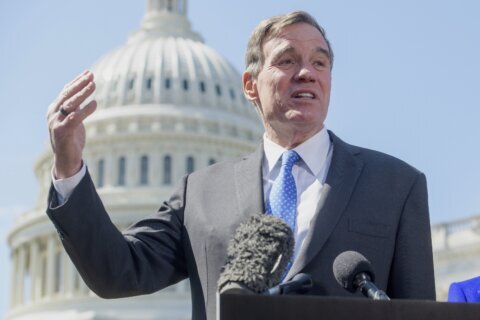
In November, U.S. Sens. Mark Warner and Tim Kaine, both Democrats, touted an almost $70 million release of federal grant funding to improve Virginia’s bus and rail systems. Part of that package includes $8.6 million to the Virginia Department of Rail and Public Transportation system to replace aging vehicles.
Also included under that $70 million amount will be roughly $10.9 million to the city of Alexandria and $50.3 million to the Washington Metropolitan Area Transit Authority to convert buses to low or no emission vehicles.
The money comes from the Department of Transportation’s 2025-26 fiscal year Low or No Emission program and a FY25 Buses & Bus Facilities Program — all part of the Bipartisan Infrastructure Law passed during President Biden’s administration.
Also in November, U.S. Transportation Secretary Sean Duffy released a similar press release announcing the same grants, describing them as part of the Trump’s administration’s investment in modernizing America’s transit bus infrastructure.
Highlights for 2026 at the General Assembly
With an eye toward 2026, here’s what some government and transportation officials say are on the horizon for the new year.
Del. Karrie Delaney, D-Fairfax, chairs the Transportation Committee. She said one of the biggest issues her committee will be taking up next session will involve expanding photo speed enforcement devices, which she said did not become law during the previous session.
“That was a big conversation last session and an important one,” Delaney said. “I think that we’re going to get a little more into [it] this session because the crime commission just released a study that I had asked them to complete.” Delaney said the report was based on conversations from the last session.
“We just need to have this looked at a little closer so that we can really drill down on where the issues are, and what legislative solutions are needed to address,” she said.
Delaney emphasized that some of those issues range from some transportation board members wanting to expand their use to include more locations — which some lawmakers disagree with. At the same time, there’s a debate about whether the current speed enforcement cameras already in place are doing what they’re supposed to be doing.
“Are they fair? Are they just? And there’s been a lot of concern about their revenue generation,” Delaney said. “There are some localities in the commonwealth that are making thousands of dollars a year in profits off of their speed cameras. And now those funds are going to the general funds, and adding quite a bit of cushion to their budget. It creates, at a minimum, a concern that localities have an incentive to police for profit.”
The Virginia Mercury reported on this bill last session.
Hampton Roads Bridge Tunnel
“The biggest project in the history of the commonwealth is, have you ever heard of a little thing called Hampton Roads Bridge Tunnel?” said John Mahaley, principal transportation planner at Hampton Roads Transportation Planning Organization.
“If you’ve ever gone to the Outer Banks, you’ve been through there. That project needed to be done 30 years ago. Finally, we were able to get the money to do it.”
Mahaley said drivers will be able to see substantial completion within a year or so. But full completion — and opening the tunnel to traffic — won’t happen for several months after that, because eight express lanes still need to be built on either side of the water to match the tunnel.
Washington Metro Area
Northern Virginia rail and transit commuters can expect to see line expansions, increased bus service and the installation of modernized bike parking within the Washington Metropolitan Area Transit Authority.
“We’re installing new bike lockers across 73 of our stations,” a Metro spokesperson said. “What that does is kind of enable a kind of wider reach for Metrorail stations. Most people might only walk 10 or 15 minutes to get to a Metro station. But if they live 20 or 25 minutes away, it gives people a safe place to park [their] bike.”
Lockers would cost $1 a day and bikes would be protected from rain and snow. Installation of the lockers will be ongoing, with updates posted on WMATA’s website.
For riders on the Yellow Line, starting Dec. 31, the Yellow Line will extend to Greenbelt, serving destinations in D.C. including Shaw and Columbia Heights, among others. In mid-December, WMATA released a proposed budget that includes rail and service increases on 15% of their routes. If approved by the Metro Board of Directors, the new services would go into effect July 1, 2026.
Richmond and Henrico eye more Fall Line Trail segments
“We are really looking at more groundbreaking and ribbon-cutting throughout the region,” said BikeWalkRVA’s Tyndall, in areas such as Lakeside, Bryan Park and Kanawha Plaza.
“So by early 2026 we’re going to have about 20 miles under construction or at least under contract being administered and something active or completed in every locality.”