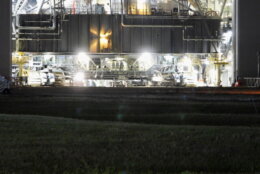
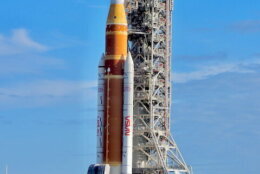
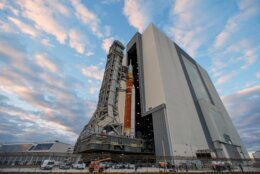
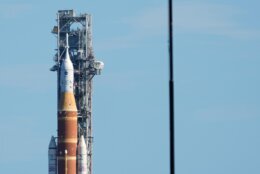
I hope you had the chance to tune in to WTOP on Saturday for our live team coverage of the Artemis II rollout.
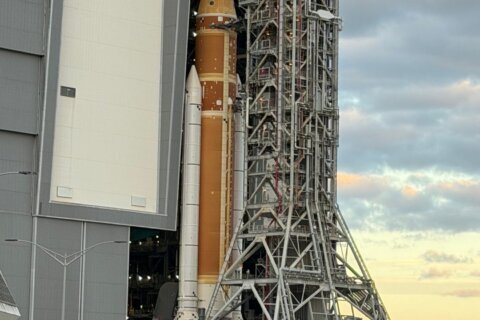
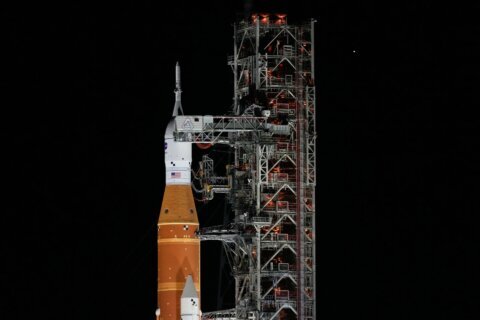
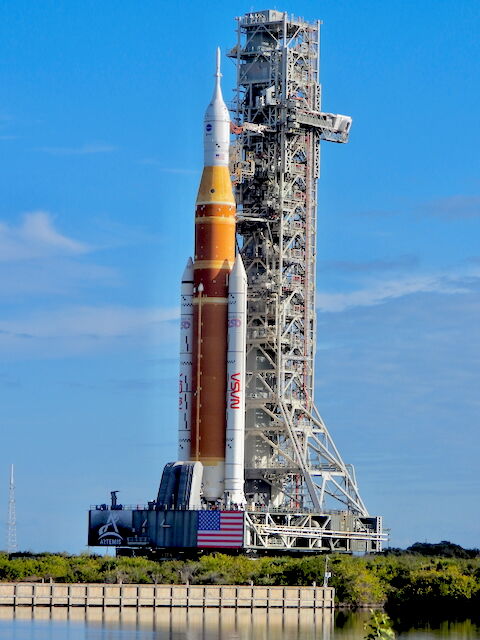
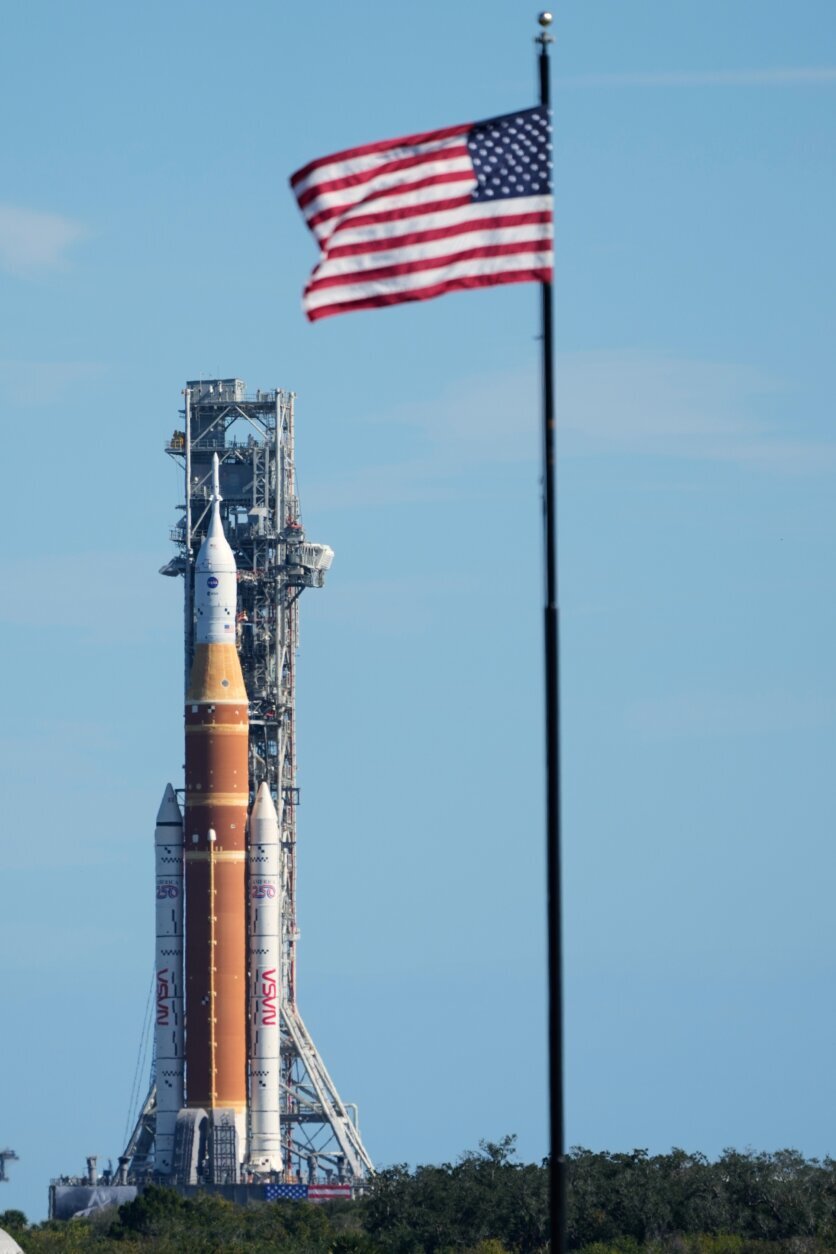
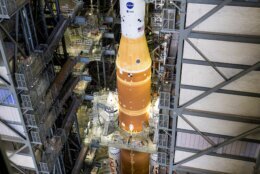
If you did, you joined thousands of NASA employees, family members, contractors, press corps and likely millions more worldwide to see for the first time the Artemis II moon rocket in all her massive glory.
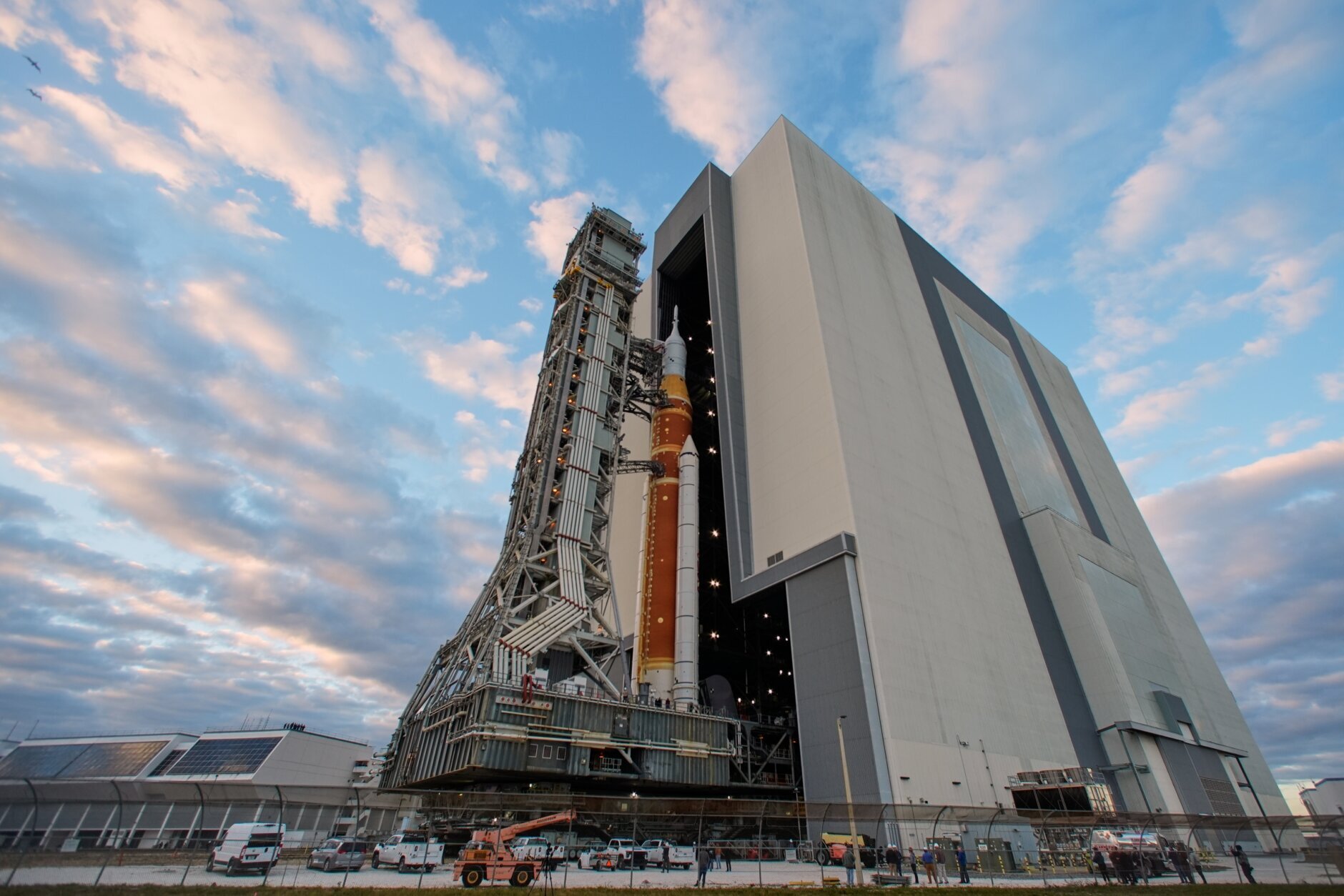
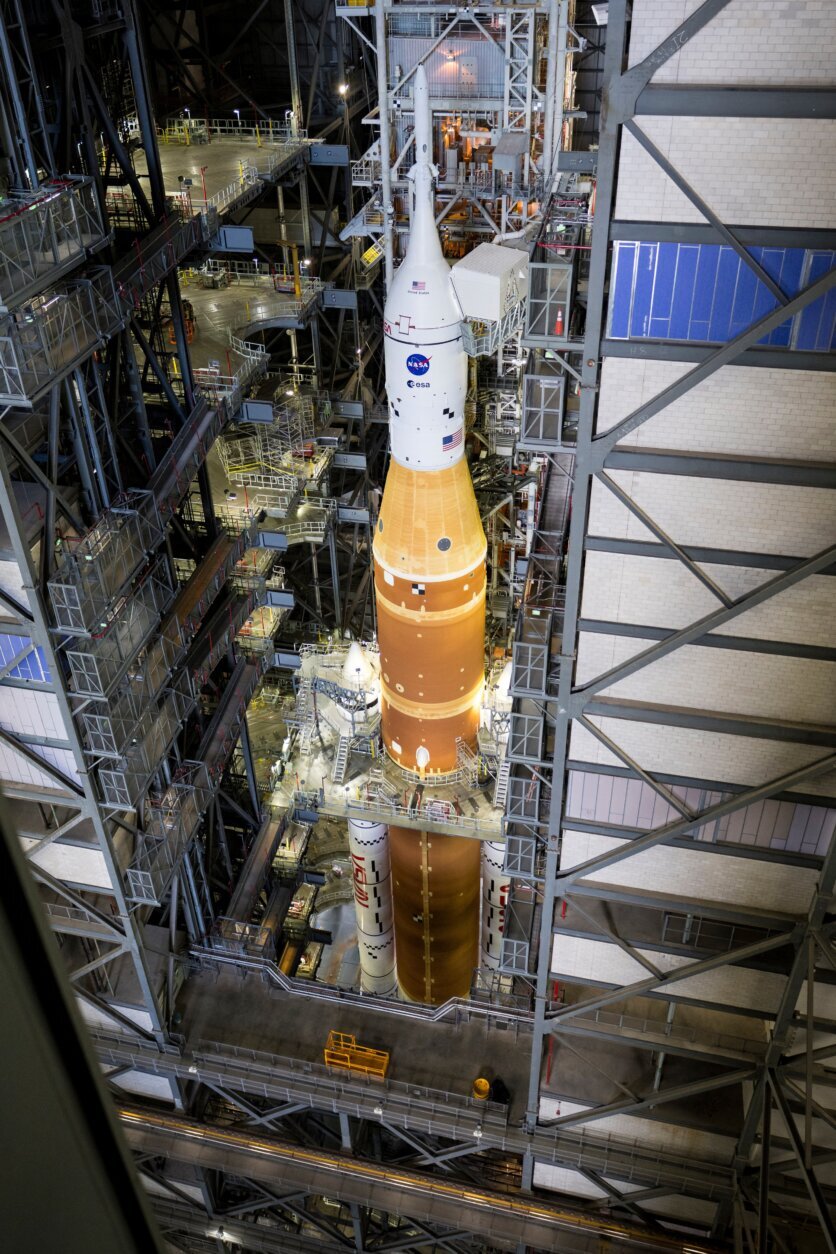
Saturday was a major milestone for America’s and humanity’s return to the moon after almost 54 years, since Apollo 17. Seeing this awe-inspiring event unfold from “First Motion” out of the Vertical Assembly Building at precisely the predicted time of 7 a.m. electrified the thousands present.
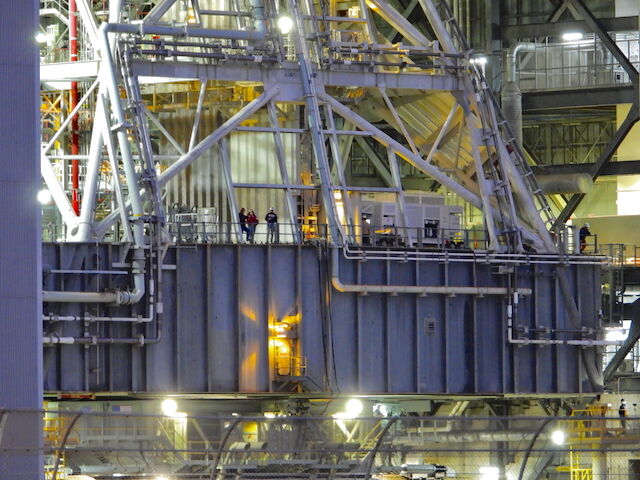
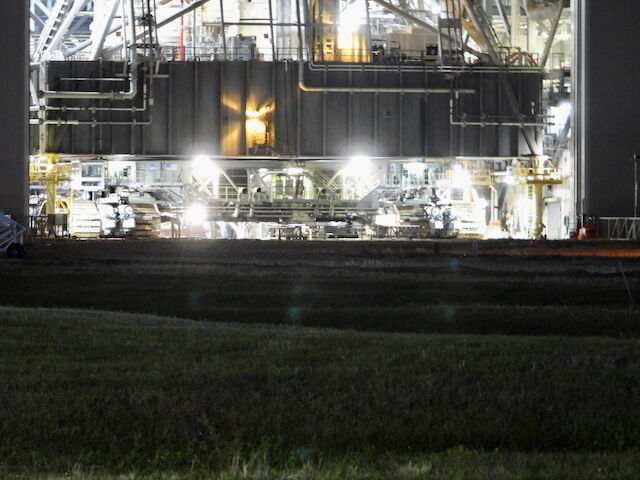
As the elven-million pound Artemis II “Stack,” riding on the back of the massive six-million pound Crawler-Transporter #2, made its way to Launch Pad 39B at 1 mile-per-hour, one could not help but ponder the day when NASA “Lights That Candle” to head for the moon.
After the twelve-hour journey to the launch pad, the Stack will be placed hard down from the crawler and the real work begins to progress to the ultimate “GO/NO GO For Launch” no earlier than Feb. 6, 2026.
I must admit that I was very emotional when I arrived at the scene at 4 a.m. today as it fulfilled a life long dream of personally witnessing a rocket that was going to carry humans to the MOON!
I grew up with the Mercury, Gemini and Apollo programs. I lamented that I was not old enough to get to the “Cape” to see fire on the pad and a beautiful Saturn V rocket climb into the sky. I vowed that I would do so one day and my own personal milestone took a big step toward that goal today.
There were many children here today and I hoped that they too, would be moved by what they saw to pursue newly formed dreams of space.
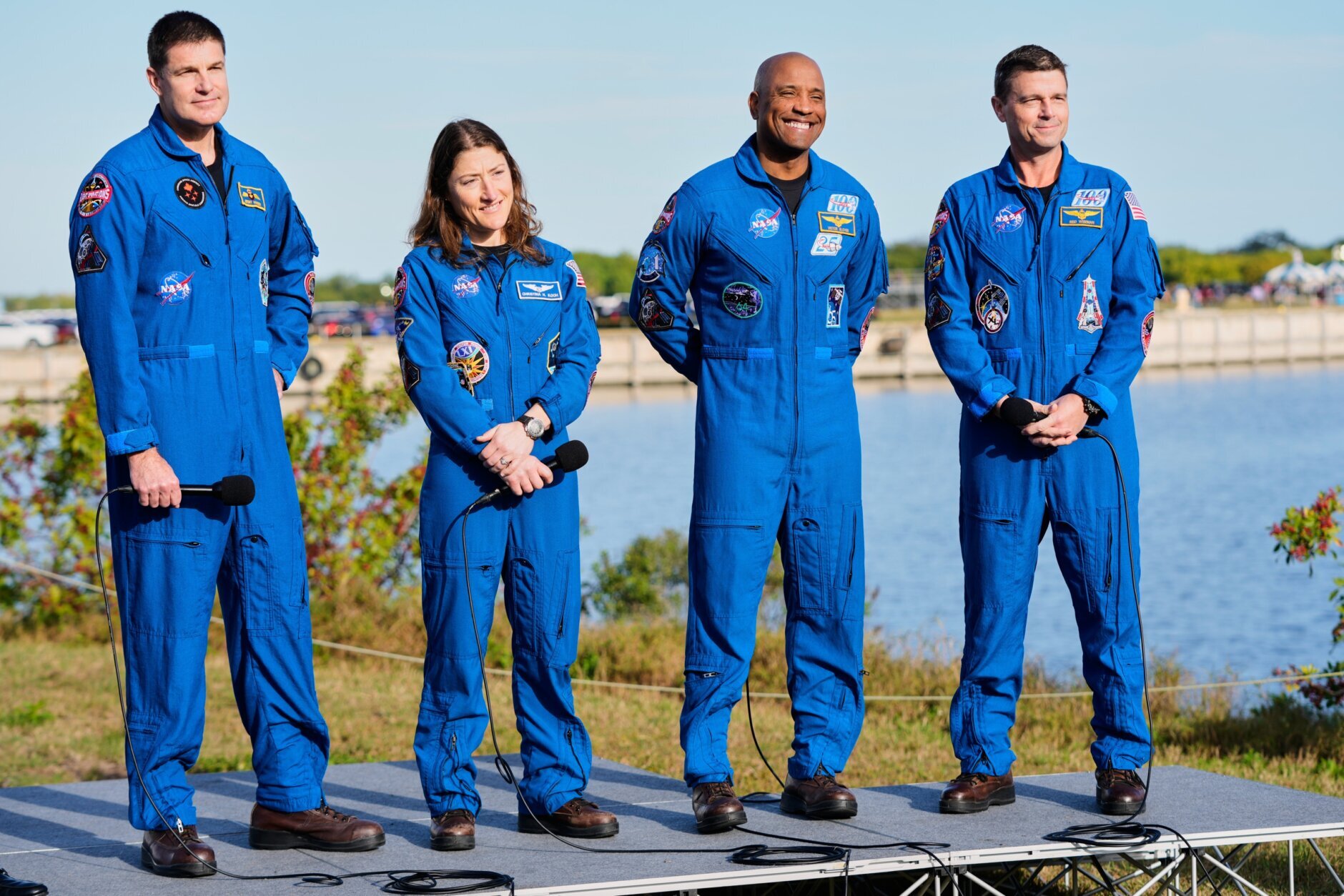
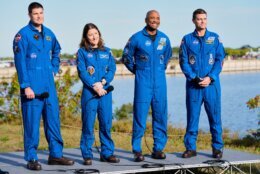
The new NASA Administrator, Jared Isaacman and the crew of Artemis II made an appearance today and held a “media gaggle” event. Before the event got started the crew kept looking at the Stack and conversing among themselves, most probably commenting about how beautiful their “ride” looked.
Being a Navy veteran that included a tour aboard an aircraft carrier and having flown as a passenger in various aircraft and helicopters — including catapult shots and arrested gear landings on the carrier — I know naval aviation up close and personal. How many times have you seen “Top Gun” and “Top Gun: Maverick?” I feel very confident I have you beat in that regard.
It is with intense pride as a Navy veteran that I make it a point to tell my audiences that the majority of Apollo Mission commanders were naval aviators:
- Apollo 7: Wally Schirra
- Apollo 11: Neil Armstrong (as a civilian)
- Apollo 12: Pete Conrad
- Apollo 13: Jim Lovell
- Apollo 14: Al Shepard (America’s first astronaut in space)
- Apollo 16: John Young
- Apollo 17: Gene Cernan
Being just twenty-feet from Mission Commander Reid Wiseman and Pilot Victor Glover, both distinguished Naval Aviators, I said to them, “Fly Navy” — a common phrase voiced in the Naval Aviation community. They looked right at me with a smile and both gave an instant nod and “thumbs-up.” It was a “forever” moment for me.
I always make it a point to comment about the crew composition of Artemis II as historic firsts are going to be accomplished when they reach their flyby of the moon.
The first woman, the first person of color, and the first Canadian, will have reached the moon. That is significant to me as I describe the moon as being the “Eighth Continent” and we — humanity — are going back to the moon to stay this time. All of the major spacefaring countries have robotic, orbital and crewed missions in the pipeline in the years to come.
Artemis III is the mission slated for an attempted lunar landing by 2028. China has said in 2030 Taikonauts will attempt a lunar landing.
NASA Administrator Isaacman said today that he hopes “his grandchildren get to witness an Artemis 100 mission.”
Humans will develop technology that allows us to survive and thrive on the moon, to live “In Situ” there.
We have already made lunar concrete, grown plants in lunar soil, fashioned one-ton building blocks out of simulated lunar soil, 3D printed parts and tools using simulated lunar soil. And with copious amounts of frozen water ice found in permanently shadowed craters on the moon, well, the “sky could be the limit” as it could be used to breathe, drink, grow plants and make rocket fuel.
Oh, and NASA wants a nuclear reactor on the moon by 2030.
Yes, Artemis II is paving the way for all of this to happen. But we humans have to insure that we do not take the politics and territorial disputes we suffer, yes, suffer, here on Earth, to the moon.
Ideally, the nations of the world will adopt the “Antarctica Approach,” whereby each nation can establish a presence on the moon but no one country can lay claim to the entire moon. At the bottom of the planet nations coexist peacefully, respecting the unique environment and a call for help is answered regardless of nationality.
Today I think everyone who saw Artemis II felt great excitement, pride, and most importantly, hope.
Hope for a successful mission and hope for humanity’s future.
After all, we are throughout all our combined history explorers.
The moon beckons.
Artemis II will carry us all there.
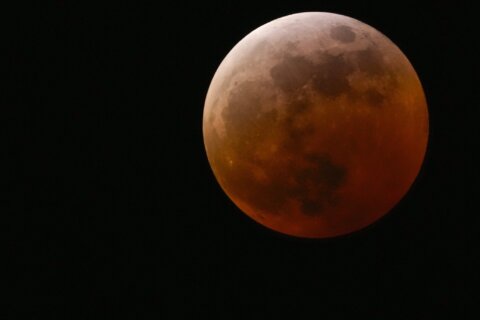
And we too will see the moon in our sky and through their eyes …
LIGHT. THAT. CANDLE!
Follow my daily blog to keep up with the latest news in astronomy and space exploration. You can email me at skyguyinva@gmail.com.
Get breaking news and daily headlines delivered to your email inbox by signing up here.
© 2026 WTOP. All Rights Reserved. This website is not intended for users located within the European Economic Area.