This content is provided by GW Hospital.
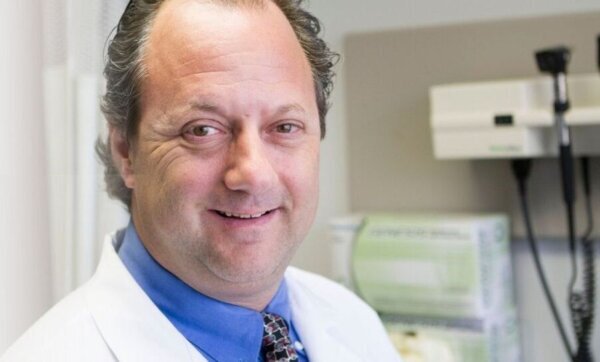 The Neurosciences Institute at The George Washington University Hospital (GW Hospital) is home to some of the region’s most advanced technological equipment. The Institute recently added neurointerventional biplane technology to its equipment.
Wayne Olan, MD, a fellowship-trained neurosurgeon, discusses how this leading-edge imaging system helps physicians at GW Hospital offer next-level treatment of conditions involving the blood vessels in the brain and spine.
Q: What is neuro biplane technology and what are its benefits?
A: The neuro biplane technology, or Two C-Arm technology, has been around for a while. I originally trained when we only had one camera at a time, but the technology has advanced and biplane [two rotating cameras] has been the standard for the last 15 to 20 years.
This new equipment that we brought in to GW Hospital is the most advanced biplane technology available. The image quality gives us the ability to make three dimensional renderings, to make measurements and look inside the blood vessels, almost like we are going through a tunnel. All of the other post processing is quicker and more complete than ever before.
Not only are procedures safer and more efficient for the patient with this biplane technology, they are also safer for our staff. Remember, we use radiation — X-ray technology — to get these images, but the neuro biplane technology requires less radiation exposure than traditional treatment methods, making it safer for the community and the people who work here.
Q: What types of conditions are you treating with this technology?
A: The conditions are expanding and our procedure foundation continues to grow. Standards for aneurysms, stroke, carotid revascularization and brain tumor evaluation are all happening in this room.
We are doing traumatic brain injury treatments and interventional spine. The indications for the use of this equipment just continue to grow as people realize how efficient this technology is and how it gives us the ability to see things better than we ever have. It makes procedures that used to be longer and more invasive, shorter and less invasive. It may also help with improved recovery and outcomes.
Q: As an academic medical center with many medical disciplines, is there a lot of collaboration going on at the hospital with this technology?
A: The collaboration is one of the things I really love about GW Hospital, which is why I’ve been affiliated with them my entire career. It allows us to train the next generation of physicians who will be using technology like this. And importantly, this new generation, knowing that this technology is available for their patients, will refer people for treatments that use this equipment.
Q: GW Hospital and the Neurosciences Institute are early adopters of new technologies like the neuro biplane suite. Why does this affect your work there?
A: One of the reasons is it becomes almost self-perpetuating when you know that you are trying to provide safe, efficient care. People bring this technology to us to evaluate. We choose what we think is going to be best, and we adopt and adapt. We get to see these new technologies because we are early adopters, and we can make it available to our patients, referring physicians, as well as our students, residents and fellows.
The Neurosciences Institute is one of the most technologically advanced in the region. We also have intraoperative MRI and focused ultrasound for movement disorders. Our techniques and equipment are designed to allow patients to return back to their lives as quickly as possible.
We are trying to set the standard because not just our staff require it, not just our practitioners require it, but look where we are — our community requires it.
Q: Why would you recommend the Neurosciences Institute at GW Hospital to the community?
A: To be honest, it’s easy. GW Hospital has given the neurosurgery department an ideal playing field to provide complete care for our patients. The highly skilled providers and efficient, safe equipment really cover the bases.
Patients should know that when they come to GW Hospital’s Neurosciences Institute, they have access to experienced providers and technologically advanced care for what are sometimes very complex problems. A lot of times, patients are very fearful. Neuroscience problems are not the easiest to accept and deal with, and we are given the opportunity at GW Hospital to provide our patients with high-quality care.
Every now and then, we hear people say: ‘Well, your book is written or your stars are what they are.’ The equipment that GW Hospital has blessed us with as providers, especially in neuroscience, gives us the chance to change our patients’ stars. It really is a privilege having this opportunity and being able to provide with it to the community we live in.
Let the GW Hospital family care for you and yours.
To find a doctor, call 888-4GW-DOCS (449-3627) or visit doctors.gwhospital.com
Learn more about the Neurosciences Institute at gwhospital.com/neuro
Individual results may vary. There are risks associated with any surgical procedure. Talk with your doctor about these risks to find out if neurosurgery with neuro biplane technology is right for you. Physicians are independent practitioners who are not employees or agents of The George Washington University Hospital. The hospital shall not be liable for actions or treatments provided by physicians. For language assistance, disability accommodations and the nondiscrimination notice, visit our website.