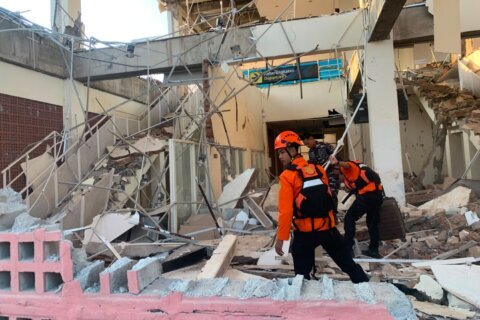
When severe weather hits, the safety of senior living residents depends entirely on preparation. During the winter of 2025-2026, two record-breaking snowstorms brought New York City to a standstill, marking the coldest, snowiest winter in 11 years.
For RiverSpring Living, a non-profit senior community in Riverdale, New York, the weather was not a surprise. Leadership monitored forecasts and enacted comprehensive emergency protocols — securing adequate staffing, food, medication and linens, while launching a robust communication plan for residents and families.
“As an organization, we consistently prepare and train for all types of emergency situations,” says Deborah Messina, chief operating officer of RiverSpring Living. “During any emergency, a well-executed plan helps to mitigate the potential impact.”
When a loved one moves into senior living, you want to make sure they’re being well taken care of — and part of that is making sure a facility has an emergency preparedness response plan in the event of a crisis. Assessing compliance, safety infrastructure and staff training protocols is the difference between a manageable challenge and a significant threat.
[READ What Are the Levels of Senior Living?]
1. Understanding Essential Safety and Compliance Standards
Senior living communities, including assisted living communities and skilled nursing facilities, are governed by a complex web of federal and state regulations. While specific requirements vary by community type, every facility is required to have an emergency plan based on a risk assessment.
Federal vs. state oversight
Understanding who regulates the facility is the first step in auditing their safety.
| Feature | Assisted Living Facilities | Skilled Nursing Facilities |
| Primary Regulation | State (Dept. of Health or Aging) | Federal (Centers for Medicare & Medicaid Services, or CMS) |
| Safety Mandates | State-specific compliance | Must follow CMS Life Safety Code |
| Staffing Ratios | Usually “sufficient” (varies by state) | Strict federal/national ratios |
| Reporting | Varies by state | Mandatory reporting to CMS |
CMS emergency preparedness rule
The CMS mandates that all senior living facilities that participate in Medicare
or Medicaid must implement an “all-hazards” approach. This includes:
— Risk assessment: A documented emergency plan anticipating local dangers
— Policies and procedures: Annual updates on food, water, medical supply contingencies and evacuation/shelter-in-place protocols
— Communication plan: Mandatory systems for contacting staff, families and emergency agencies
— Training and testing: Initial staff training and regular, documented drill participation
The Life Safety Code (NFPA 101)
Often called the “gold standard” for life safety and emergency protocols in buildings, NFPA 101 (the Life Safety Code) is a widely adopted standard code that establishes minimum fire safety requirements.
When touring a senior living facility, look for these evidence-based features that signal it is following the proper safety code:
— Fire containment: Properly functioning fire walls and doors that allow residents to stay safe in their rooms
— Built-in protection: Operational automatic sprinklers, smoke detectors and integrated alarms
— Accessible design: Wide, unobstructed hallways, flat thresholds for mobility aids and clearly lit exit paths
[READ: How to Know Your Loved One Is Getting the Senior Care They’re Paying For]
2. How to Audit a Facility’s Safety Record
Don’t rely on a facility’s marketing materials. Instead, use official public records to view their inspection history and verify their safety claims.
Step-by-step: Searching the Medicare “Care Compare” tool
You can check the state survey and deficiency reports of a nursing home by using the Medicare Care Compare website to see the history of a facility’s safety and violations.
Here’s how to access inspection data:
1. Search by location and name: Enter the facility’s name and location to find its profile.
2. Review quality ratings: Look for the star rating, which aggregates health inspections, staffing data and quality measures.
3. Check inspection history: Scroll to the “Inspections” tab to view dates of the most recent surveys. Verify that the facility meets Life Safety Code standards.
4. Audit penalties: Review the history of any federal or state penalties issued for health or fire safety violations.
Understanding violation ratings
Inspectors rate violations at nursing homes using a Scope and Severity Matrix that assigns letters from A-L, indicating the severity and level of harm. The four tiers of violations range from minor deficiencies to severe problems that cause residents to be at immediate jeopardy:
| Severity Level | Impact | Description/Context |
| Level 1 | None | Potential for harm, but no actual harm (typically minor record-keeping) |
| Level 2 | Potential | No actual harm, but significant potential for harm, such as missing evacuation plan |
| Level 3 | Actual harm | Noncompliance resulted in actual harm; pattern of severe system failures, but not immediate jeopardy |
| Level 4 | Immediate jeopardy | Problems are immediate; high risk of serious injury or death; requires immediate correction |
Violations are ranked on a severity scale based on how many residents are affected and are codified as follows:
— Isolated (A, D, G, J): Violation affects a limited number of residents.
— Pattern (B, E, H, K): Violations affect more than a limited number of residents.
— Widespread (C, F, I, L): Violations affect many residents throughout a facility.
Verifying safety leadership
Senior living facilities should have a designated safety officer on staff. When touring, ask if their leadership holds any of the following professional certifications, which indicate a higher standard of emergency management expertise:
— CHEP: Certified Healthcare Emergency Professional
— CFPS: Certified Fire Protection Specialist
— CSP: Certified Safety Professional
— CHSP: Certified Healthcare Safety Professional
[READ: What Is Luxury Senior Living? Amenities, Costs and Care Levels]
3. The Physical “Safety Walk-Through”: What to Look For
Senior living communities are mandated to abide by federal and local emergency mandates that require compliance with fire and safety codes designed to protect vulnerable residents.
When choosing a senior living facility, don’t just accept the “safety” label — physically verify it. Use the checklist below to evaluate the facility’s infrastructure.
Visual audit checklist: Navigation and fire safety
As you walk the facility, look for these evidence-based safety indicators.
| Feature | What to Look For |
| Evacuation Maps | Maps must be at wheelchair eye-level, display “You Are Here” markers and show primary/secondary routes. |
| Exit Signage | Signage must be clearly illuminated and hard-wired to backup emergency power sources |
| Fire Suppression | Fire pulls and extinguishers must be unobstructed, visible and accessible at a seated height. |
| Pathways | Hallways should be wide, clutter-free, with flat thresholds to prevent trips and allow for smooth wheelchair movement. |
| Resident Rooms | Check for posted evacuation instructions on the inside of the door; this is a state requirement in many regions. |
External safety hazards
During your tour, be sure to verify that the facility is prepared for external emergencies:
— Unobstructed fire lanes: Look for unobstructed fire lanes that allow emergency vehicles to access the building. Confirm that emergency vehicle access points are not blocked by landscaping, parked cars or deliveries.
— Generator readiness: Verify that the facility has emergency generators designed for life-safety systems, critical medical equipment and temperature control during power outages. They should be protected from areas prone to flooding or other environmental threats.
Emerging safety technology
While smart-safety AI-driven technology is not mandated by law to be implemented to improve safety in senior communities, many are exploring and adopting systems that can predict a crisis in the making and reduce caregiver response time. Here are some of the innovations to keep an eye on:
— Predictive gait analysis: AI systems can monitor and analyze walking speed, posture and sleep patterns to detect subtle declines and notify care workers before a crisis occurs.
— Real-time fall detection: AI-enabled fall detection uses sensors, computer vision systems and wearables to monitor movements in real time and alert staff immediately if a fall occurs. It works by analyzing gait changes to prevent falls before they happen.
— Environmental sensors: AI can conduct real-time predictive monitoring and can analyze rainfall, soil saturation and historical data to forecast water levels and lead to early warning.
[READ: The Pros and Cons of Assisted Living]
4. Evaluating Staff Training and Readiness
A safety plan is only as effective as the staff’s ability to execute it under pressure. When touring, don’t just ask if they train their staff — ask to see the documented drill logs.
Senior living communities are required by regulations to keep detailed, up-to-date, documented logs of fire, weather and evacuation drills that you can ask to see when you visit a facility.
Essential drill requirements
Ask to see the records for the following kinds of drills:
| Drill Type | Frequency | Goal |
| Fire Drills | Quarterly (all shifts) | Rapid containment and clear-path evacuation |
| Weather/Disaster | Semi-annually | Managing power outages and shelter-in-place protocols |
| Elopement | Periodic | Efficiently locating and securing wandering residents |
| Staff Training | Ongoing | Mastery of emergency equipment (sleds, lifts) and leadership roles |
Practice vs. planning: The “tabletop” difference
State and federal regulations mandate that communities practice — not just plan for — emergencies. These drills are vital for protecting residents, especially those with limited mobility
, memory problems or complex health needs that require continuous medical equipment
“We take various scenarios and work through them step-by-step to determine how our staff and residents act and respond,” says Sakhonh Kheuamun, director of security and emergency management at Hebrew SeniorLife in the greater Boston area. “When we’ve concluded the drill, we conduct an after-action report to determine where we need to improve and where we need more training.”
The “after-action report” (AAR) standard
After every drill, a top-tier facility will generate an AAR, which:
— Identifies what went wrong, including where communication broke down and what went well
— Details specific corrective actions to prevent the issue from happening again in the future
— Shows that the facility updated their emergency plan based on the results
10 Critical Questions to Ask During Your Tour
Here is a list of questions you can ask about safety when you tour a senior living facility:
— Can I see your emergency preparedness plan?
— How often are staff trained in emergency preparedness?
— Do the staff wear emergency credentials or carry radios?
— Is the most recent state inspection posted in a public area?
— What is the staff-to-patient ratio?
— Are there designated security personnel on all shifts?
— What is the smoking policy?
— Does the facility have a “Memorandum of Understanding” with another facility for emergency relocation?
— How does the facility communicate with families and each other during an emergency?
— Can I see a log of your drills?
Bottom Line: Why Preparedness Matters
Emergency preparedness is a critical component of quality senior living. While no one can predict when a crisis may occur, communities that plan ahead are better equipped to protect residents, maintain continuity of care and respond quickly and effectively when emergencies arise.
“Knowing what to expect provides peace of mind and helps ensure that everyone is prepared to navigate challenging situations,” Messina says.
FAQs
More from U.S. News
The True Cost of Aging: A 2026 Budget Comparison of Senior Living and Aging in Place Options
Does Medicare Pay for Assisted Living?
How Much Does Independent Living Cost?
How to Evaluate a Senior Living Facility?s Emergency Preparedness originally appeared on usnews.com
Update 06/23/26: This story was published at an earlier date and has been updated with new information.