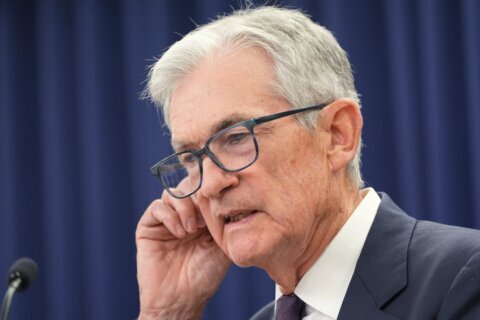
The Federal Reserve opted to hold interest rates steady on Wednesday, just like it did back in January.
If you’re in the market for a home purchase, or if you’ve been waiting for mortgage rates to come down so you can sell your home, you may be wondering how the Fed’s latest decision will impact the housing market. The quick answer? Not all that much.
The Federal Reserve’s Role in Mortgage Rates
The job of the Federal Reserve is to oversee monetary policy. The Fed can lower or raise its benchmark interest rate, known as the federal funds rate, to help boost the U.S. economy out of a slump or tame rampant inflation. Ultimately, the Fed’s goal is long-term economic stability.
When we talk about the Fed pausing interest rates at its most recent meeting, it means the Fed opted not to lower or raise its federal funds rate, which is the rate banks charge each other for overnight borrowing.
When the federal funds rate rises and falls, it tends to influence other consumer borrowing rates, like loan and credit card rates. However, the federal funds rate doesn’t typically have a very large impact on mortgage rates.
“Mortgage rates are typically priced off the 10?year U.S. Treasury yield,” explains Kurt Funderburg, chief investment officer for Byline Bank’s wealth management group. “The mortgage rate reflects the 10?year rate plus a spread that compensates investors for interest rate risk and other market factors.”
Still, the Fed’s decisions can ripple through the mortgage market.
“Federal Reserve interest rate decisions influence mortgage rates indirectly,” Funderburg says. “Over time, long?term rates and, by extension, mortgage rates tend to follow the broader direction of Fed policy. In addition, nonrate policy tools such as quantitative easing or quantitative tightening, which involve the purchase or sale of U.S. Treasury securities and/or mortgage?backed securities, also affect the overall level of interest rates and mortgage pricing.”
[Read: Best Mortgage Lenders]
A Rate Pause Changes Little
Given the relationship between the Fed’s interest rate decisions and mortgage rates, March’s pause changes very little in terms of borrowing costs, says John Carbone, associate broker and global real estate advisor with Sotheby’s International Realty.
“The Fed holding rates steady is already priced into the bond market, and so we should not expect that much of an impact on mortgage rates,” he explains. Rather, there are other factors much more likely to influence mortgage rates.
“The bigger and not insignificant variables right now all center around uncertainty,” Carbone says. “Inflation is still not where it should be, tariffs are still gumming up free trade, and the U.S./Iran conflict has now introduced a risk premium that is keeping Treasury bonds elevated. Not great for mortgages.”
Affordability Remains a Major Challenge
Funderburg says affordability remains the primary challenge in today’s real estate market, and mortgage rates are only one piece of that puzzle.
“Home prices, now approximately 60% above prepandemic levels, pose the largest obstacle to a meaningful housing market rebound,” he says. “Additionally, the market continues to face a shortage of existing home inventory.”
Carbone says a big reason inventory has been sluggish stems from the lock-in effect.
“Property owners with low mortgage rates from the pandemic-era days are still holding on to them,” he explains. “The limited supply is what is keeping prices up.”
Funderburg agrees.
“Many homeowners with ultralow mortgage rates remain reluctant to sell, constrained by both price considerations and the prospect of significantly higher mortgage rates on a new purchase.”
Now it’s worth noting that mortgage rates did briefly fall below the 6% mark in late February. But that drop was very short-lived. And as Carbone says, “Most of my broker colleagues seem to generally coalesce around the idea that rates need to be in the 5% bracket to meaningfully unlock existing property supply.”
[READ: Today’s FHA Mortgage Rates]
The Fed’s Decision Could Impact Buyer Psychology
While the Fed’s March decision is unlikely to move mortgage rates or have a huge influence on the housing market by itself, Ben Mizes, president and co-founder at Clever Real Estate, says it may have a modest impact on buyers’ mindset.
“Most of the changes in mortgage rates have already been priced in,” he says. “However, a pause can matter psychologically. It signals stability and can reduce volatility in bond markets. That can provide a more predictable environment for buyers who have been waiting to borrow.”
Mizes also says that a Fed rate pause could actually help hold home prices steady. That’s good news for sellers. For buyers, not so much.
“A pause can help reduce buyer hesitancy created by climbing rates,” he says. “If buyers are convinced that rates have peaked, a slight uptick in demand is likely, which would decrease the likelihood of prices dropping aggressively.”
[SEE: Current Jumbo Mortgage Rates]
The Bottom Line
All told, paused rates on the part of the Fed signal confidence in economic stability. That alone, under typical circumstances, could be enough to push more buyers into the housing market. But given that real estate prices and mortgage rates remain elevated, many buyers may be hesitant to bid on a home in the near term, especially given uncertainty stemming from recently higher gas prices and the broad conflict overseas.
If you’re in the market for a new home right now, a “wait and see” approach may be your best bet. Mortgage rates could start to fall in time. But borrowing rates aren’t the core issue.
You can often refinance a mortgage when borrowing conditions improve. Paying a premium for a home is a harder commitment to undo.
Over time, falling mortgage rates could lead to more housing inventory, resulting in lower prices. And that could be a bigger win than locking in a mortgage rate in the 5% range.
More from U.S. News
How to Pay Off Your Mortgage Faster
Is Mortgage Interest Tax Deductible?
Mortgage Rates on the Decline: Should You Refinance in 2026?
The Fed Holds Interest Rates Steady: Will It Impact the Housing Market? originally appeared on usnews.com