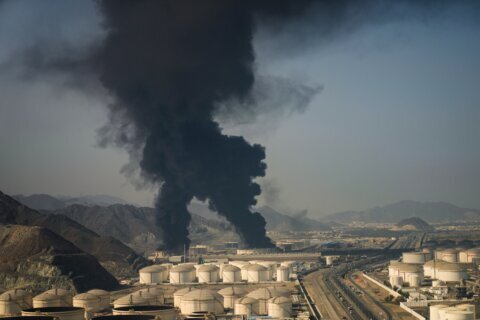
The joint U.S.-Israeli attack on Iran has driven gas prices up by 60 cents a gallon in a matter of weeks as the price of a barrel of oil hovers around $100, just as the spring break driving season begins.
Although the 32-member International Energy Agency has authorized the release of 400 million barrels of oil and the U.S. has relaxed sanctions on Russian oil to improve supplies, the key element remains how long the war continues.
Around 20% of the world’s oil transits the narrow Strait of Hormuz. Until that is clear for tankers to safely move through it, the price of oil will remain elevated.
[Read: How to Avoid Sticker Shock at the Gas Pump: 6 Essential Tips From U.S. News’ Senior Car Expert]
Crude Oil vs. Gasoline Prices: What’s the Difference?
The price of gasoline generally tracks the cost of oil, but there are additional costs that go into making gasoline, including refining, transportation, and state and federal taxes. Oil itself accounts for roughly half the overall cost of a gallon of gas, according to the U.S. Energy Information Administration.
Still, the speed with which gasoline retailers adjust prices has increased in recent years, and drivers will often see prices change within 24 to 36 hours.
Nationally, the average cost of a gallon of unleaded is now $3.63, according to AAA. A month ago, it was $2.94. A year back, it was roughly $3.
The price of oil, meanwhile, was $58 at the start of 2026. That is the West Texas Intermediate, a benchmark for American Oil. The price of Brent crude, a global measure, runs a little higher. U.S. oil accounts for more than 90% of the gasoline sold in America. But oil prices tend to reflect global developments.
Where Are Gas Prices Headed?
That’s the $64,000 question. Prior to the hostilities that began on Feb. 28, oil prices had been falling and the national average of a gallon of unleaded was just a hair under $3. The price is not likely to decline to those levels until there is some signal of the war ending, but most analysts think that will not happen for a month or so at the earliest.
“Consumers are already faced with a sharply rising cost for energy, with gasoline prices jumping from $2.83 per gallon to $3.63 today — damaging for both pocketbooks and confidence,” Richard de Chazal, macro analyst at William Blair, wrote in an email. “Consumers’ direct spending on energy only accounts for 3.7% of total personal consumption and has fallen precipitously from 9.6% in the mid-1980s, due to greater energy efficiencies and expanded supply.”
[READ: Everything You Need to Know About Claiming a Mileage Tax Deduction in 2026]
What Consumers Should Do to Combat Rising Prices
Although it may be alarming, the Russian invasion of Ukraine in 2022 offers some hope. Oil prices spiked to $124 a barrel then, but quickly receded — even though the conflict is still ongoing.
There are some other steps you can take. These include keeping your tires properly inflated and the car serviced, as this can maintain your fuel economy. Keeping an eye on the price of oil can help. If there is a dip, it might be worth taking advantage of it and filling your tank.
Maximizing your trips and combining errand runs to limit the number of times you drive is also advisable.
More from U.S. News
Costco vs. Sam’s Club: Which Membership Is Worth It in 2026?
12 Best Discount Shopping Apps
Crude Oil vs. Gasoline Prices: How They Differ and What Rising Prices Mean for Your Wallet originally appeared on usnews.com