President Donald Trump on Tuesday announced that the U.S. would withdraw from the international agreement brokered by the administration his predecessor, President Barack Obama, signed by five other world powers and the EU.
Trump’s highly anticipated decision ultimately followed through on a campaign promise and aligned with the hawkish approaches of his new National Security Adviser John Bolton and Secretary of State Mike Pompeo, who was en route to North Korea while the president delivered his public address.
The implications of the deal, designed to rein in Tehran’s ability to make a nuclear weapon and for the world to verify, extend far beyond the U.S. and Iran.
Here are the regions of the world that will be most affected by Trump’s decision:
North Korea and Its Neighbors
One of the most frequently cited criticisms of Trump’s withdrawing the U.S. from the deal, known formally as the Joint Comprehensive Plan of Action or JCPOA, was the precedent it would set for future diplomatic efforts. If the administration were to tear up a deal brokered by its predecessor, what would stop future leaders from doing the same to new agreements, like one Trump hopes to broker with North Korea?
In a rare public statement, Obama addressed that topic shortly after Trump finished speaking:
“The JCPOA is a model for what diplomacy can accomplish — its inspections and verification regime is precisely what the United States should be working to put in place with North Korea,” Obama wrote. “Indeed, at a time when we are all rooting for diplomacy with North Korea to succeed, walking away from the JCPOA risks losing a deal that accomplishes — with Iran — the very outcome that we are pursuing with the North Koreans.”
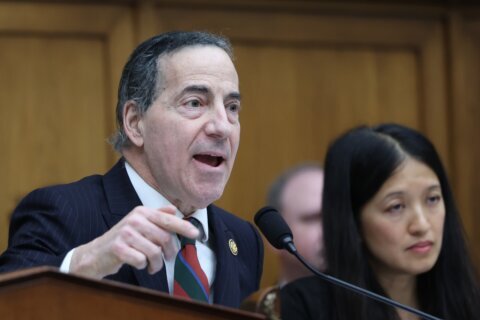
Rep. Adam Schiff, ranking member of the House Intelligence Committee, said in a statement that securing a comparable deal with North Korea “has now become even more difficult.”
“What incentive does Pyongyang now have in signing on to any agreement knowing that the United States could unilaterally renege at any point in this administration or the next?” the California Democrat wrote.
Schiff’s question may be answered within days.
The frequency of North Korean nuclear and missile tests reached unprecedented highs in recent months, as did hot-tempered rhetoric from both Kim Jong Un and Trump. But that all seems to have calmed amid a meeting last month between Kim and his South Korean counterpart, Moon Jae-in, and an expected summit between Trump and Kim that the president confirmed during his Iran remarks. He also confirmed Pompeo was at the time traveling to North Korea to secure the details.
A senior State Department official traveling with Pompeo official pushed back against claims that withdrawing from the Iran deal would harm U.S. prospects with Pyongyang, telling reporters that prior U.S. policy for North Korea has focused on “a bottom-up approach to a lot of work at kind of the sub-presidential level to try to get to an outcome that can bring the leaders together.”
“This president is taking the rather bold step of reversing that formula after setting a very powerful pressure campaign to bring the North Koreans to the negotiating table,” the official told reporters, speaking on the condition of anonymity. “But he’s now showing what we’ve said all along: We are committed to a diplomatic solution to the nuclear crisis.”
The official declined to elaborate on the specifics of these “bold steps.”
China and Russia
One of the signature achievements of the Iran deal was the Obama administration’s ability to rally support from China and Russia, both backers of Tehran and strong trading partners with it, which also enjoy veto power on the U.N. Security Council.
Beijing and Moscow will almost certainly not join the U.S. in placing new sanctions against Iran, experts say, as they did prior to the implementation of the agreement.
“U.S. tensions are currently high with China and Russia over international trade and the Syrian conflict, respectively, while both countries remain staunch advocates of maintaining the JCPOA,” Pratibha Thaker, an Iran expert with risk analysis firm the Economist Intelligence Unit, said in a statement.
New sanctions Trump says the U.S. will impose will also put China and Russia into a difficult position as Iran increasingly turns to them, and India, for economic ties amid the threat of new sanctions, says private geopolitical intelligence firm STRATFOR in an analysis.
“China has expanding business interests in Iran that it would wish to protect, while Russia would see the reintroduction of sanctions by the U.S. as another opportunity to drive a wedge between Mr. Trump’s administration and European leaders,” Thaker says.
European Powers
The leaders of France, Germany and the U.K. issued a joint statement immediately after Trump’s remarks condemning his decision “with regret and concern.” They hinted at a lack of unity among the U.S. and its traditional partners, who in recent weeks have labored to keep Trump from breaking away from the agreement.
But Europe also faces steep economic pressure amid new prospective U.S. sanctions against Iran and the volatility that will likely ensue, both among their private sectors and global oil prices. The new U.S. ambassador to Germany, Richard Grenell, who submitted his credentials earlier on Tuesday, warned local businesses in a tweet.
“As @realDonaldTrump said, US sanctions will target critical sectors of Iran’s economy. German companies doing business in Iran should wind down operations immediately,” Grenell wrote.
“Early signals suggest volatile times,” E*TRADE Financial Corporation Vice President of Investment Strategy Mike Loewengart wrote in an emailed analysis note, “especially in the oil market as worry of supply disruptions grow. This could make things uncomfortable for European economies who are some of Iran’s biggest customers.”
The Economist’s Thaker believes European countries and others may introduce “blocking regulations” which would prohibit non-Americans from complying with U.S. sanctions, and reinforce the jurisdiction of non-American courts and other authorities regarding sanctions violations, and file complaints in the World Trade Organization.
The Middle East
The Ministry of Energy, Industry and Mineral Resources in Saudi Arabia — considered Iran’s chief rival and an outspoken critic of the nuclear accord — issued a statement shortly after Trump’s remarks saying it “remains committed to supporting the stability of oil markets, benefiting producers and consumers alike, and to sustaining growth in the global economy.”
Saudi Arabia will work with “major producers” within the Organization of Petroleum Exporting Countries, or OPEC, as well as countries outside of it “to mitigate the impact of any potential supply shortages.”
In explaining his justification for withdrawing from the agreement, Trump repeated a frequent claim that Iran had violated the “spirit of the agreement” — though he and his administration affirms Iran has not violated the agreement. Iran’s support for proxy forces in Iraq, Lebanon, Syria and Yemen and its deployment of special operations forces throughout the region has undermined Middle East security, Trump says.
In addition to rising oil prices, Trump’s new policy toward Iran “may also increase the tail risk of further escalation of Mid-East tensions that could place significant upward pressure on oil prices,” Lewis Alexander, chief U.S. economist at Japanese financial holdings company Nomura Holdings wrote in an emailed analysis.
The European leaders calling themselves the E3, who in their statement expressed concern for future partnerships with the U.S., extended that skepticism to ongoing coalitions fighting extremism in the Middle East, framing their plans for future operations as Eurocentric.
“Because our commitment to the security of our allies and partners in the region is unwavering, we must also address in a meaningful way shared concerns about Iran’s ballistic missile programme and its destabilising regional activities, especially in Syria, Iraq and Yemen,” they wrote in the statement emailed by the British Foreign and Commonwealth Office. “We have already started constructive and mutually beneficial discussions on these issues, and the E3 is committed to continuing them with key partners and concerned states across the region.”
However not all commenters on Trump’s decision expressed pessimism about the future of stability in the Middle East. Sen. Thom Tillis, a member of the Senate Armed Services Committee, cited concerns among key Middle East allies who he says told him they feared Iran would skirt the deal and that lifting sanctions would empower Tehran.
“The president’s decision today provides a new opportunity for America to alleviate the concerns of our allies in the Middle East by ending the experiment of appeasement and holding Iran accountable for its belligerence,” the North Carolina Republican said in a statement. “The Iranian regime’s threat to peace and stability is real: we cannot repeat the mistakes and miscalculations of the past.”
In the United States
The precedents set by Trump’s decision on Tuesday do not only apply to faraway countries. It also has direct implications on Americans and the treaties governing their immediate neighbors, namely the North American Free Trade Agreement, which Trump has also threatened to tear up.
“It suggests Trump is not all bluster–he will walk away from bad deals,” E*TRADE’s Lowengart wrote. “Many on the street are now likely wondering what he could walk away from next, and NAFTA could be on the short list. For investors, the lesson of today is what it has been all year: it’s best to get comfortable, because volatility is here to stay.”
More from U.S. News
The Global Effect of John Bolton as National Security Adviser
After Inauguration Vladimir Putin Faces Questions on Political Future
Europeans Scramble to Save Iran Deal After Trump Reneges
Places Most Affected by Trump?s Decision on the Iran Nuclear Deal originally appeared on usnews.com