People don’t like change. Anecdotally, most of us know this. But there’s a well-known behavioral phenomenon called the “status-quo bias” that shows why people prefer the current situation over something unknown.
In a 1991 academic paper, “Anomalies: The Endowment Effect, Loss Aversion, and Status Quo Bias,” researchers Daniel Kahneman, Jack L. Knetsch and Richard H. Thaler showed people associated loss with change.
In layman’s terms, it means people are happier to accept the status quo — even if it’s not ideal — than make a change whose implications may be unclear. Think of it as the devil-you-know phenomenon.
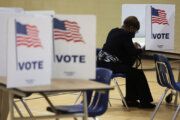
This month, the change that has Americans worried is, of course, the upcoming presidential election.
[See: 13 Ways to Take the Emotions Out of Investing.]
Historically, October has been a choppy month in the U.S. markets. According to data from FactSet and State Street Global Advisors, October is the month in which the Standard & Poor’s 500 index has both the highest volatility and lowest return on average from 1988 through 2015,. The second-most volatile month, with the next highest level of drawdowns? September.
September 2016 saw the S&P 500 decline just 0.50 percent, a number that may surprise some who believe the recent election-focused nail-biting has driven markets down sharply.
But fear remains, particularly given the contentious nature of this election. According to polling organization Rasmussen, only 30 percent of likely voters believe the country is “headed in the right direction” as of Oct. 10.
Polls are showing Democrat Hillary Clinton with a lead over Republican rival Donald Trump, and some forecasters are projecting a Clinton victory.
For markets, that’s essentially the same as maintaining the status quo. Clinton is a well-known political figure, and she represents the party currently in the White House. Her policies and plans for an administration are fairly well understood.
In addition, with Congressional races also at stake, traditional divisions look likely to remain in place, potentially resulting in the gridlock so familiar to U.S. voters.
Trump’s potential effect on government spending are largely unknown, which worries markets in the short term, despite a possible long-term stimulative effect should he boost spending the way many expect.
[See: 7 Ways to Avoid Financial Stress Over the Holidays.]
Each side fears the opposing candidate can wreak havoc on the financial markets, for differing reasons. Yes, there are risks of a new, unknown president, such as an increase in market volatility and accompanying drop in Treasury yields. Market volatility often results in a spike in gold prices, as well.
Despite worries about a president gone wild, Trump would still have to work with Congress, and even members of his own party are at significant odds with him. That could hamper his ability to achieve some of his goals.
For example, he won’t have the authority to build a wall along the border with Mexico, reverse the North American Free Trade Agreement, deport millions of immigrants all at once, exit the North Atlantic Treaty Organization or prevent Muslim refugees from entering the country.
If Trump were to win, some industries, such as energy and defense, may see investment inflows. Perhaps some regulatory burdens on other industries may be relieved, also spurring new investment.
Regardless of who is president, the country will feel the effects of the business cycle and market cycle. The economic recovery, although shallow, began in June 2009. The bull market for equities began in March of that same year.
Nothing lasts forever, and that’s especially true for market and economic cycles. So it wouldn’t be in the least bit surprising to see an economic slowdown and a market pullback, regardless of who’s president, and having nothing to do with the election results.
Here’s another thing investors may find surprising: According to the FactSet/State Street data, between 1976 and 2012, the S&P 500 on average rallied in the months immediately after an election. If the incumbent party lost, the rally was been more muted than if the incumbent party won. Keep in mind: 1988, when George H. W. Bush was elected, was the only year during that time period in which a new president replaced an outgoing president of the same party.
[Read: Halloween ETFs Haul: 3 Tricks, 3 Treats.]
In other words, markets typically rally following an election, perhaps manifesting a collective sigh of relief that all the campaign insanity is finally over. Markets abhor uncertainty, and elections are chock full of uncertainty about possible reforms, legislation, taxes and new leadership style. The election removes that wild card, potentially paving the way for either a simple relief rally or rally based upon the market’s expectations for the new administration.
More from U.S. News
7 of the Most Loathed Stocks in the Market
20 Awesome Dividend Stocks for Guaranteed Income
8 Cheap ETFs That You Won’t Regret
Market Anxiety Remains as Vote Nears originally appeared on usnews.com