As 2025 wraps up, it’s another in a string of years after the 2020 pandemic in which most Americans consistently voiced negative views about the economy amid ongoing concerns about costs — a topic that looks poised to dominate 2026, too.
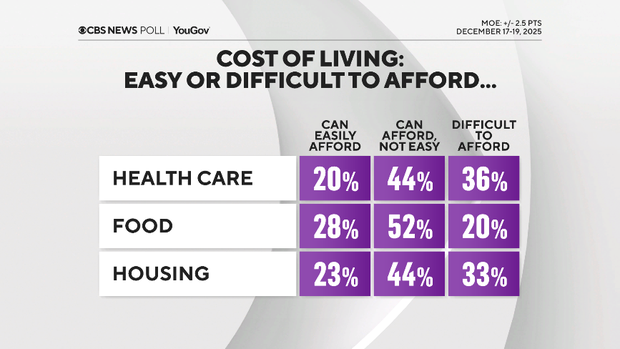
That’s because in the eyes of many Americans today, the U.S. is an expensive place to live. Relatively few describe basics like food and housing today as easy to afford, while housing and health care, in particular, are described by more as “difficult” to afford than easy.
Against that backdrop, persuading the wider public that things are improved — as President Trump aimed to do this past week — sets up a challenge for him going into 2026.
Expectations aren’t that high for the impact of his policies to make them better off in 2026, and many don’t think that happened in 2025.
Fewer than one in five say Mr. Trump’s policies made them financially better in 2025. Outlook on that for 2026 is better by comparison, but still isn’t widespread.

And it still pales compared to 2025’s expectations. Just ahead of him being sworn in, more expected Mr. Trump’s policies to make them financially better off.
Either way, in the public mind, it is more Mr. Trump’s economy than Joe Biden’s.
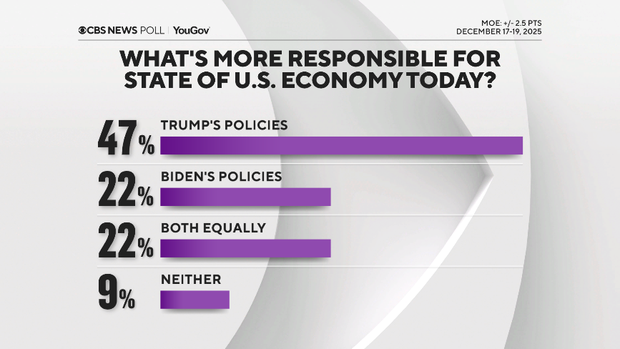
Adding to his challenges: the Americans who give the economy bad grades are even more likely to hold him responsible.
That’s maybe partly about what he’s done — people who oppose new tariffs, for example, are especially likely to call it his economy — but also what they think he hasn’t done. Those who feel he hasn’t put enough focus on lowering prices are even more likely to say this economy is his alone.
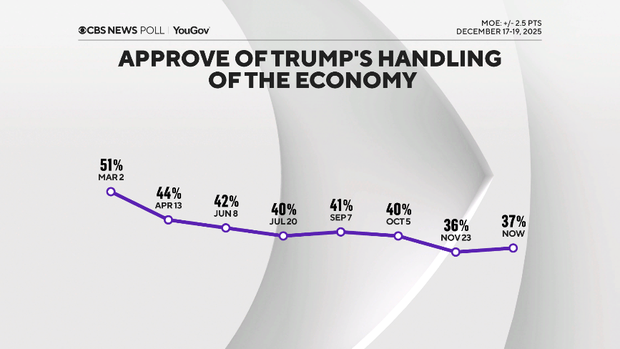
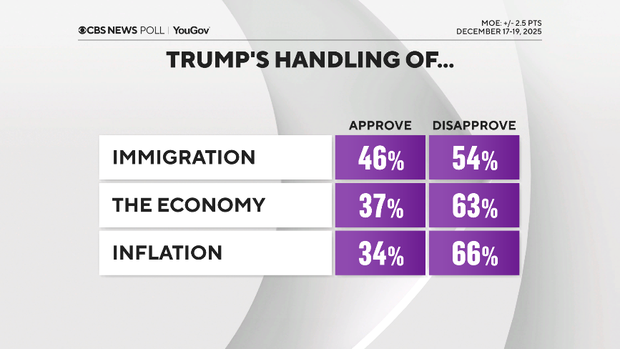
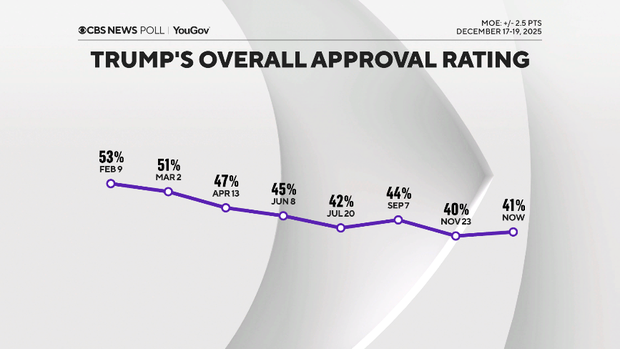
The president did halt a months-long steady decline in his handling of the economy and inflation. Each is still low, but now up from the lows of this term recorded in November. His overall approval saw the same dynamic, back up one point.
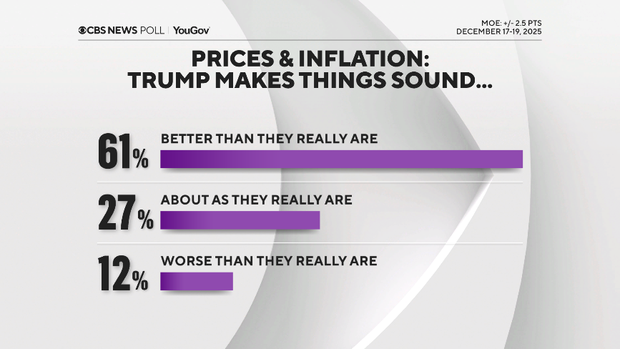
Most still feel he describes things as better than they really are. That hasn’t changed.
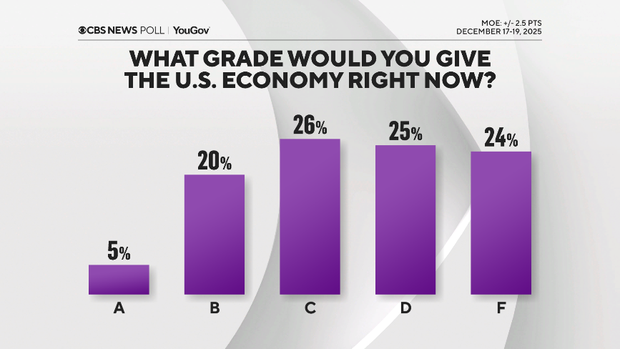
On balance, Americans mostly grade the economy as either a “C” or “D” or worse.
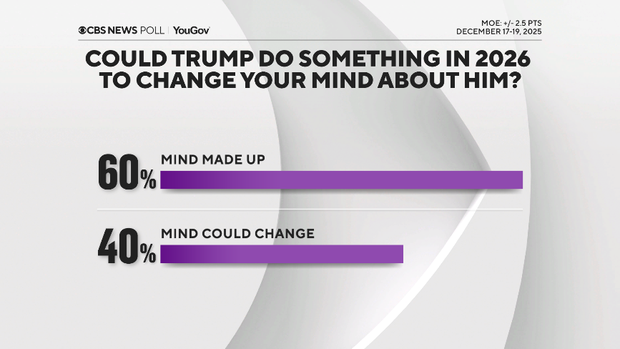
But plenty of people say their views of the president’s job performance could change in the new year — that he could do something to change their minds. That includes a quarter of those who disapprove of Mr. Trump’s performance now.
Most of them say that it would have to do with the economy.
All interviewing for this poll was done following the address to the nation on Wednesday night.
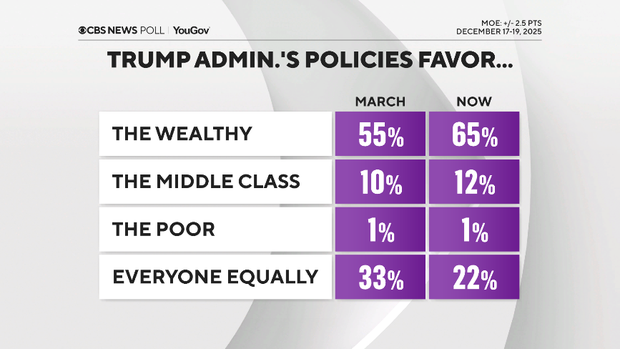
Trump drew plenty of support in 2024 from voters in middle-income ranges, but today two-thirds of Americans say he favors the wealthy, not the middle class — and that number is higher than it was this spring.
Meanwhile, a range of issues swirl ahead of 2026 that could impact people’s bottom lines next year. These include the rise of AI, the impact of deportation efforts (including on jobs), and health care policy, which is looming large.
AI
When looking at a range of different aspects of the U.S. economy, Americans tend to be most optimistic about the technology sector. (more than housing or manufacturing, for instance).
At the same time, there’s a lot of skepticism about AI’s impact, even as it drives the stock market and investments at ever-higher rates in one of the year’s biggest economic stories.
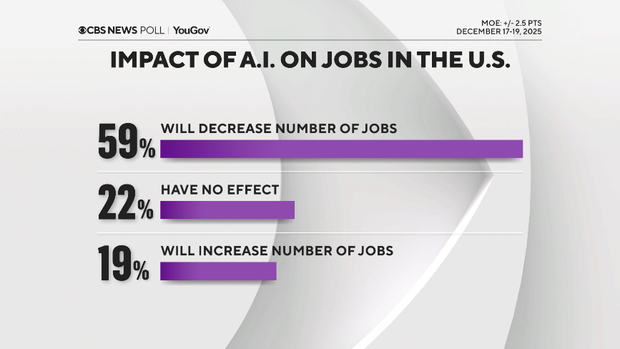
A majority think AI will decrease American jobs, not increase them.
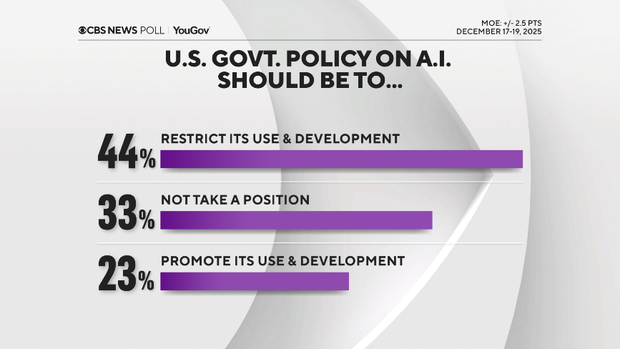
On balance, people would have government policy restrict, not promote, AI.
Immigration and deportation
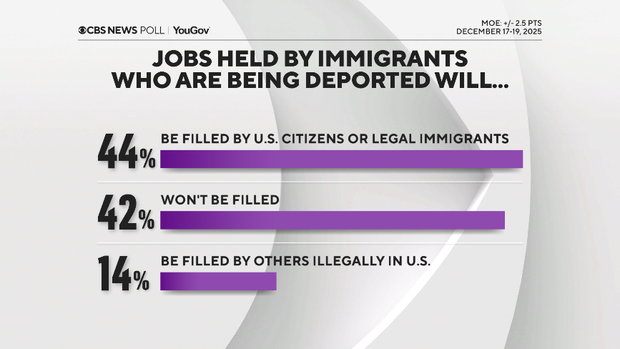
The deportation program continues to divide the country, and it is also connected in the public mind to an impact on the economy and jobs. A sizable number — especially those who approve of it — believe jobs that were done by those being deported will now be done by citizens or legal immigrants.
Most who disapprove of the deportation program think those jobs will go unfilled.
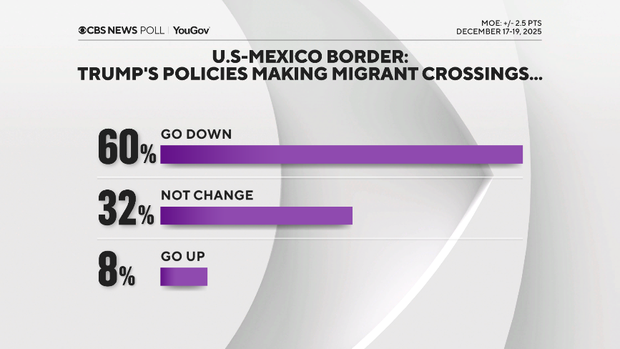
Most continue to say border crossings are down this year. It’s one reason the president’s approval ratings on handling immigration has been higher than his ratings for handling the economy this year.
Health care
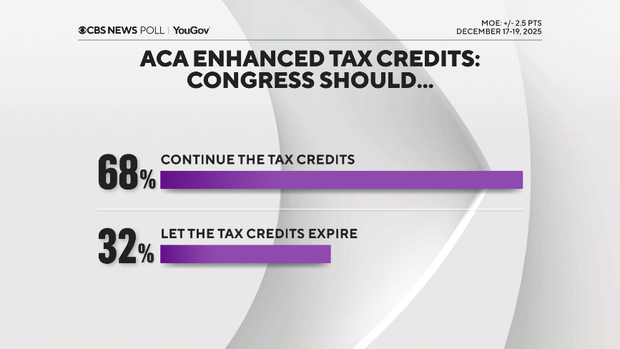
Most Americans would like to see the ACA tax credits extended, including more than four in 10 Republicans.
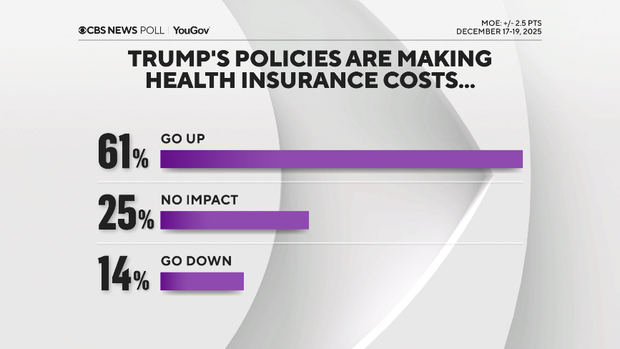
A big majority think the administration’s policies are making health insurance costs go up.
Heading into his latest announcement of a recent deal with drug makers, the public was not convinced yet of the president’s approach to lowering drug prices — more think he’s making costs go up than down.
On the international front
People don’t expect Mr. Trump’s policies to have any more impact on peace and stability than they perceived in 2025, and a large majority still says Mr. Trump needs to explain what’s going on with Venezuela.
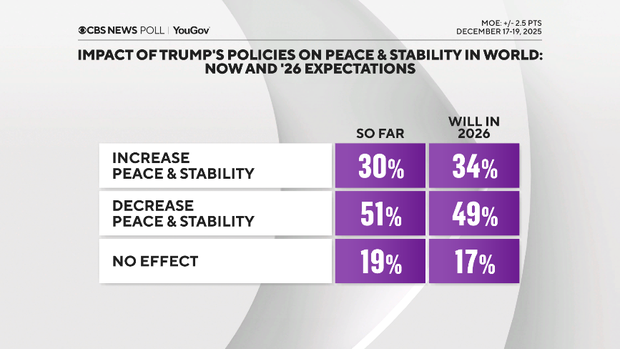
This CBS News/YouGov survey was conducted with a nationally representative sample of 2,300 U.S. adults interviewed between December 17-19, 2025. The sample was weighted to be representative of adults nationwide according to gender, age, race, and education, based on the U.S. Census American Community Survey and Current Population Survey, as well as 2024 presidential vote. The margin of error is ±2.5 points.